The New York Times bestselling author and entrepreneur investigates what would happen if a new financial world order took hold, one in which global elites own everything and you own nothingand yet you are somehow happy.
The inside story of the US-China trade war, "e;especially insightful on how the contradictory natures of Trump and Xi have impeded understanding"e; (The Boston Globe).
The former leader of the Liberal Democrats sets out his personal beliefs and political vision to create a new political language and a new brand of politics.
The No Logo of climate change - a book that shows how global warming is not a theory we should still debate, but something that has already happened on a global scale.
Your morning flat-white helped shape the modern world'Elegantly written, witty and so wide in scope, so rich in detail and so thought provoking' Joanna BlythmanIt may seem like just a drink, but coffee's dark journey from the highlands of Ethiopia to the highstreets of every town in the country links alchemy and anthropology, poetry and politics, science and slavery.
Bestselling author and renowned economist Lester Thurow argues forcefully that globalization is not a done deal and we must seize the moment now if we are to create a new global economy in which all can prosper.
Features updated material and a special foreword from Arianna for the UK audienceIt's not an exaggeration to say that the hard-working, average citizen on an average income is an endangered species and that the American Dream of a secure, comfortable standard of living has become outdated.
An unusual and authoritative 'natural history of languages' that narrates the ways in which one language has superseded or outlasted another at different times in history.
Expanding on the 1989 National Research Council volume AIDS, Sexual Behavior, and Intravenous Drug Use, this book reports on changing patterns in the distribution of cases and the results of intervention efforts under way.
This volume examines the complex medical, social, ethical, financial, and scientific problems arising from the AIDS epidemic and offers dozens of public policy and research recommendations for an appropriate national response to this dread disease.
Mother-to-child transmission of HIV-1 afflicts hundreds of thousands of children every year, especially in parts of the world such as sub-Saharan Africa, where HIV infection is prevalent and resources are limited.
This book, written at the request of the National Institutes of Health (NIH) to assist its AIDS program office in planning future directions, contains a series of recommendations for ensuring that AIDS research is a well-organized, well-planned, and comprehensive long-range program leading to the control and eventual eradication of the disease.
How far have we come in the fight against AIDS since the Institute of Medicine released Confronting AIDS: Directions for Public Health, Health Care, and Research in 1986?
The Ryan White Comprehensive AIDS Resources Emergency (CARE) Act gives fundingto cities, states, and other public and private entities to provide care and supportservices to individuals with HIV and AIDS who have low-incomes and little or noinsurance.
Using the United Nations' 2030 Sustainable Development Goals as a reference framework, Identity, Territories, and Sustainability explores the interplay between territorial and collective identities, territorial policies, and their implications for environmental, economic, and social sustainability.
Mother-to-child transmission of HIV-1 afflicts hundreds of thousands of children every year, especially in parts of the world such as sub-Saharan Africa, where HIV infection is prevalent and resources are limited.
The Ryan White Comprehensive AIDS Resources Emergency (CARE) Act gives fundingto cities, states, and other public and private entities to provide care and supportservices to individuals with HIV and AIDS who have low-incomes and little or noinsurance.
A case for why regionalization, not globalization, has been the biggest economic trend of the past forty yearsThe conventional wisdom about globalization is wrong.
A powerful case for the global market economy The debate on globalization has reached a level of intensity that inhibits comprehension and obscures the issues.
A controversial look at the end of globalization and what it means for prosperity, peace, and the global economic order Globalization, long considered the best route to economic prosperity, is not inevitable.
A celebrated theologian explores how the greatest dangers to humanity, as well as the greatest promises for human flourishing, are at the intersection of religion and globalization More than almost anything else, globalization and the great world religions are shaping our lives, affecting everything from the public policies of political leaders and the economic decisions of industry bosses and employees, to university curricula, all the way to the inner longings of our hearts.
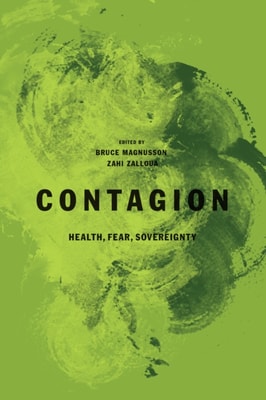
Over many decades, "e;contagion"e; has been a metaphor of choice for everything from global terrorism, suicide bombings, poverty, immigration, global financial crises, human rights, fast food, obesity, divorce, and homosexuality.