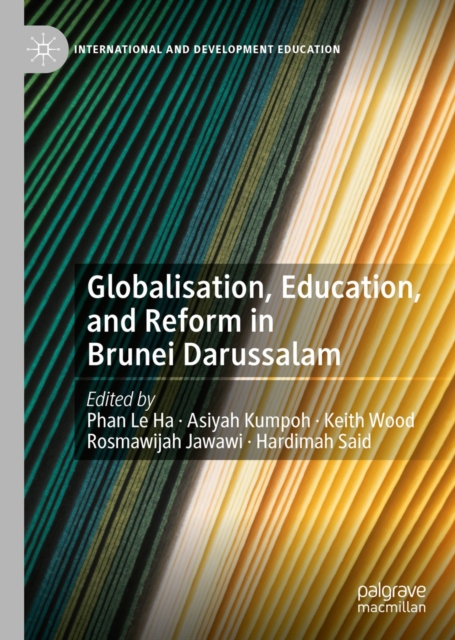
This book focuses on the intertwined relationships between globalisation, nation-building, education, and reform as manifested throughout the modern history of Brunei Darussalam, an Islamic monarchy located on the island of Borneo in Southeast Asia.
This book focuses on measures pertaining to the three-pillar implementation strategy of R2P and examines how and to what extent the three pillars have been practised.
This book is a comprehensive introduction to the relationship between communism (understood as an ideological, political, and social project) and culture, broadly defined as the field of aesthetic production.
This book departs from existing studies by focusing on the impact of international influences on the society, culture, and language of both North and South Korea.
Studying the case of Latin American cinema, this book analyzes one of the most public - and most exportable- forms of postcolonial national culture to argue that millennial era globalization demands entirely new frameworks for thinking about the relationship between politics, culture, and economic policies.
This book examines the institutions that are producing consumer law at the international level, the substantive issues enshrined in these laws, and the enforcement mechanisms meant to ensure effective protection.
This book contributes to the discourse on post-colonial and globalization theories, focusing on Nigeria's transition to a federal system of government.
Pursuing an interdisciplinary approach, this book offers detailed insights into the empirical relationships between overall social key figures of states and cultures in the fields of information and communication technology (ICT) (digital divide/inequality), the economy, education and religion.
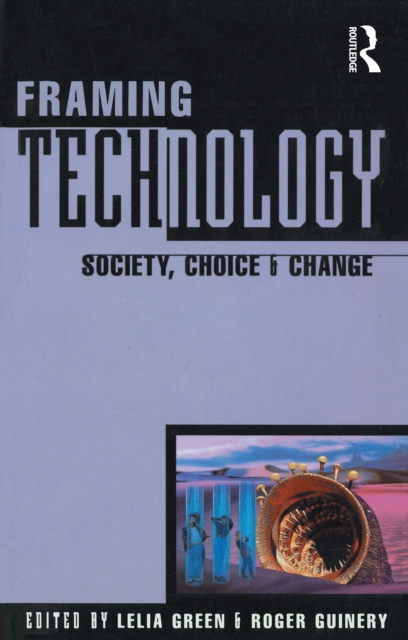
Framing Technology uses an interdisciplinary approach to explore some of the key issues in technology today, including virtual reality, gender, health, the environment, regulation, the information society, surveillance and globalisation.
This book investigates recent policy initiatives dealing with the online enforcement of copyright in the European Union, providing unique insights into the current stalemate in the field.
This book maintains that the theory of imperialism should incorporate the concept of an "e;operational code"e; of political elites to account for agencies' actions.
This book explores the consequences of the last three decades' substantial neoliberal securitisation of freedom of speech, democracy and social security of racialised groups.
This book looks at marginality from a less conventional perspective by analyzing complex social, cultural, political and economic relations between the aspects of globalization and various forms of marginalization.
This book introduces Ali Mazrui's delightfully stimulating scholarship about intercultural relations, calling it Postcolonial Constructivism, and shares elements of his intellectual vitality in an original way.
This book analyses and furthers the academic debates on post-liberal peacebuilding, through a number of conceptual, theoretical and empirical research outputs.
Combining global, media, and cultural studies, this book analyzes the success of Hallyu, or the "e;Korean Wave"e; in the West, both at a macro and micro level, as an alternative pop culture globalization.
This book challenges the conventional wisdom that civil war inevitably stymies economic development and that 'civil war represents development in reverse'.
This book explains how the US dollar serves as the primary reserve currency for the international financial system and assesses its prospects for the future.
Human trafficking has come to be seen as a growing threat, and transnational advocacy networks opposed to human trafficking have succeeded in establishing trafficking as a pressing political problem.
This innovative volume explores the link between local and regional eating cultures and their mediatization via transnational TV cooking shows, glocal food advertising and social media transfer of recipes.
This book offers a systematic and comprehensive introduction to the Arctic in the era of globalization, or as it is referred to here, the 'GlobalArctic'.
This book presents stimulating new perspectives on three key sets of issues: a fair globalization, the policies that might be adopted in response to protectionist pressures, and sustainable development policies involving G7 and G20 actions to lay the foundations for renewed trust.
This book examines the nature of transnational organized crime and gangs, and how these diverse organizations contribute to violence, especially in so-called fragile states across Central and Latin America.
This book offers new ways of thinking about corruption by examining the two distinct ways in which policy approaches and discourse on corruption developed in the UN and the OECD.
Dieses Lehrbuch führt ein in die politischen Zusammenhänge der Wahrnehmung von Risiken, des politischen Umgangs mit ihnen und in die gesellschaftswissenschaftlichen Möglichkeiten, diese Politik zu analysieren.
Das Buch liefert in komprimierter Form einen Überblick über die wichtigsten unterschiedlichen theoretischen Zugriffe auf Sicherheit in den Internationalen Beziehungen und erläutert, was daraus für die wissenschaftliche Analyse relevanter Akteure, Strukturen und Prozesse folgt.
Der Band diskutiert die Möglichkeiten, aber auch Grenzen und Probleme von EU-Simulationen und liefert wissenschaftliche Erkenntnisse zur Konzeptualisierung, zum Simulationsdesign und zur systematischen Evaluation von Lernergebnissen.
Spätestens seit den frühen Formationen einer auf Notendrucken basierenden Musikindustrie unterhalten musikferne Unternehmen Beziehungen zu Musik und ihren Akteur*innen.