This book explores violence against the environment within the broad scope of transnational environmental crime (TEC): its extent, perpetrators, and responses.
This volume brings together marginalized perspectives and communities into the mainstream discourse on education for sustainable development and global citizenship.
This book explores how resurgent nationalism across the globe demands re-examination of many of the theories and practices in applied linguistics and language teaching as political forces seek to limit the movement of people, goods, and services across national borders and, in some cases, enact violence upon those with linguistic and/or ethnic backgrounds that differ from that of the dominant culture.
This book maintains that the theory of imperialism should incorporate the concept of an "e;operational code"e; of political elites to account for agencies' actions.
This book examines external perceptions of the Franco-German relationship, both from a historical perspective and as a driving force for regional integration.
This book aims to develop a critical understanding of multistakeholder governance in Internet Governance through an in-depth analysis of the Internet Assigned Numbers Authority (IANA) transition, the process through which the U.
This compendium showcases the ongoing trends and challenges in South-South cooperation between India and select countries in Africa, for achieving food security and poverty reduction.
This book looks at marginality from a less conventional perspective by analyzing complex social, cultural, political and economic relations between the aspects of globalization and various forms of marginalization.
This book presents a comparative literary study of the works of four writers working in European minority languages - Frisian, Welsh, Scots and Breton.
The Politics of Mobile Citizenship in Europe explores contemporary models of national and European Union (EU) citizenship in the context of intra-EU mobility.
This edited volume provides an inclusive explanation of what, why, and how cities interact with global counterparts as well as with nation states, non-governmental organizations, and foreign publics.
This book is the empirical part of a broad research project on society in a global context, complementing the first, theoretical book, Theorizing Society in a Global Context.
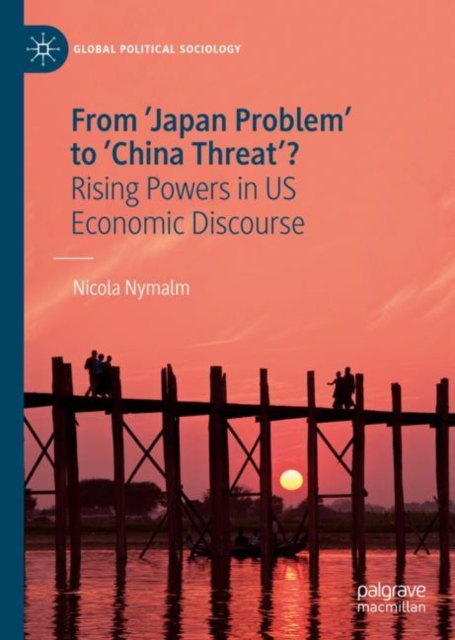
This book has four main objectives: to bring the thus far almost entirely neglected historical case of 'the rise of Japan' into the literature on power shifts in general and 'the rise of China' in particular; to propose a discourse-based conceptualization of identity for the study of economic policy that engages theoretical and methodological debates on how to overcome the dichotomy between 'ideational' (identity) and 'material' (economic) factors; to address the tendency to focus on the 'radical Other' in poststructuralist IR scholarship, by highlighting how heterogeneity disturbs exclusive and binary articulations of identity and difference; and to propose a method for putting political discourse theory (PDT) into practice in empirical research by drawing on rhetorical political analysis (RPA).
"e;Weak Institutions and the Governance Dilemma is especially important and welcome since it offers a very incisive analysis of the role of NGOs in transitional democracies and the effect of institutional setting on NGO effectiveness in representing citizen interests.
This book develops a new concept of post-refugee transnationalism to describe experiences of Bosnian refugees who settled in Ireland after fleeing the conflict in 1990s Bosnia and Herzegovina.
This book explains the making of the South African state and thereby contributes to the development theory by analyzing the concept of the embedded neoliberal state.
This book studies the relationship between British government and faith groups in its international development agenda within and beyond the context of Brexit.
In light of new global challenges for international cooperation and coordination, such as the revival of protectionism, surge of populism, or energy-related issues, this volume highlights possible scenarios for the future of Global Economic Governance (GEG).
This book provides a quantitative, cross-nationally comparative, longitudinal, and multilevel study of the drivers and spoilers of national governments' anti-trafficking measures.
This book brings together a series of contributions by international legal scholars that explore a range of subjects and themes in the field of international economic law and global economic governance through a variety of methodological and theoretical lenses.
This book sets out to re-examine the foundations of Thomas Hobbes's political philosophy, and to develop a Hobbesian normative theory of international relations.
This volume examines the Africa-Asia relationship from a transregional perspective, namely as a set of emergent social, political and economic practices spanning a number of analytical and spatial scales.
Written from the perspective of an insider of the most prominent events in the Middle East over the last fifty years, this book examines Egypt's diplomacy in transformative times of war, peace and transition.
Volume 10 of the EYIEL focusses on the relationship between transnational labour law and international economic law on the occasion of the 100th anniversary of the International Labour Organisation (ILO).
This book explains the importance of globalization and the Belt and Road Initiative, which is one of the essential projects of President Xi Jinping, and where China fits on the global arena.