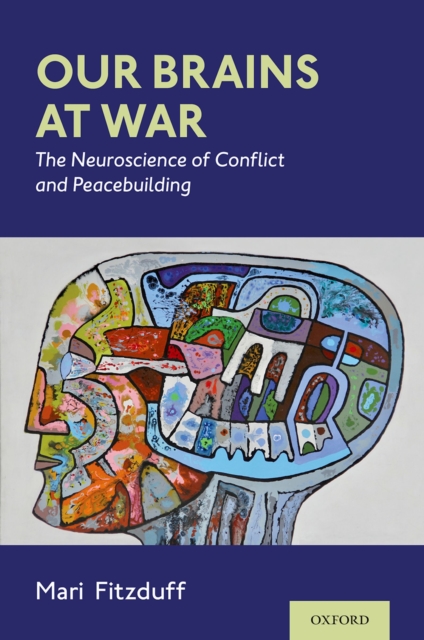
Our Brains at War: The Neuroscience of Conflict and Peacebuilding suggests that we need a radical change in how we think about war, leadership, and politics.
Our Brains at War: The Neuroscience of Conflict and Peacebuilding suggests that we need a radical change in how we think about war, leadership, and politics.
Despite the liberalized reconfiguration of civil society and political practice in nineteenth-century Europe, the right to make foreign policy, devise alliances, wage war and negotiate peace remained essentially an executive prerogative.
Our world of increasing and varied conflicts is confusing and threatening to citizens of all countries, as they try to understand its causes and consequences.
Civil wars have caused tremendous human suffering in the last century, and the United Nations is often asked to send peacekeepers to stop ongoing violence.
Civil wars have caused tremendous human suffering in the last century, and the United Nations is often asked to send peacekeepers to stop ongoing violence.
The Good Friday Agreement of 1998 ended a protracted violent conflict in Northern Ireland and became an international reference point for peace-building.
The Good Friday Agreement of 1998 ended a protracted violent conflict in Northern Ireland and became an international reference point for peace-building.
Composing Peace: Mission Composition in UN Peacekeeping is about mission composition in peacekeeping operations and asks how diversity of mission composition influences the ability of a peace mission to keep the peace.
Composing Peace: Mission Composition in UN Peacekeeping is about mission composition in peacekeeping operations and asks how diversity of mission composition influences the ability of a peace mission to keep the peace.
During the first decade of the twenty-first century, the rising demand for peacekeepers saw the United Nations (UN) operate at a historically unprecedented tempo, with increases in the number and size of missions as well as in the scope and complexity of their mandates.
This is the first major exploration of the United Nations Security Council's part in addressing the problem of war, both civil and international, since 1945.
Human progress and prosperity depend on a peaceful environment, and most people have always sought to live in peace, yet our perception of the past is dominated too often not by stories of peace but by tales of war.
Human progress and prosperity depend on a peaceful environment, and most people have always sought to live in peace, yet our perception of the past is dominated too often not by stories of peace but by tales of war.
The international administration of troubled states - whether in Bosnia, Kosovo, or East Timor - has seen a return to the principle of trusteeship; that is when some form of international supervision is required in a particular territory in order both to maintain order and to foster the norms and practices of fair self-government.
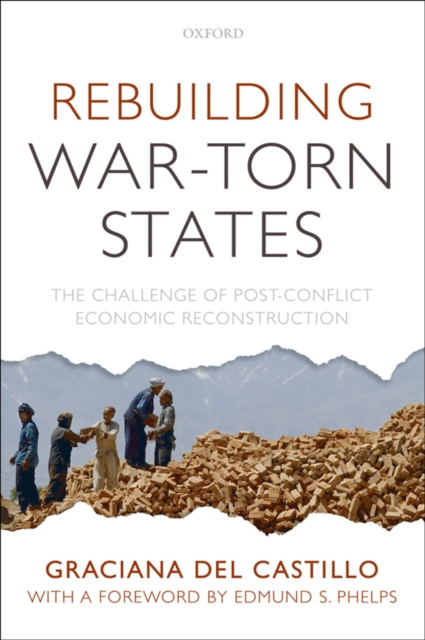
Post-conflict economic reconstruction is a critical part of the political economy of peacetime and one of the most important challenges in any peace-building or state-building strategy.
Post-conflict economic reconstruction is a critical part of the political economy of peacetime and one of the most important challenges in any peace-building or state-building strategy.
Why is it that Catholics and Protestants in Northern Ireland have been in perpetual conflict for thirty years when they can live and prosper together elsewhere?
This is the first major exploration of the United Nations Security Council's part in addressing the problem of war, both civil and international, since 1945.
This book provides the first comparative treatment of the roles of informal ad hoc groupings of states within selected conflict settings and their effects on governance in and out of the UN Security Council.
Since the mid-1990s the United Nations and other multilateral organizations have been entrusted with exceptional authority for the administration of war-torn and strife-ridden territories.
On 25 May 1993 the United Nations Security Council took the extraordinary and unprecedented step of deciding to establish the International Criminal Tribunal for the Former Yugoslavia (ICTY) as a mechanism for the restoration and maintenance of international peace and security.
Crises occur in all societies across world, and can be natural (such as hurricanes, flooding, and earthquakes), man-made (such as wars and economic downturns), or, often, a combination of both (such as famines, the flooding of New Orleans in 2005 after Hurricane Katrina and subsequent levy failures, and the earthquake, tsunami, and nuclear disaster in Japan in 2011).
Humanitarianism and Security contends that the search for stability and peace remains central to the political environment within the Democratic Republic of Congo (DRC).
The Oxford Handbook on United Nations Peacekeeping Operations presents an innovative, authoritative, and accessible examination and critique of the United Nations peacekeeping operations.