The complex problems of peace, security, and development in societies affected by conflict increasingly demand innovative ideas, and comprehensive strategies to tackle the diverse, simultaneous, and daunting challenges faced in trying to rebuild states and communities after war.
Urban centres are at the heart of the dynamics of war and peace, of stability and violence: as 'safe havens' for those seeking protection, as concentrations of public administrative and military apparatus, and as symbolic bases of state sovereignty and public authority.
While many have argued in the past decade that peace and conflict studies must engage more with local actors and communities, and scholars regularly describe the importance of local context and culture for building sustainable peace, there are substantial challenges methodologically to fulfilling this 'local turn'.
This book assesses the International Criminal Tribunal for former Yugoslavia's (ICTY) legacy and examines the conflicting intersection of law and politics in the search for justice, both thematically and through close analysis of some of the major trials.
This book explores misdemeanor courts in the United States by focusing on the processing of misdemeanor crimes and the resultant consequences of conviction, such as loss of employment and housing, the imposition of significant fines, and loss of liberty-all amounting to the criminalization of poverty that happens in many U.
The Mental Capacity Act 2005 (MCA) provides a legal framework for acting on behalf of individuals who lack the capacity to make decisions for themselves.
Resting on a convincing body of evidence that violence is not a necessary component of conflict among states and between states and non-state actors, World BEYOND War asserts that war itself can be ended.
Crime Prevention: Approaches, Practices, and Evaluations, Eleventh Edition, meets the needs of students and instructors for engaging, evidence-based, impartial coverage of interventions that can reduce or prevent deviance.
Crime Prevention: Approaches, Practices, and Evaluations, Eleventh Edition, meets the needs of students and instructors for engaging, evidence-based, impartial coverage of interventions that can reduce or prevent deviance.
We see the bloodshed, the hatred, the greed, the ruthless brutality in the world, and then we look to see who is making or letting this madness happen.
On September 20, 2001, the planned date of the meeting of the Community of Bishops of the Episcopal Church, was radically altered by the events of the previous week.
A Hundred Days of Carnage, Twenty-Five Years of RebirthIn the space of a hundred days, a million Tutsi in Rwanda were slaughtered by their Hutu neighbors.
This book makes an important contribution to police scholarship by focusing on the critical need for law enforcement personnel to receive education on chemical/biological/radiological/nuclear (CBRN) hazards.
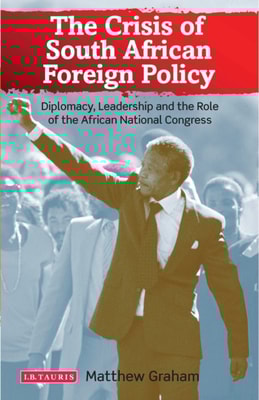
The emergence of a 'new' democratic South Africa under Nelson Mandela was regarded as a high watermark for international ideals of human rights and democracy.
From handshakes on the White House lawn to Picasso's iconic dove of peace, the images and stereotypes of peace are powerful, widespread and easily recognizable.
Diplomats, politicians and activists alike have long laboured under the assumption that a two-state solution is the only path to peace between the Israelis and the Palestinians.
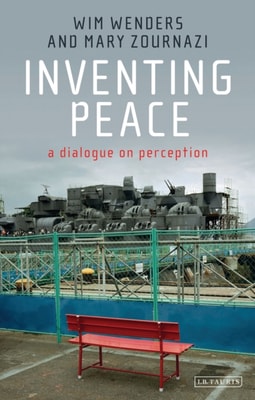
Inventing Peace revolves around the question of how we look at the world, but do not see it when there is so much war, injustice, suffering and violence.
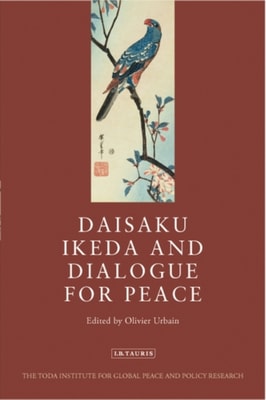
The prominent Buddhist religious leader and advocate for peace, Daisaku Ikeda, has placed dialogue at the centre of his efforts towards securing global justice and conflict resolution.
The years 1942 to 1946 saw the acceleration of World War II, its conclusion and the construction of a post-war order that was to culminate in the Cold War.
In the aftermath of explosive civil wars in Africa during the 1990s and 2000s, the establishment of multi-party elections has often been heralded by the West as signaling the culmination of the conflict and the beginning of a period of democratic rule.
Long before it became fashionable to talk of climate change, drought and water shortages, the authors of this lucid and trenchant dialogue were warning that planet earth was heading for uninhabitability.
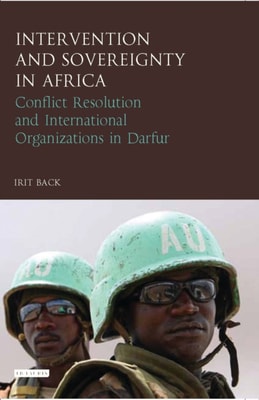
In response to the civil war in Darfur, the African Mission in Sudan (AMIS) force was established in May 2004, and by June its first contingents were on the ground.
One of the 'inventors' of the nuclear bomb, Sir Joseph Rotblat very soon turned away from weapons research to make a prolonged and principled stand against the dangers of nuclear proliferation.
In 1923 the Turkish government, under its new leader Kemal Ataturk, signed a renegotiated Balkan Wars treaty with the major powers of the day and Greece.