This book presents a cogent but comprehensive review of Taiwan's socio-economic transformation from a Japanese colony to a thriving East Asian mini-state.
This book provides an in-depth introduction to, and analysis of, the issues relating to the implementation of the recent Responsibility to Protect principle in international relationsThe Responsibility to Protect (RtoP) has come a long way in a short space of time.
This book undertakes an exploratory exercise in decolonizing criminology through engaging postcolonial and postdisciplinary perspectives and methodologies.
This book provides a critical assessment of the impact of UN Resolution 1325 by examining the effect of peacebuilding missions on increasing gender equality within conflict-affected countries.
Despite for many years receiving the highest per capita aid worldwide, the economies of the West Bank and Gaza Strip have failed to achieve any lasting developmental outcomes and suffer from major weaknesses which undermine their very survival.
This volume looks at the forms and functions of counterspeech as well as what determines its effectiveness and success from multidisciplinary perspectives.
State failure, ethnopolitical war, genocide, famine, and refugee flows are variants of a type of complex political and humanitarian crisis, exemplified during the 1990s in places like Somalia, Bosnia, Liberia, and Afghanistan.
This book is the most comprehensive collection available explaining what the military industrial complex (MIC) is, where it comes from, what damage it does, what further destruction it threatens, and what can be done and is being done to chart a different course.
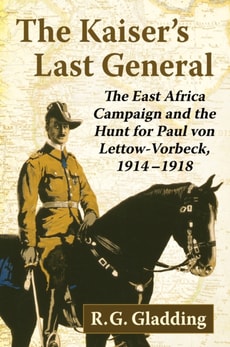
At the outbreak of World War I, Lieutenant Colonel Paul Emil von Lettow-Vorbeck, military commander of Germany's East African Colony, planned to divert British troops from Europe to East Africa.
This book presents what numerous reviewers have called the best existing argument for the abolition of war, demonstrating that war can be ended, war should be ended, war is not ending on its own, and that we must end war.
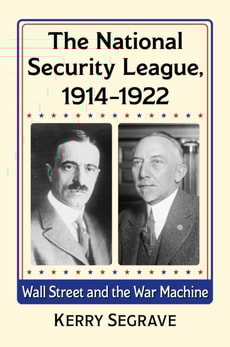
The early 20th century saw the founding of the National Security League, a nationalistic nonprofit organization committed to an expanded military, conscripted service and meritocracy.
Focusing on Ireland's literary and artistic response to World War I, this book explores works from a range of perspectives that intervened in Irish political and cultural discourse.
This first ever biography of Antarctic explorer Sir Raymond Priestley (1886-1974) covers his full (at times life-threatening) involvement with Sir Ernest Shackleton's 1907-1909 Nimrod Expedition and Robert Scott's 1910-1913 Terra Nova Expedition.
This book examines the dynamics of oil and gas conflicts within the context of federalism in Canada, an older federation with broadly a decentralized institutional design governing oil and gas, and Nigeria, a newer federation with a largely centralized design.
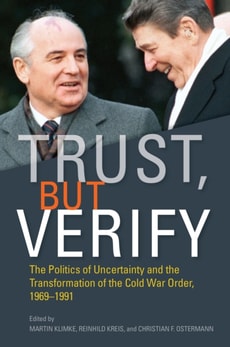
Trust, but Verify uses trust-with its emotional and predictive aspects-to explore international relations in the second half of the Cold War, beginning with the late 1960s.
In contemporary accounts of the Shining Path insurgency and Peru's internal war, the Upper Huallaga Valley has largely been overlooked-despite its former place as the country's main cocaine-producing region.
At no time in Northern Ireland's history did so many significant political initiatives occur as between 1972 and 1975, the most violent and polarised years of the region's conflict.
If your compassionate instincts are greater than the time or energy you can spare, The Difference a Day Makes is all you need to turn your good intentions into powerful action.
Beginning with the achievements of Mahatma Gandhi, and following the legacy of nonviolence through the struggles against Nazism in Europe, racism in America, oppression in China and Latin America, and ethnic conflicts in Africa and Bosnia, Michael Nagler unveils a hidden history.