This timely, insightful, and data-led book fills a gap in gang scholarship by examining gangs in rural areas, specifically focusing on youth gang activity.
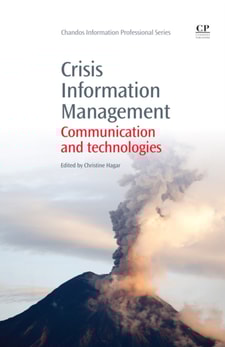
This book explores the management of information in crises, particularly the interconnectedness of information, people, and technologies during crises.
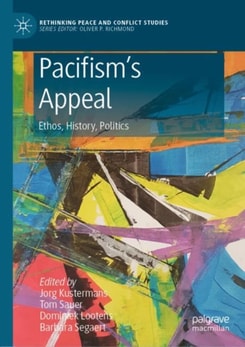
Over the last three decades, a considerable amount of work has been conducted in the field of peace studies, conflict management, peace science in economics, sociology, anthropology and management.
This volume explores three recent challenges the military faces: changing missions, changing socio-economic and demographic conditions, and end of conscription.
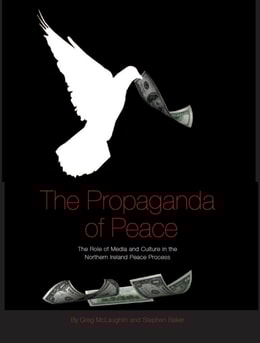
When political opponents Ian Paisley and Martin McGuiness were confirmed as First Minister and Deputy First Minister of a new Northern Ireland executive in May 2007, a chapter was closed on Northern Ireland's troubled past.
Homeland Security Cultures: Enhancing Values While Fostering Resilience explores the role that culture plays in the study and practice of homeland security in an all-hazards, whole-community, and all-of-government scope.
There have been few, if any, attempts to translate the immense library of academic studies on gender norms for a lay audience, or to illustrate practical ways in which their insights could (and should) be applied.
This book is aimed at both professionals and students who desire to deepen their understanding of the processes involved in conflict intervention and resolution effectively.
Drawing on over 150 interviews with former IRA, INLA, UVF and UFF prisoners, this is a major analysis of why Northern Ireland has seen a transition from war to peace.
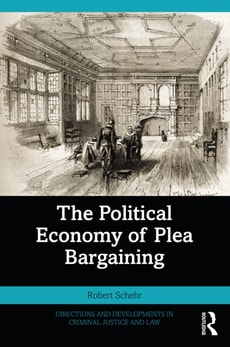
The Political Economy of Plea Bargaining provides the political, economic, and cultural context for understanding the evolution of plea bargaining as a juridical technology implemented to ensure the efficient administration of violations of criminal law.
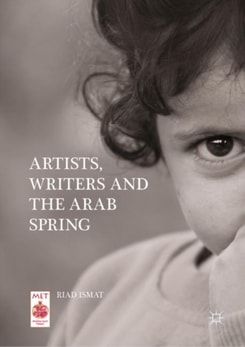
The book aims to explore the foresight of prominent Middle Eastern authors and artists who anticipated the Arab Spring, which resulted in demands for change in the repressive and corrupted regimes.
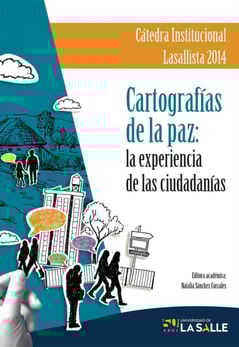
En la presente versión de la Cátedra Institucional Lasallista 2014, denominada "Cartografías para la paz: la experiencia de las ciudadanías", quisimos avizorar las posibilidades de paces desde los ciudadanos y las comunidades locales, que reclaman una reconfiguración de los actores de la guerra precisamente en relación con la civilidad misma, una institucionalidad dialogante y renovada y unas opciones distintas de desarrollo, respetuosas con el medio ambiente y con el mundo simbólicorelacional, acciones que consecuentemente permitirían la mutación de la sociedad en su conjunto.
This book explores how the experience of war and related atrocities tend to be visually expressed and how such articulations and representations are circulated and consumed.
This book assesses the important role of the Association of Southeast Asian Nations (ASEAN) in the management of regional political, security and economic relations.
This book compares different international responses to the internal conflicts in Syria and Yemen through an examination of the coverage each conflict has received in the media.
"e;Jenkins' rare combination of psychological theorizing and archival research in several countries and time periods yields a fascinating new take on the central question of when states over-estimate or under-estimate others' resolve.
First published in December 1919, this global bestseller attacking those who had made the peace in Paris after the First World War, sparked immediate controversy.
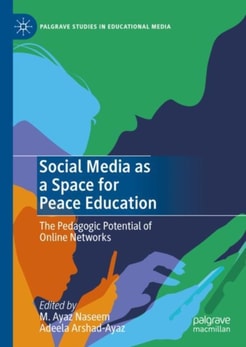
The ubiquity of the internet and social media has influenced the lives of people across the globe, including young people involved in street gangs and troublesome youth groups.
Against the backdrop of the ongoing Rohingya crisis, this book takes a close and detailed look at the rise of militant Buddhism in Sri Lanka, Burma and Thailand, and especially at the issues of 'why' and 'how' around it.
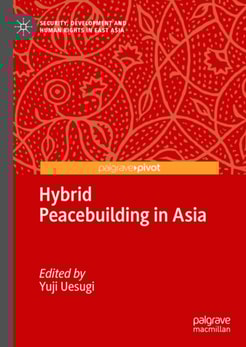
This book explores hybrid peacebuilding in Asia, focusing on local intermediaries bridging the gaps between incumbent governments and insurgents, national leadership and the grassroots constituency, and local stakeholders and international intervenors.
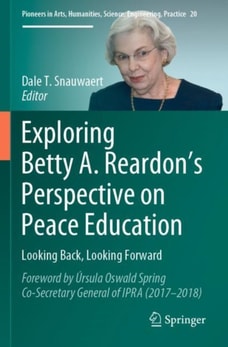
This book presents commentaries by a leading international group of peace education scholars and practitioners concerning Reardon's peace education theory and intellectual legacy.
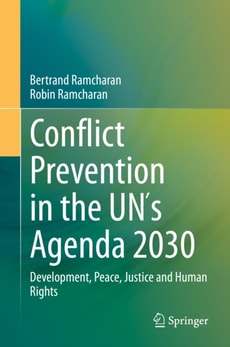
This book analyses the UN's Agenda 2030 and reveals that progress is lagging on all five interlocking and interdependent themes that are discussed: conflict prevention, development, peace, justice and human rights.
This book examines US interventions in the Democratic Republic of the Congo and Rwanda -- two countries whose post-independence histories are inseparable.
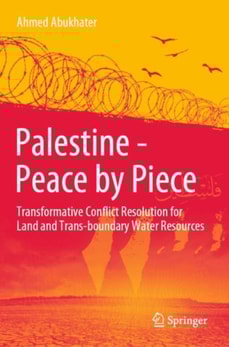
This book draws lessons and conclusions, based on the methodology outlined in the author's previous book, Water as a Catalyst for Peace (Routledge, 2013), and further charts the course to a more practical framework for achieving regional stability and justice.
This book explores the EU's effectiveness as an international mediator and provides a comparative analysis of EU mediation through three case studies: the conflict over Montenegro's independence, the Belgrade-Pristina dialogue between Kosovo and Serbia, and the Geneva International Discussions on South Ossetia and Abkhazia.
This book explores distinct forms of civil resistance in situations of violent conflict in cases across Latin America, drawing important lessons learned for nonviolent struggles in the region and beyond.