This edited volume critically assesses emerging trends in contemporary warfare and international interventionism as exemplified by the 'local turn' in counterinsurgent warfare.
By examining Libya's security architecture before and after the North Atlantic Treaty Organization (NATO) intervention in 2011, this book aims to answer three questions.
This edited volume brings together global perspectives on twenty-first century Arab revolutions to theoretically and methodologically link these contemporary uprisings to resistance and protest movements worldwide, above all in the Americas.
This book examines changes in the Persian Gulf security complex following the United States (US) invasion of Iraq in 2003, focusing on threats to the collective identities of two religious sects - Shia and Sunni.
Much has been written about reintegration of ex-combatants in a traditional or conventional disarmament, demobilisation and reintegration (DDR) programme.
This book completes Wolfgang Dietrich's path-breaking trilogy of the Many Peaces; the foundation of the highly innovative approach to peace and conflict as taught and applied at the University of Innsbruck, Austria.
This book presents a cogent but comprehensive review of Taiwan's socio-economic transformation from a Japanese colony to a thriving East Asian mini-state.
Writing from a variety of contexts, the contributors to this volume describe the ways that conflict and their efforts to engage it constructively shape their work in classrooms and communities.
This volume brings to the fore the spatial dimension of specific places and sites, and assesses how they condition - and are conditioned by - conflict and peace processes.
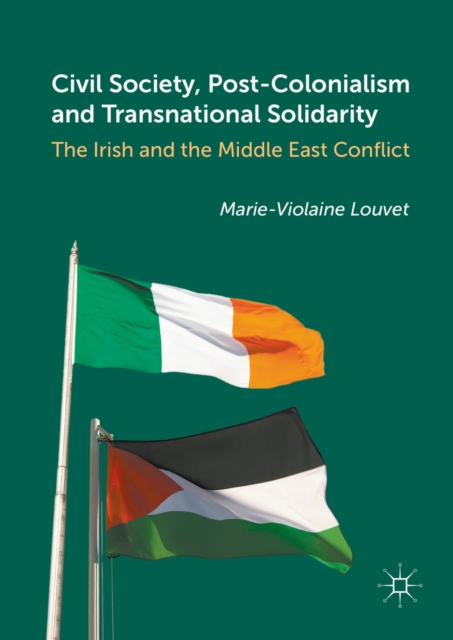
Civil Society, Post-Colonialism and Transnational Solidarity originates from Louvet's observation of the strong commitment of a layer of Irish civil society- from the man on the street to political parties, associations and trade unions- to the defence of one antagonist or the other in the Israeli-Palestinian conflict, beginning with the Six Day War in 1967 and increasingly so after the Lebanon Wars at the start of the 1980s and the Second Intifada (2000-2005).
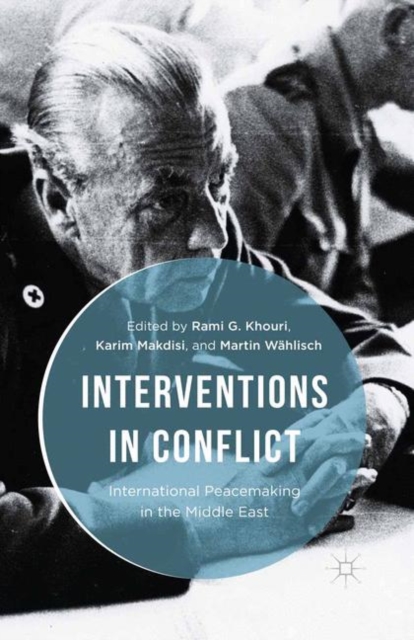
This book presents reflections of prominent international peacemakers in the Middle East, including Jimmy Carter, Lakhdar Brahimi, Jan Eliasson, Alvaro de Soto, and others.
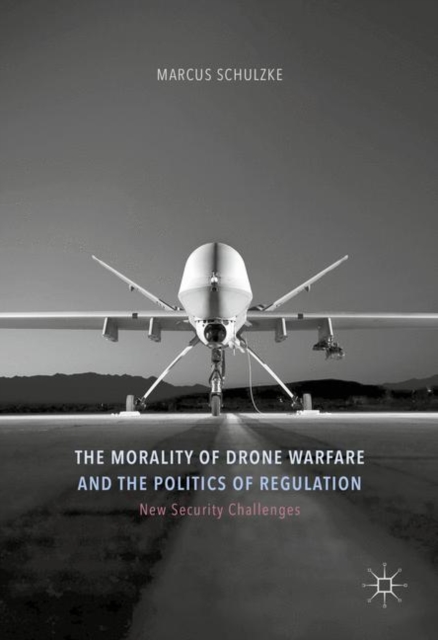
This book discusses the moral and legal issues relating to military drones, focusing on how these machines should be judged according to the principles of just war theory.
This book undertakes an exploratory exercise in decolonizing criminology through engaging postcolonial and postdisciplinary perspectives and methodologies.
This book makes a timely contribution to debates surrounding transnational political participation, the relationship between diasporas and conflict, and the gendered experiences of migrants.
The Israeli-Palestinian Conflict in the British Press provides an extensive empirical analysis of how the Israeli-Palestinian conflict has been constructed in British national newspapers since 1948.
Since the early weeks of the so-called Arab Spring, high hopes for democratic, social, and political change in the Middle East have been met with varying degrees of frustration.
This book systematically exploreshow different theoretical concepts of myth can be utilised to interpretivelyexplore contemporary international politics.
By delving into the history of geopolitics and bringing us up to date with cutting-edge case studies looking at infrastructure, terrain, and maps, this book will dispel simplistic and misleading notions about the nature of how humans interact with the environment.
Offering a comprehensive, up-to-date examination of the complex web of wars and proxy wars, revolutions and counter-revolutions that are ripping the Middle East apart, this book puts these events in their historical context and leads readers through the labyrinth that is the new Middle East.
Based on interviews with political decision-makers involved in post-Cold War case studies, this research reassesses the prevalent conclusion in the academic literature, according to which American public opinion has limited influence on military interventions, by including the level of commitment in the study of the decision-making process.
Drawing on lessons from civil society in Northern Ireland, Beyond Social Capital examines the limitations of social capital theory in deeply divided societies.
In exploring the dynamics and narratives of peace in journalism, this book explains the media's impact on the transformation of the conflict between Israelis and Palestinians.
This volume argues that a renewed commitment to sound macroeconomic policies and structural reforms is needed for countries in South East Europe, or 'the Balkans' achieve to sustainable prosperity, along with enhanced support from the international community.
Drawing on unique first-hand data from Russia's North Caucasus, this study is the first of its kind to detail the causes and contexts of individual disengagement of various types of militants: avengers, nationalists, and jihadists.
This edited volume is both a guide for educators and a resource for everyone who wants to strengthen resistance against a major atrocity that besieges human development.
Strengthening local humanitarian engagement demands not only rethinking dominant understandings of religion, but also revisiting the principles and practices of humanitarianism.