This book explores the everyday life of Muslims in late imperial China proper ("e;Sino-Muslims"e;), revealing how they integrated themselves into Chinese society, while also maintaining distinct Islamic features.
This book is the first to recover and analyse at length the extent, complexity, and character of African American responses to the Nigerian Civil War (1967-1970).
The German offensive on Stalingrad was originally intended to secure the Wehrmachts flanks, but it stalled dramatically in the face of Stalin's order: Not a Step Back!
En plena marcha victoriosa de su regimiento de infantería por territorio de Francia, en 1944, el soldado Leroy Stewart no pensaba en la gloria ni en la muerte.
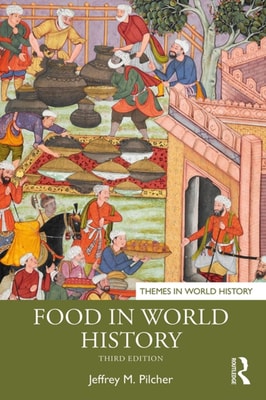
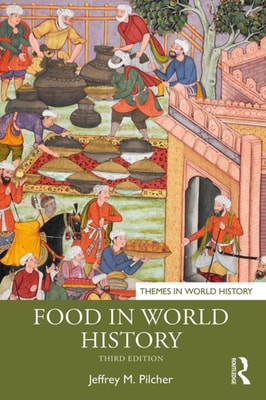
Now in its third edition, Food in World History explores culinary cultures and food politics throughout the world, from ancient times to the present day, with expanded discussions of industrialization, indigeneity, colonialism, gender, environment, and food and power.
This book explores the life and poetry of Chaim Nachman Bialik (1873-1934) in the context of European national literature between the French Revolution and World War I, showing how he helped create a modern Hebrew national culture, spurring the revival of Hebrew as a spoken language.
This book explores the life and poetry of Chaim Nachman Bialik (1873-1934) in the context of European national literature between the French Revolution and World War I, showing how he helped create a modern Hebrew national culture, spurring the revival of Hebrew as a spoken language.
With a range of case studies from every continent, the contributors to this book analyze the challenges that arise for states living with much larger neighbors, and the policies they develop to account for this asymmetry.
With a range of case studies from every continent, the contributors to this book analyze the challenges that arise for states living with much larger neighbors, and the policies they develop to account for this asymmetry.
Now in its third edition, Food in World History explores culinary cultures and food politics throughout the world, from ancient times to the present day, with expanded discussions of industrialization, indigeneity, colonialism, gender, environment, and food and power.
This edited volume offers new analytical and methodological approaches to the study of education in the post-pandemic educational context, through case studies from countries in South Asia such as Bhutan, India, Nepal, Pakistan and Sri Lanka.
Paul Harvey uses four characters that are important symbols of religious expression in the American South to survey major themes of religion, race, and southern history.
In the 1970s among peoples of the third world migration, paid employment, and urban living had caused changes in domestic economies, in decision making in households, and in the sexual division of labour and power.
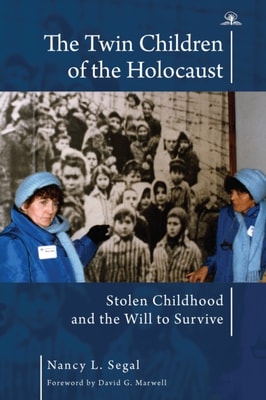
This volume is an annotated collection of original, informative, and moving photographs of the twins who survived the brutal medical experiments conducted at the Auschwitz-Birkenau death camp (1943-1945).
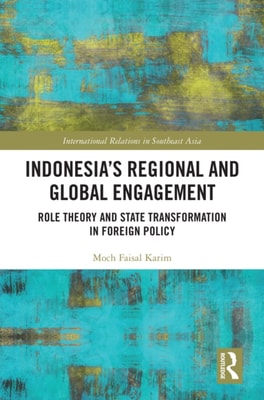
Karim examines the changes and continuity of Indonesia's foreign policy in the post-authoritarian era, under presidents Susilo Bambang Yudhoyono and Joko Widodo.
Russia and America (1987) examines the divergence between two countries organised on diametrically opposed economic principles - one centrally-planned, state-dominated, the other a highly decentralised market economy, free from significant government intervention.
Against a background of calls to prioritise the improvement of financial inclusion in Africa, this book provides an analysis of current financial inclusion measures in Southern Africa.
The Economic Development of the USSR (1982) examines the economic advances the Soviet Union made as the first major economy to adopt full-scale socialist planning.
The Economic Development of the USSR (1982) examines the economic advances the Soviet Union made as the first major economy to adopt full-scale socialist planning.
Russia and America (1987) examines the divergence between two countries organised on diametrically opposed economic principles - one centrally-planned, state-dominated, the other a highly decentralised market economy, free from significant government intervention.
The Disintegration of the Soviet Economic System (1992) examines in detail the collapse of the Soviet economic system, and is set in its political context, both international and domestic.
Soviet Central Asia (1989) explores the economic development of the four republics of Central Asia that suffered under Moscow's economic policies - Uzbekistan, Tajikistan, Turkmenistan and Kirghizia.
Against a background of calls to prioritise the improvement of financial inclusion in Africa, this book provides an analysis of current financial inclusion measures in Southern Africa.
This book interrogates the identity politics involved in framing Colombian diasporas, examining the ways that creative writers, directors, performers and artists negotiate collective and personal experiences that shape their identities through their art and cultural productions.
This book interrogates the identity politics involved in framing Colombian diasporas, examining the ways that creative writers, directors, performers and artists negotiate collective and personal experiences that shape their identities through their art and cultural productions.
In this unflinching, detailed portrait of a forgotten group of Nazi forced labor survivors, author Sophie Horodowicz Knab reveals the personal stories of hundreds of Polish women who were forced to leave their homes to work in Nazi German factories and farms during World War II.
This book explores the ways in which memories of Stalin-era repression and displacement manifest across times and places through diverse forms of materialization.
Karim examines the changes and continuity of Indonesia's foreign policy in the post-authoritarian era, under presidents Susilo Bambang Yudhoyono and Joko Widodo.
Soviet Central Asia (1989) explores the economic development of the four republics of Central Asia that suffered under Moscow's economic policies - Uzbekistan, Tajikistan, Turkmenistan and Kirghizia.
Focusing on the conflict and coordination between social development and political order in social governance, this book investigates the causes, evolution, and manifestations of such tensions in contemporary China, combining both qualitative and quantitative analysis.