Christian Political Ethics brings together leading Christian scholars of diverse theological and ethical perspectives--Catholic, Lutheran, Calvinist, and Anabaptist--to address fundamental questions of state and civil society, international law and relations, the role of the nation, and issues of violence and its containment.
In Gender, Class, and Freedom in Modern Political Theory, Nancy Hirschmann demonstrates not merely that modern theories of freedom are susceptible to gender and class analysis but that they must be analyzed in terms of gender and class in order to be understood at all.
Emilio Gentile, an internationally renowned authority on fascism and totalitarianism, argues that politics over the past two centuries has often taken on the features of religion, claiming as its own the prerogative of defining the fundamental purpose and meaning of human life.
Covenantal Rights is a groundbreaking work of political theory: a comprehensive, philosophically sophisticated attempt to bring insights from the Jewish political tradition into current political and legal debates about rights and to bring rights discourse more fully into Jewish thought.
Using the written word as her witness statement, Jessica Willis Fisher gives a lacerating portrait of a girl finding her voice after years of being silenced and an unforgettable story of risk and faith.
Acclaimed historian and New York Times bestselling author Craig Shirley delivers a compelling account of 1945, particularly the watershed events in the month of April, that details how America emerged from World War II as a leading superpower.
FULLY UPDATED'A fascinating and often violent odyssey, spanning more than 1,000 years of conflict and culture'INDEPENDENTFlat, fertile, and fatally tempting to invaders, for centuries Ukraine was fought over by more powerful neighbours.
'As in a good novel, the people, their feelings and reactions are instantly recognisable and as fresh and immediate today as they were then' GUARDIAN'She writes vividly and movingly' DAILY TELEGRAPH26th September 1939.
Covenantal Rights is a groundbreaking work of political theory: a comprehensive, philosophically sophisticated attempt to bring insights from the Jewish political tradition into current political and legal debates about rights and to bring rights discourse more fully into Jewish thought.
How secularism has been used to justify the subordination of womenJoan Wallach Scott's acclaimed and controversial writings have been foundational for the field of gender history.
Why churches in some democratic nations wield enormous political power while churches in other democracies don'tIn some religious countries, churches have drafted constitutions, restricted abortion, and controlled education.
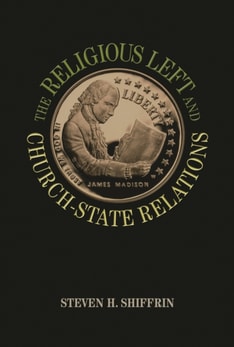
In The Religious Left and Church-State Relations, noted constitutional law scholar Steven Shiffrin argues that the religious left, not the secular left, is best equipped to lead the battle against the religious right on questions of church and state in America today.
An award-winning history of the transformation of Europe between 1989 and todayThe year 1989 brought the fall of the Berlin Wall and the collapse of communism in Eastern Europe.
A concise and authoritative introduction to Islamic political ideasIn sixteen concise chapters on key topics, this book provides a rich, authoritative, and up-to-date introduction to Islamic political thought from the birth of Islam to today, presenting essential background and context for understanding contemporary politics in the Islamic world and beyond.
Published to commemorate the 80th anniversary of VE Day'[The] stories are every bit as dramatic as those from the front lines and Barrett and Calvi have done an incredible job.
Philosopher Myisha Cherry teaches us the right ways to deal with wrongdoing in our lives and the worldSages from Cicero to Oprah have told us that forgiveness requires us to let go of negative emotions and that it has a unique power to heal our wounds.
To discover how war can affect the status of women in industrial countries, Leila Rupp examines mobilization propaganda directed at women in Nazi Germany and the United States.
A Sunday Times bestselling landmark history of the alliance that won the war and made the peace from the author of Appeasing Hitler An astonishing achievement.
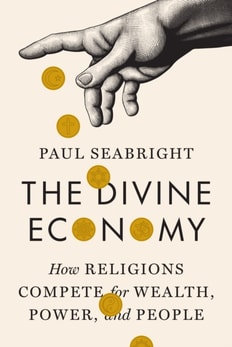
Longlisted for the Financial Times and Schroders Business Book of the Year AwardA novel economic interpretation of how religions have become so powerful in the modern worldReligion in the twenty-first century is alive and well across the world, despite its apparent decline in North America and parts of Europe.
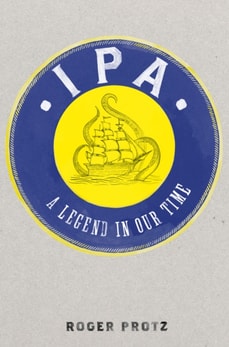
This is a long-awaited book from Roger Protz, a highly respected authority on beer, on the rebirth of IPA or India Pale Ale - one of the most popular styles in today's craft beer revolution.
'I wept, real tears, at least seven times reading this novel, and I intend to return to these pages often' - Moriel Rothman-Zecher, author of Before All the WorldFor fans of Life After Life by Kate Atkinson and All the Light We Cannot See by Anthony Doerr, Rooms for Vanishing is an epic novel of grief and hope and one family blown apart - across the globe, across time, across parallel possibilities - by war.
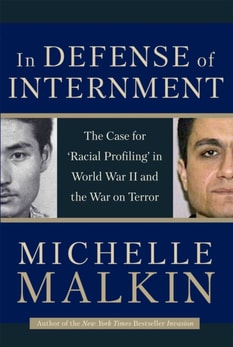
Everything you've been taught about the World War II "e;internment camps"e; in America is wrong:They were not created primarily because of racism or wartime hysteriaThey did not target only those of Japanese descentThey were not Nazi-style death campsIn her latest investigative tour-de-force, New York Times best-selling author Michelle Malkin sets the historical record straight-and debunks radical ethnic alarmists who distort history to undermine common-sense, national security profiling.
'Powerful, absorbing and endlessly thought-provoking' SINCLAIR MCKAYA radical new history of history's most brutal struggle for survival between imperial powers.