For students of literature, a background in literary theory will provide tools for analysis that yield a rich understanding of literary texts as well as a variety of approaches to writing about them.
How the King James Bible has influenced the style of the American novel from Melville to Cormac McCarthyThe simple yet grand language of the King James Bible has pervaded American culture from the beginning-and its powerful eloquence continues to be felt even today.
This book examines the correspondence between international relations (IR) theories of structural realism and constructivism and paintings, notably the artwork of Mark Rothko and Jackson Pollock, in a game theory setting.
This book examines the correspondence between international relations (IR) theories of structural realism and constructivism and paintings, notably the artwork of Mark Rothko and Jackson Pollock, in a game theory setting.
Syntactic Argumentation and the Structure of English (SASE) presents the major theoretical developments in generative syntax and the empirical arguments motivating them.
This collection of essays brings together a selection of some of the most important studies of Professor Ivo Assad Ibri about the work of Charles Sanders Peirce.
The book provides a historical (with an outline of the history of the concept of truth from antiquity to our time) and systematic exposition of the semantic theory of truth formulated by Alfred Tarski in the 1930s.
This book offers an in-depth analysis of the case of Corbett v Corbett, a landmark in terms of law's engagement with sexual identity, marriage, and transgender rights.
This book draws on visual data, ranging from advertisements to postage stamps to digital personal photography, to offer a complex interpretation of the different social functions realised by these texts as semiotic artefacts.
From the most prominent thinkers in Latin American philosophy, literature, politics, and social science comes a challenge to conventional theories of globalization.
In a postcolonial world, where structures of power, hierarchy, and domination operate on a global scale, writers face an ethical and aesthetic dilemma: How to write without contributing to the inscription of inequality?
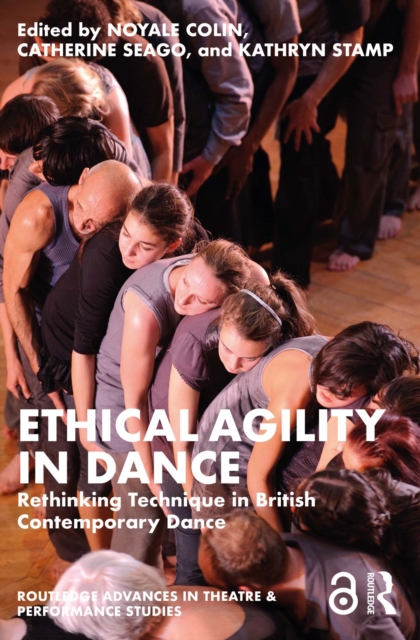
This edited collection examines the potential of dance training for developing socially engaged individuals capable of forging ethical human relations for an ever-changing world and in turn frames dance as a fundamental part of human experience.
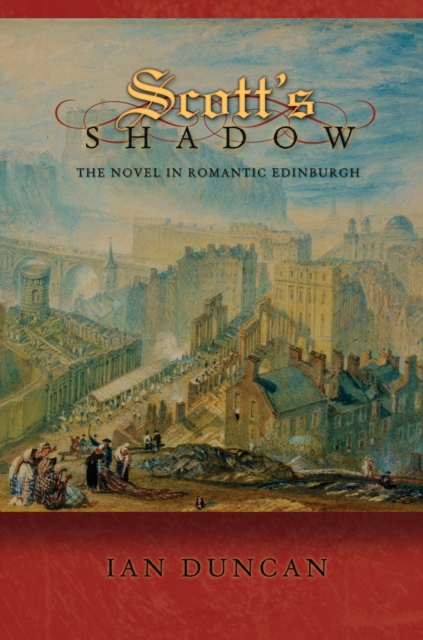
Scott's Shadow is the first comprehensive account of the flowering of Scottish fiction between 1802 and 1832, when post-Enlightenment Edinburgh rivaled London as a center for literary and cultural innovation.
A partir de un marco científico, histórico y filosófico, el autor plantea un diálogo entre la complejidad y la biosemiótica acentuando la importancia de la semiosis como un componente substancial de la vida, en tanto los signos, su significado e interpretación existen en todos los sistemas vivos.
This book offers fresh critical insights to the field of children's literature translation studies by applying the concept of transcreation, established in the creative industries of the globalized world, to bring to the fore the transformative, transgressional and creative aspects of rewriting for children and young audiences.
Ocho entrevistas a reconocidos investigadores de la escritura se agrupan en el presente libro para abonar a la reflexión sobre la importancia de este proceso en la vida universitaria.
This book attempts to solve the question whether semiotics is a methodology as is generally held and if the studies of meaning and the mind can shed light on a series of metaphysical issues, so that the edifice of semiotics could be erected on a philosophical ground.
This book is the third in a three-volume set that celebrates the career and achievements of Cliff Goddard, a pioneer of the Natural Semantic Metalanguage approach in linguistics.
This book is the second in a three-volume set that celebrates the career and achievements of Cliff Goddard, a pioneer of the Natural Semantic Metalanguage approach in linguistics.
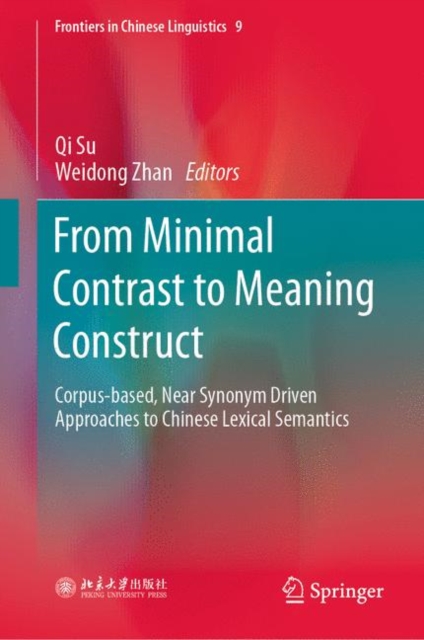
This book offers new perspectives on the study of Chinese lexical semantics, as well as discourse analysis and cognitive pragmatics based on lexical semantics.
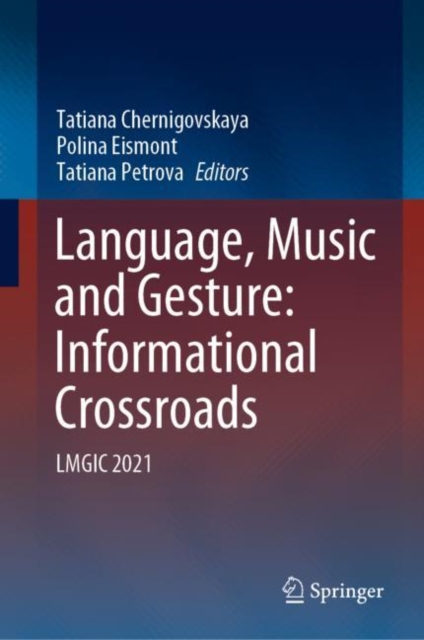
This book brings together selected revised papers representing a multidisciplinary approach to language, music, and gesture, as well as their interaction.
This book attempts to solve the question whether semiotics is a methodology as is generally held and if the studies of meaning and the mind can shed light on a series of metaphysical issues, so that the edifice of semiotics could be erected on a philosophical ground.
This book brings together selected revised papers representing a multidisciplinary approach to language, music, and gesture, as well as their interaction.
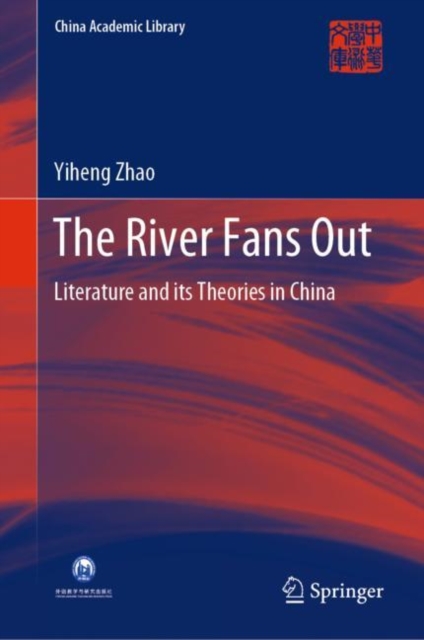
This book presents 18 highly influential essays on Chinese literature and semiotics by Professor Zhao Yiheng, including his analysis and discussions of the development of Chinese literature and its characteristics from traditional to modern times.