This is the first serious attempt to understand modern Iraq through a close examination of the political discourse used by the Ba'th regime and its leader, Saddam Hussein.
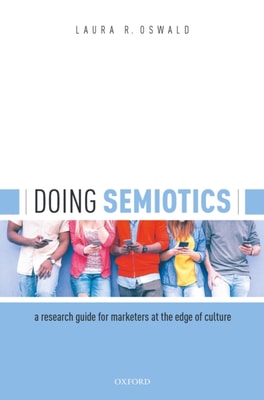
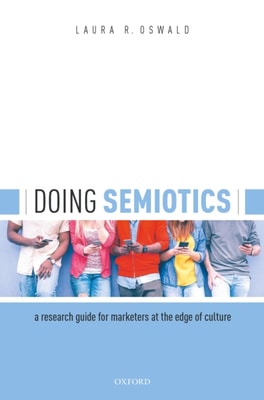
The semiotics discipline - a hybrid of communication science and anthropology - accounts for the deep cultural codes that structure communication and sociality, endow things with value, move us through constructed space, and moderate our encounters with change.
The semiotics discipline - a hybrid of communication science and anthropology - accounts for the deep cultural codes that structure communication and sociality, endow things with value, move us through constructed space, and moderate our encounters with change.
Everyday consumers buy into the concept of brands and their associated meanings - the perception of quality, a symbolic relationship, a vicarious experience, or even a sense of identity.
In global consumer culture, brands structure an economy of symbolic exchange that gives value to the meanings consumers attach to the brand name, logo, and product category.
Everyday consumers buy into the concept of brands and their associated meanings - the perception of quality, a symbolic relationship, a vicarious experience, or even a sense of identity.
This acclaimed short study, originally published in 1983, and now thoroughly updated, elucidates the varied theoretical contributions of Roland Barthes (1915-80), the 'incomparable enlivener of the literary mind' whose lifelong fascination was with the way people make their world intelligible.
The Oxford Handbook of Music and Advertising is an essential guide to the crucial role that music plays in relation to the audio or audiovisual advertising message, from the perspectives of its creation, interpretation, and reception.
The Oxford Handbook of Music and Advertising is an essential guide to the crucial role that music plays in relation to the audio or audiovisual advertising message, from the perspectives of its creation, interpretation, and reception.
Among the most prominent scholars of language and law is Peter Tiersma, a law professor at Loyola Law School with a doctorate in linguistics (co-editor of The Oxford Handbook of Language and Law).
Dance in TV advertisements has long been familiar to Americans as a silhouette dancing against a colored screen, exhibiting moves from air guitar to breakdance tricks, all in service of selling the latest Apple product.
Dance in TV advertisements has long been familiar to Americans as a silhouette dancing against a colored screen, exhibiting moves from air guitar to breakdance tricks, all in service of selling the latest Apple product.
This is the first serious attempt to understand modern Iraq through a close examination of the political discourse used by the Ba'th regime and its leader, Saddam Hussein.
In this fascinating, provocative account, eminent philosopher John Searle shows how our everyday actions and cultural knowledge are of a metaphysical complexity that is truely staggering.
This engaging book examines the origins and first effects of the concept 'legal semiotics', focusing on the inventor of the term, Roberta Kevelson (1931-1998).
In our everyday speech we represent events and situations, but we also provide commentary on these representations, situating ourselves and others relative to what we have to say and situating what we say in larger contexts.
This book examines the nature of human language and the ideology of linguistic legitimacy - the common set of beliefs about language differences that leads to the rejection of some language varieties and the valorization of others.
This book uncovers properties of focus association with 'only' by examining the interaction between the particle and bare (or "e;evaluative"e;) gradable terms.
This book contains papers that were written to honor Professor Lyn Frazier on the occasion of her retirement from the University of Massachusetts Amherst.
This book proposes an interdisciplinary methodology for developing an intercultural use of law so as to include cultural differences and their protection within legal discourse; this is based on an analysis of the sensory grammar tacitly included in categorizations.