This book examines the problems, pitfalls and opportunities of different models of assessing research quality, drawing on studies from around the world.
Whether you are just starting to create a digital repository or your institution already has a fully-developed program, this book provides strategies for building and maintaining a high-use, cohesive, and fiscally-responsible repository with collections that showcase your institution.
This book provides a companion volume to Digital Library Economics and focuses on the 'how to' of managing digital collections and services (of all types) with regard to their financing and financial management.
Volume 37 of Advances in Librarianship presents detailed examples of local and regional mergers and collaborations and serves as a companion to Volume 36 which presented a comprehensive broad review of the factors that lead to mergers and other alliances, and the methods used to ensure effective and successful collaborations.
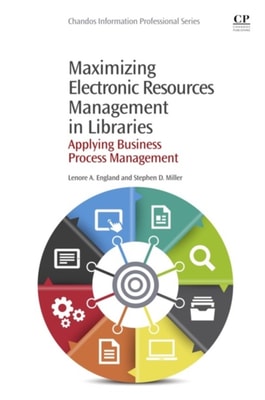
Maximizing Electronic Resources Management in Libraries: Applying Business Process Management examines the use of Business Process Management (BPM) and the ways it can be beneficially applied to electronic resources management (ERM) to help organize processes in libraries.
This book reviews the role of information literacy (IL) in developing employability skills, personal health management and informal learning from a variety of areas including: information policy issues, information usage and training needs and skills development.
Libraries and Identity summarizes the role of institutional identity in the emergence of new types of libraries such as joint-use libraries and digital libraries.
This book, divided into two parts, provides an introduction to the quality management issues and gives a general overview to the use of ISO 9001 in the library environment.
The digital is the new milieu in which academic libraries must serve their patrons; but how best to utilize the slew of digital devices and their surrounding trends?
The changing nature of education and training systems in Japanese firms is reviewed with focus on developments of management education in Japanese universities.
A Librarian's Guide on How to Publish discusses the publishing strategies needed for the development of skills that are essential for successful job requirements and the production of quality print and electronic publications.
Whilst external quality audits have been in place for more than a decade in some countries, limited research exists on the extent to which such audits have been effective in improving systems and processes for quality assurance in higher education institutions, and the extent to which such audits have improved academic standards, outcomes and student experience.
Private Philanthropic Trends in Academic Libraries is written with the senior library administrator and the development officers of academic institutions in mind.
Many modern technologies give the impression that they somehow work by magic, particularly when they operate automatically and their mechanisms are invisible.
Becoming a Lean Library: Lessons from the World of Technology Start-ups provides a guide to the process and approach necessary to manage product development.
An Evaluation of the Benefits and Value of Libraries provides guidance on how to evaluate libraries and contains many useful examples of methods that can be used throughout this process.
Many libraries and museums have adapted to the current information climate, working with Google, Facebook, Twitter and iTunes to deliver information for their users.
Beneficial to scholars and students in the fields of media and communication, politics and technology, this book outlines the significant role of search engines in general and Google in particular in widening the digital divide between individuals, organisations and states.
Qualitative Research and the Modern Library examines the present-day role and provides suggestions for areas that might be suited to this type of research for the purposes of evaluation.
This book is aimed at the practicing academic librarian, especially those working on the 'front lines' of reference, instruction, collection development, and other capacities that involve dealing directly with library patrons in a time of changing scholarly communication paradigms.
This book explores issues surrounding all aspects of visual collection management, taken from real-world experience in creating management systems and digitizing core content.
In a time when libraries have to face constant change, this book provides examples and advises on how to lead when change is needed (for example, when quality management is implemented or when libraries have to merge or to relocate).