Whilst enterprise technology departments have been steadily building their information and knowledge management portfolios, the Internet has generated new sets of tools and capabilities which provide opportunities and challenges for improving and enriching knowledge work.
In a world where computing power, ubiquity and connectivity create powerful new ways to facilitate learning, this book examines how librarians and information professionals can utilize emerging technologies to expand service and resource delivery.
This book discusses the topic of 'weblogs and libraries' from two main perspectives: weblogs as sources of information for libraries and librarians; and weblogs as tools that libraries can use to promote their services and to provide a means of communication with their clients.
A straightforward overview with minimum technical descriptions of the underlying networking principles, standards, applications and uses of the Internet.
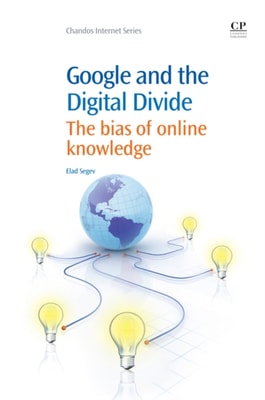
Beneficial to scholars and students in the fields of media and communication, politics and technology, this book outlines the significant role of search engines in general and Google in particular in widening the digital divide between individuals, organisations and states.
Effective Information Retrieval from the Internet discusses practical strategies which enable the advanced web user to locate information effectively and to form a precise evaluation of the accuracy of that information.
The originality of this book, which deals with such a new subject matter, lies in the application of methods and concepts never used before - such as ontologies and taxonomies, as well as thesauri - to the ordering of knowledge based on primary information.
This book addresses the question of how knowledge is currently documented, and may soon be documented in the context of what it calls 'semantic publishing'.
Aimed at students and professionals within Library and Information Services (LIS), this book is about the power and potential of ontologies to enhance the electronic search process.
This book attacks the often implicit and damaging assumption that 'everyone' is online and that 'everyone' is using online resources within the specified parameters of employers, government and national laws.
An exciting challenge to how the internet and ICT have been understood in academia and popular culture and shows how important 'cultural' assumptions are in how we understand technology.
The sustainability of Networked Collaborative Learning (NCL) is a key topic of discussion amongst the institutions where it has been or may potentially be introduced.
The Google Generation examines original and secondary research evidence from international sources to determine whether there is a younger generation of learners who are adopting different styles of information search behaviour from older generations as a function of their patterns of use of online technologies.
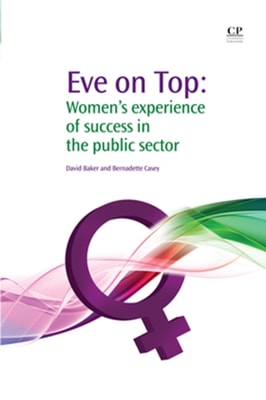
Eve on Top takes an in-depth look at the position of women in senior positions in the public sector using a case-study approach, based on ten 'successful' women and their background, upbringing, career progression, successes and failures, challenges and experiences.
Leadership Scaffolding discusses the practicalities for middle managers of leadership - providing readers with the framework or scaffolding to being an effective manager.
Written by two intellectual property (IP) lawyers, experienced in contentious and non-contentious matters, Intellectual Property deals with different types of intellectual property protection and how to apply for them.
From a traditional role of information gatekeepers, librarians have been challenged to become pedagogues who teach and counsel students in information literacy.
The on going movement to electronic collections presents many exciting new service opportunities for libraries, as well as creating materials management, resource, and service challenges.
This book provides an overview of digital rights management (DRM), including: an overview of terminology and issues facing libraries, plus an overview of the technology including standards and off-the-shelf products.
The management of organisational information assets and the development of information policies have received much attention in recent times with organisations challenging themselves to think about 'information' and 'knowledge' as key organisational assets that require careful management.
From full-text article databases to digitized collections of primary source materials, newly emerging electronic resources have radically impacted how research in the humanities is conducted and discovered.
In this information age it is widely recognised that, in order to maintain relevance and to gain a competitive edge, libraries and other organisations in the business of information must continuously assess their roles, collections, services and perhaps most importantly, their business practices.
Whether you are just starting to create a digital repository or your institution already has a fully-developed program, this book provides strategies for building and maintaining a high-use, cohesive, and fiscally-responsible repository with collections that showcase your institution.
Aimed at academic library practitioners, this book describes how e-reserve services can evolve and adapt to the changing virtual learning environment of higher education.
Making a Collection Count connects the various pieces of library collection management, such as selection, cataloguing, shelving, circulation and weeding, and teaches readers how to gather and analyze data from each point in a collection's life cycle.
Transforming Research Libraries for the Global Knowledge Society explores critical aspects of research library transformation needed for successful transition into the 21st century multicultural environment.