Museums, Refugees and Communities explores the ways in which museums in Germany, The Netherlands and the UK have responded to the complexities and ethical dilemmas involved in discussing the reasons for, and issues surrounding, contemporary refugee displacements.
Contemporary Art in Heritage Spaces considers the challenges that accompany an assessment of the role of contemporary art in heritage contexts, whilst also examining ways to measure and articulate the impact and value of these intersections in the future.
Shakespeare and Tourism provides a dialogical mapping of Shakespeare studies and touristic theory through a collection of essays by scholars on a wide range of material.
Shakespeare and Tourism provides a dialogical mapping of Shakespeare studies and touristic theory through a collection of essays by scholars on a wide range of material.
Museums, Refugees and Communities explores the ways in which museums in Germany, The Netherlands and the UK have responded to the complexities and ethical dilemmas involved in discussing the reasons for, and issues surrounding, contemporary refugee displacements.
Chartism, the British mass movement for democratic and social rights in the 1830s and 1840s, was profoundly shaped by the radical tradition from which it emerged.
Chartism, the British mass movement for democratic and social rights in the 1830s and 1840s, was profoundly shaped by the radical tradition from which it emerged.
The Routledge Handbook of Religious and Spiritual Tourism provides a robust and comprehensive state-of-the-art review of the literature in this growing sub-field of tourism.
The Routledge Handbook of Religious and Spiritual Tourism provides a robust and comprehensive state-of-the-art review of the literature in this growing sub-field of tourism.
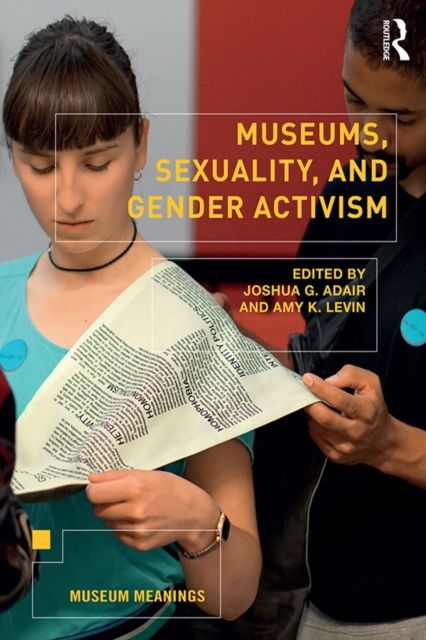
Museums, Sexuality, and Gender Activism examines the role of exhibitionary institutions in representing LGBTQ+ people, cisgender women, and nonbinary individuals.
Museums, Sexuality, and Gender Activism examines the role of exhibitionary institutions in representing LGBTQ+ people, cisgender women, and nonbinary individuals.
The UNESCO Convention for the Safeguarding of the Intangible Cultural Heritage came into force in 2006, framing the international and national practices and policies associated with intangible cultural heritage.
The UNESCO Convention for the Safeguarding of the Intangible Cultural Heritage came into force in 2006, framing the international and national practices and policies associated with intangible cultural heritage.
The Routledge International Handbook of New Digital Practices in Galleries, Libraries, Archives, Museums and Heritage Sites presents a fascinating picture of the ways in which today's cultural institutions are undergoing a transformation through innovative applications of digital technology.
The Routledge International Handbook of New Digital Practices in Galleries, Libraries, Archives, Museums and Heritage Sites presents a fascinating picture of the ways in which today's cultural institutions are undergoing a transformation through innovative applications of digital technology.
This book provides a comprehensive discussion of the phenomenon of World Heritage tourism through a critical, global perspective that encompasses both supply and demand.
This book provides a comprehensive discussion of the phenomenon of World Heritage tourism through a critical, global perspective that encompasses both supply and demand.
Human-Centered Built Environment Heritage Preservation addresses the question of how a human-centred conservation approach can and should change practice.
Human-Centered Built Environment Heritage Preservation addresses the question of how a human-centred conservation approach can and should change practice.
This book offers a compelling study of contemporary developments in European migration studies and the representation of migration in the arts and cultural institutions.
This book offers a compelling study of contemporary developments in European migration studies and the representation of migration in the arts and cultural institutions.
Conflict and Battlefield Archaeology is a growing and important field in archaeology, with implications on the state of the world today: how humanity has prepared for, reacted to, and dealt with the consequences of conflict at a national and international level.
In Risk Analysis of Complex and Uncertain Systems acknowledged risk authority Tony Cox shows all risk practitioners how Quantitative Risk Assessment (QRA) can be used to improve risk management decisions and policies.