This book should be considered as an introduction to a special dass of hierarchical systems of optimal control, where subsystems are described by partial differential equations of various types.
Motivation Stochastic Linear Programming with recourse represents one of the more widely applicable models for incorporating uncertainty within in which the SLP optimization models.
Human Face Recognition Using Third-Order Synthetic Neural Networks explores the viability of the application of High-order synthetic neural network technology to transformation-invariant recognition of complex visual patterns.
At present, concerning intensive development of computer hardware and software, computer-based methods for modeling of difficult problems have become the main technique for theoretical and applied investigations.
This book contains the proceedings of the NATO Advanced Research Workshop on "e;Resonant Tunneling in Semiconductors: Physics and Applications"e;, held at Escorial, Spain, on May 14-18, 1990.
Discrete Event Systems: Analysis and Control is the proceedings of WODES2000 (the 5th Workshop on Discrete Event Systems, held in Ghent, Belgium, on August 21-23, 2000).
Stochastic Resonance: Theory and Applications deals with the theory of noise-added systems and in particular with Stochastic Resonance, a quite novel theory that was introduced in the 1980s to provide better understanding of some natural phenomena (e.
Feedback Control Systems: A Fast Track Guide for Scientists and Engineers is an essential reference tool for: Electrical, mechanical and aerospace engineers who are developing or improving products, with a need to use feedback control systems.
This book is a result of the ISD'99, Eight International Conference on Infonnation Systems Development-Methods and Tools, Theory, and Practice held August 11-13, 1999 in Boise, Idaho, USA.
Computing Tools for Modeling, Optimization and Simulation reflects the need for preserving the marriage between operations research and computing in order to create more efficient and powerful software tools in the years ahead.
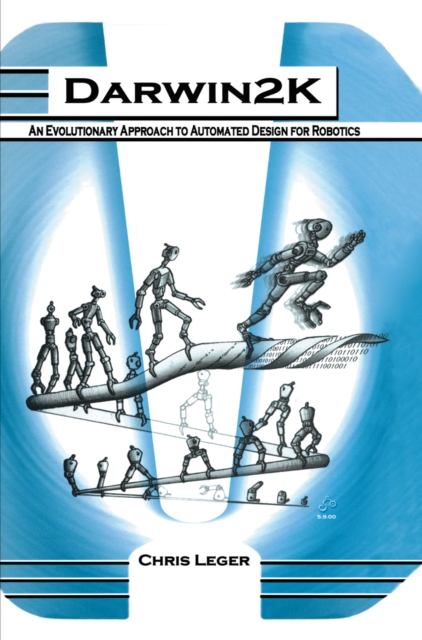
Darwin2K: An Evolutionary Approach to Automated Design for Robotics is an essential reference tool for researchers, professionals, and students involved in robot design or in evolutionary synthesis, design, and optimization.
The disciplines of computer science and operations research (OR) have been linked since their origins, each contributing to the dramatic advances of the other.
This book is an edited selection of the papers presented at the International Workshop on VLSI for Artifidal Intelligence and Neural Networks which was held at the University of Oxford in September 1990.
This book brings together in one place important contributions and state-of-the-art research in the rapidly advancing area of analog VLSI neural networks.
Based on chaos theory two very important points are clear: (I) random- looking aperiodic behavior may be the product of determinism, and (2) nonlinear problems should be treated as nonlinear problems and not as simplified linear problems.
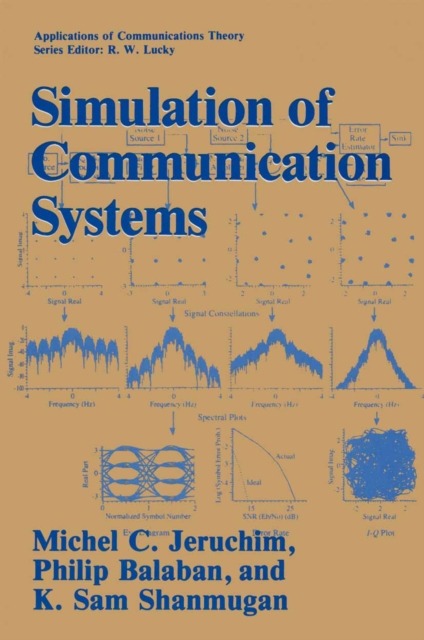
Simulation may be defined as the discipline whose objective is to imitate one or more aspects of reality in a way that is as close to that reality as possible; indeed, an apt synonym that is gaining some currency is artificial reality.
This book is based on a number of systems concepts, of which the following are emphasized here: oThe interacting systems of society and the environment are dynamic and evolution- ary oEvolution of these systems carries them through stages of differential stability and instability, continuity and discontinuity oAssociated with evolution and instability is structural change that is essentially irre- versible oThe present is a stage of world transformation that may not have been equaled for decades or even centuries oPolicies and decisions must match the times, in the present case the stage of world transformation The time 11:59:59 PM, approximately, on December 31, 2000 has an impor- tant symbolic meaning.
Connectionist Speech Recognition: A Hybrid Approach describes the theory and implementation of a method to incorporate neural network approaches into state of the art continuous speech recognition systems based on hidden Markov models (HMMs) to improve their performance.
Neural Networks in Robotics is the first book to present an integrated view of both the application of artificial neural networks to robot control and the neuromuscular models from which robots were created.
Since the late 1960s, there has been a revolution in robots and industrial automation, from the design of robots with no computing or sensorycapabilities (first-generation), to the design of robots with limited computational power and feedback capabilities (second-generation), and the design of intelligent robots (third-generation), which possess diverse sensing and decision making capabilities.
Fuzzy logic is `a recent revolutionary technology' which has brought together researchers from mathematics, engineering, computer science, cognitive and behavioral sciences, etc.
Engineers have long been fascinated by how efficient and how fast biological neural networks are capable of performing such complex tasks as recognition.
Hybrid Neural Network and Expert Systems presents the basics of expert systems and neural networks, and the important characteristics relevant to the integration of these two technologies.
Computation in Neurons and Neural Systems contains the collected papers of the 1993 Conference on Computation and Neural Systems which was held between July 31--August 7, in Washington, DC.
When confronted with the hows and whys of nature's computational engines, some prefer to focus upon neural function: addressing issues of neural system behavior and its relation to natural intelligence.
An Analog VLSI System for Stereoscopic Vision investigates the interaction of the physical medium and the computation in both biological and analog VLSI systems by synthesizing a functional neuromorphic system in silicon.
In earlier forewords to the books in this series on Discrete Event Dynamic Systems (DEDS), we have dwelt on the pervasive nature of DEDS in our human-made world.
This volume includes papers presented at the Third Annual Computation and Neural Systems meeting (CNS*94) held in Monterey California, July 21 - July 26, 1994.