This book offers a thorough introduction to the highly promising complex agent-based approach to economics, in which agent-based models (ABMs) are used to represent economic systems as complex and evolving systems composed of heterogeneous agents of limited rationality who interact with each other, generating the system's emergent properties in the process.
The book conclusively solves problems associated with the control and estimation of nonlinear and chaotic dynamics in financial systems when these are described in the form of nonlinear ordinary di?
Stabilizing and Optimizing Control for Time-Delay Systems introduces three important classes of stabilizing controls for time-delay systems: non-optimal (without performance criteria); suboptimal (including guaranteed costs); and optimal controls.
Providing an introduction to stochastic optimal control in infinite dimension, this book gives a complete account of the theory of second-order HJB equations in infinite-dimensional Hilbert spaces, focusing on its applicability to associated stochastic optimal control problems.
This book describes power management integrated circuits (PMIC), for power converters and voltage regulators necessary for energy efficient and small form factor systems.
Within this carefully presented monograph, the authors extend the universal phenomenon of synchronization from finite-dimensional dynamical systems of ordinary differential equations (ODEs) to infinite-dimensional dynamical systems of partial differential equations (PDEs).
This book lays the foundation for the study of input-to-state stability (ISS) of partial differential equations (PDEs) predominantly of two classes-parabolic and hyperbolic.
This third of three volumes from the inaugural NODYCON, held at the University of Rome, in February of 2019, presents papers devoted to New Trends in Nonlinear Dynamics.
Atlas of Human Cranial Macromorphoscopic Traits synthesizes macromorphoscopic traits and their analysis in an accessible manner, providing detailed descriptions and examples of the various character state manifestations intended for use in classrooms, laboratories, and in the field.
Criminal Psychology: Forensic Examination Protocols is a compact practitioner's guide to essential forensic concepts and protocols related to the evaluation and assessment of crime and criminals.
This monograph introduces breakthrough control algorithms for partial differential equation models with moving boundaries, the study of which is known as the Stefan problem.
This book provides a valuable reference for digital forensics practitioners and cyber security experts operating in various fields of law enforcement, incident response and commerce.
"e;Digital transformation"e; sounds harmless, given that the explosion in data volumes, processing power and Artificial Intelligence has driven humanity and the entire world to a point of no return.
Forensic Examination of Signatures explains the neuroscience and kinematics of signature production, giving specific details of research carried out on the topic.
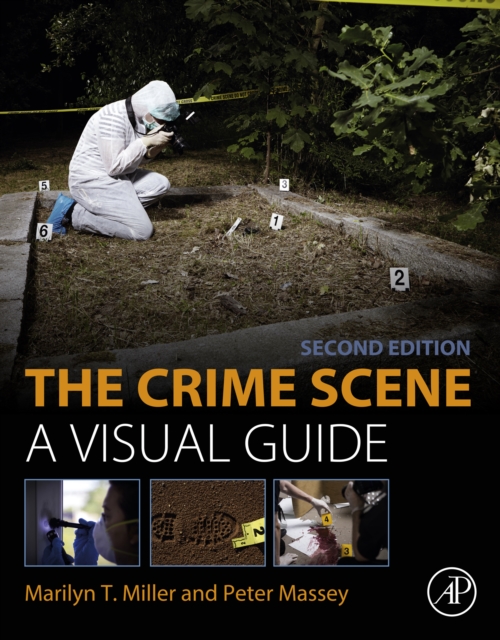
The Forensic Crime Scene: A Visual Guide, Second Edition presents knowledgeable chapters on crime scene investigation, the various types of documentation, scene reconstruction, and the value of evidence and proper evidence collection.
Crime Scene Investigation Laboratory Manual, Second Edition, is written by a former crime scene investigator and forensic scientist who provides practical, straightforward, and immediately applicable best practices.
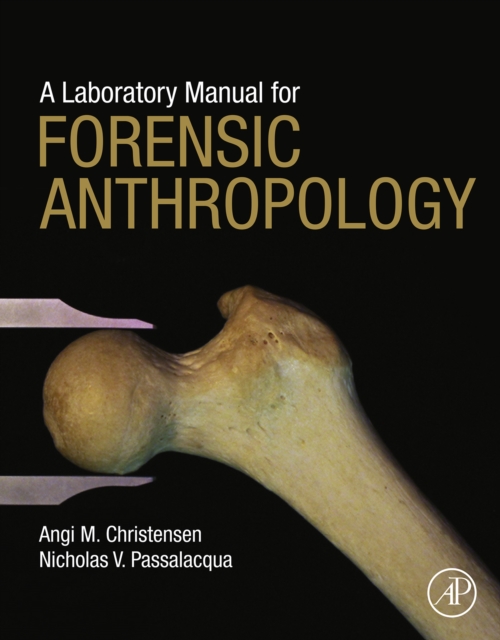
A Laboratory Manual for Forensic Anthropology approaches forensic anthropology as a modern and well-developed science, and includes consideration of forensic anthropology within the broader forensic science community, with extensive use of case studies and recent research, technology and challenges that are applied in field and lab contexts.
Preventing Domestic Homicides: Lessons Learned from Tragedies focuses on the diverse nature of domestic homicides and what has been learned about the most effective prevention strategies from emerging research and the work of domestic violence death review committees in Canada, the US, the UK, NZ and AU.
Forensic Ecogenomics: The Application of Microbial Ecology Analyses in Forensic Contexts provides intelligence on important topics, including environmental sample provenance, how to indicate the body decomposition timeline to support postmortem interval (PMI) and postmortem submersion interval (PMSI) estimates, and how to enhance identification of clandestine and transit grave locations.
Hacking Wireless Access Points: Cracking, Tracking, and Signal Jacking provides readers with a deeper understanding of the hacking threats that exist with mobile phones, laptops, routers, and navigation systems.
Evidence Found: An Approach to Crime Scene Investigation is not another analysis of forensic errors using an "e;After the Fact"e; or "e;Lessons Learned"e; approach but a "e;Before the Fact"e; guide that examines the thought processes that can lead to those mistakes.
Forensic Toxicology, the latest release in the Advanced Forensic Science Series that grew out of recommendations from the 2009 NAS Report, Strengthening Forensic Science: A Path Forward will serve as a graduate level text for those studying and teaching forensic toxicology.
Forensic Anthropology: Current Methods and Practice-winner of a 2015 Textbook Excellence Award (Texty) from The Text and Academic Authors Association-approaches forensic anthropology through an innovative style using current practices and real case studies drawn from the varied experiences, backgrounds, and practices of working forensic anthropologists.
Misleading DNA Evidence: A Guide for Scientists, Judges, and Lawyers presents the reasons miscarriages of justice can occur when dealing with DNA, what the role of the forensic scientist is throughout the process, and how judges and lawyers can educate themselves about all of the possibilities to consider when dealing with cases that involve DNA evidence.
Bloodstain Patterns: Identification, Interpretation and Application combines material from Blood Dynamics (2001) and Bloodstain Pattern Evidence (2007) with updated case work and scientific advances from medical and hard sciences.
This practical field guide contains many of the checklists necessary to guide the first responder step-by-step through procedures, tactics, and forensic techniques used in sudden death and violent death investigations.
Forensic Handwriting Identification: Fundamental Concepts and Principles teaches the law enforcement and legal communities the major principles involved in handwriting and hand-printing analysis as applied to many types of investigations, including fraud, homicide, suicide, drug trafficking/clandestine labs, sexual offenses, threats and extortion, blackmail, arson, bombings, and theft.
Forensic Document Examination enlightens forensic document examiners, forensic investigators, attorneys and others using the services of forensic document examiners with the basic principles and current trends in the area.
Kidnapping: An Investigator's Guide to Profiling is based on a three-part analysis of 100 randomly selected kidnapping cases prosecuted in the United States that have survived Supreme Court appeal.
Published in 2009, the first edition of Forensic Victimology introduced criminologists and criminal investigators to the idea of systematically gathering and examining victim information for the purposes of addressing investigative and forensic issues.
The book explains the need to decarbonise energy supplies, urban systems and industrial processes to reduce global greenhouse gases and meet the ambitious emissions reduction goals set out in the Paris Agreement 2016.
This book presents how federated learning helps to understand and learn from user activity in Internet of Things (IoT) applications while protecting user privacy.
This book, based on international collaborative research, presents a state-of-the-art design for "e;Smart Master Planning"e; for all metropolises, megacities and metacities as well as at subcity zonal and community and neighborhood level.
In our attempts to understand crime, researchers typically focus on proximate factors such as the psychology of offenders, their developmental history, and the social structure in which they are embedded.
Forensic Testimony: Science, Law and Expert Evidence-favored with an Honorable Mention in Law & Legal Studies at the Association of American Publishers' 2015 PROSE Awards-provides a clear and intuitive discussion of the legal presentation of expert testimony.
This book explores Probabilistic Cellular Automata (PCA) from the perspectives of statistical mechanics, probability theory, computational biology and computer science.
This monograph presents the most recent progress in bifurcation theory of impulsive dynamical systems with time delays and other functional dependence.