Recently, the subject of nonlinear control systems analysis has grown rapidly and this book provides a simple and self-contained presentation of their stability and feedback stabilization which enables the reader to learn and understand major techniques used in mathematical control theory.
Nonlinear Model Predictive Control is a thorough and rigorous introduction to nonlinear model predictive control (NMPC) for discrete-time and sampled-data systems.
From power plants to sugar refining, model predictive control (MPC) schemes have established themselves as the preferred control strategies for a wide variety of processes.
Distributed Coordination of Multi-agent Networks introduces problems, models, and issues such as collective periodic motion coordination, collective tracking with a dynamic leader, and containment control with multiple leaders, and explores ideas for their solution.
This book constitutes the refereed proceedings of the 27th European Conference on Genetic Programming, EuroGP 2024, held in Aberystwyth, UK, April 3-5, 2024 and co-located with the EvoStar events, EvoCOP, EvoMUSART, and EvoApplications.
This book contains all refereed papers accepted during the 14th International Conference on Complex Systems Design & Management CSD&M 2023 that took place in Beijing, People's Republic of China by the end October 2023.
This book, the fifth of 15 related monographs, presents systematically a theory of product-cubic nonlinear systems with constant and single-variable linear vector fields.
Linear switched systems are a fascinating field of research, with many theoretical questions arising from applications which require sophisticated mathematical tools for their resolution.
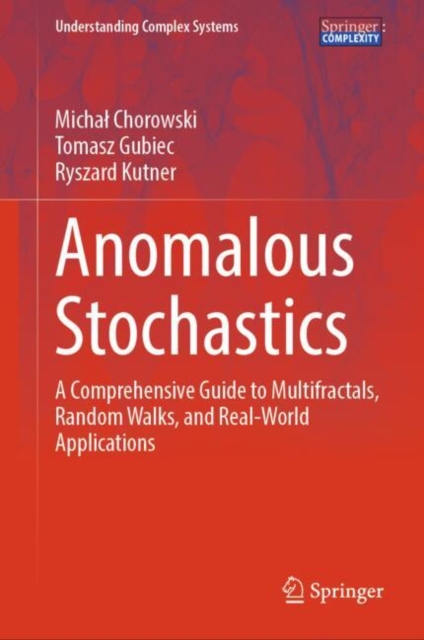
This textbook provides a comprehensive exploration of anomalous stochastic processes and extreme events, commonly referred to as "e;black swans,"e; with a particular focus on (multi-)fractal approaches and continuous-time random walks.
The main challenge in the study of nonautonomous phenomena is to understand the very complicated dynamical behaviour both as a scientific and mathematical problem.
This 2nd edition of the book focuses on the properties of stationary states in chaotic systems of particles or fluids, setting aside the theory of how these states are achieved.
This book highlights the presentation of methods for studying oscillations under external periodic influence and random changes in parameters in dynamic systems with nonlinearities that have discontinuities and kinks.
In an age where real-time processing and interaction with the physical world through digital lenses are paramount, visual SLAM technology has become the backbone of mobile AR/VR applications, robotics, and autonomous systems.
This updated and enriched new edition maintains its complementarity principle in which the subgroup of rotations, harmonic oscillators, and the conventional complex analysis generate linear and weakly nonlinear approaches, whereas translations and reflections, impact oscillators, and hyperbolic Clifford's algebras, give rise to the essentially nonlinear "e;quasi-impact"e; methodology based on the idea of non-smooth temporal substitutions.
This book delves deep into the world of low-power Internet of Things (IoT) node positioning, in an era where IoT is revolutionizing connectivity and communication.
The book offers an exciting, non-technical intellectual journey around applying feedback control to emerging and managing local and global crises, thus keeping the world on a sustainable trajectory.
Modern industrial processes and systems require adaptable advanced control protocols able to deal with circumstances demanding "e;judgement"e; rather than simple "e;yes/no"e;, "e;on/off"e; responses: circumstances where a linguistic description is often more relevant than a cut-and-dried numerical one.
This book presents a unique approach to the design and analysis of beneficial nonlinearity, which can take an important and critical role in engineering systems and thus cannot be simply ignored in structural design, dynamic response analysis, and parameter selection.
This textbook is a comprehensive overview of the construction, implementation, and application of important numerical methods for the solution of Initial Value Problems (IVPs).
This book presents cognition of the universality of systems theory thinking by using some ordinary physical phenomena and their methods in study, of which the involved treatments are consistent with the viewpoint of systems theory.
Edge computing has emerged as a powerful technology for efficiently executing tasks by pushing cloud computing capabilities to the edge of the network.
As we enter an exciting new era in industrial design, simulation, and manufacturing, a clear understanding of mechanics of solids is needed now more than ever.
This book discusses the latest progresses and developments on complex systems research and intends to give an exposure to prospective readers about the theoretical and practical aspects of mathematical modelling, numerical simulation and agent-based modelling frameworks.
This book presents the reader with a streamlined exposition of the notions and results leading to the construction of normal forms and, ultimately, to the construction of smooth conjugacies for the perturbations of tempered exponential dichotomies.
As we enter an exciting new era in industrial design, simulation, and manufacturing, a clear understanding of mechanics of solids is needed now more than ever.
This book organizes and explains, in a systematic and pedagogically effective manner, recent advances in path integral solution techniques with applications in stochastic engineering dynamics.
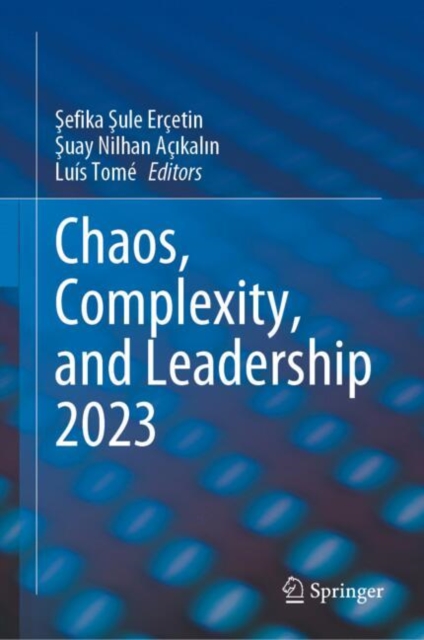
The proceedings of the 8th International Symposium on Chaos, Complexity, and Leadership present various concepts of diverse research methodologies to explore chaos and complexity across different scientific fields of leadership.
In an age where real-time processing and interaction with the physical world through digital lenses are paramount, visual SLAM technology has become the backbone of mobile AR/VR applications, robotics, and autonomous systems.