Introduces a formal theory of linguistic individuality, a perspective-changing framework moving the field towards more cognitively realistic methods of authorship analysis.
This book describes how complex systems from a variety of fields can be modeled using quantum mechanical ideas; from biology and ecology, to sociology and decision-making.
This book reports on cutting-edge experimental and numerical findings related to the application of active bearings, including smart ones, in rotating machinery.
This is the first comprehensive book on Trotter-Kato approximations of stochastic differential equations (SDEs) in infinite dimensions and applications.
This volume consists of 14 contributed chapters written by leading experts, offering in-depth discussions of the mathematical modeling and algorithmic aspects for tackling a range of space engineering applications.
This book presents the concept of Control Barrier Function (CBF), which captures the evolution of safety requirements during the execution of a system and can be used to enforce safety.
This book is about the dynamics of neural systems and should be suitable for those with a background in mathematics, physics, or engineering who want to see how their knowledge and skill sets can be applied in a neurobiological context.
This book is about the dynamics of neural systems and should be suitable for those with a background in mathematics, physics, or engineering who want to see how their knowledge and skill sets can be applied in a neurobiological context.
Harness the power of AI with innovative, real-world applications, and unprecedented productivity boosts, powered by the latest advancements in AI technology like ChatGPT and OpenAIPurchase of the print or Kindle book includes a free PDF eBookKey FeaturesExplore the theory behind generative AI models and the road to GPT3 and GPT4Become familiar with ChatGPT s applications to boost everyday productivityLearn to embed OpenAI models into applications using lightweight frameworks like LangChainBook DescriptionGenerative AI models and AI language models are becoming increasingly popular due to their unparalleled capabilities.
This volume consists of 14 contributed chapters written by leading experts, offering in-depth discussions of the mathematical modeling and algorithmic aspects for tackling a range of space engineering applications.
The Digital Twin book is about harnessing the power of technology, business practices, and the digital infrastructure to make revolutionary improvements for the benefit of society.
This textbook explores the different protocols and technologies that are key to supporting the most important Internet of Things (IoT) networking scenarios.
Both refining and extending previous publications by the authors, the material in this monograph has been class-tested in mathematical institutions throughout the world.
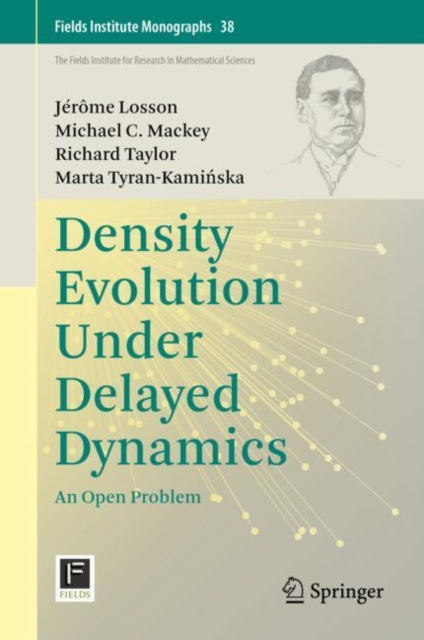
This monograph has arisen out of a number of attempts spanning almost five decades to understand how one might examine the evolution of densities in systems whose dynamics are described by differential delay equations.
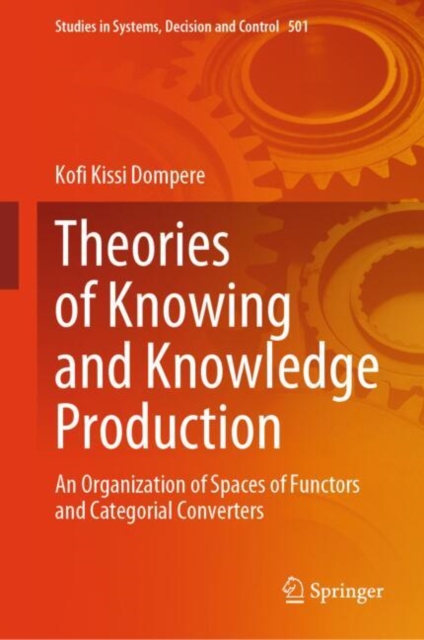
The book is devoted to exploring the organizational dimensions of the general space of problem-solution dualities within epistemic fields to examine the diversity and unity of knowing and information-knowledge production in science and non-science and how to account for and explain the forces of variety transformations, as induced by decision-choice actions in creating the functor space and the space of categorial converters as well as to integrate decision-choice qualities of curiosity, creativity, hope, despair, success, failure, and their relationships with epistemic anomalies in the production of intellectual investment flows and capital stocks, and the rise and fall of institutions in response to the dynamics of the open space of problem-solution dualities with open algorithms under the principle of non-satiation.
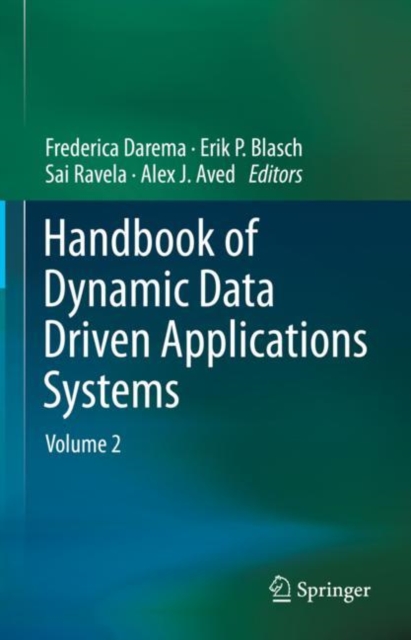
This Second Volume in the series Handbook of Dynamic Data Driven Applications Systems (DDDAS) expands the scope of the methods and the application areas presented in the first Volume and aims to provide additional and extended content of the increasing set of science and engineering advances for new capabilities enabled through DDDAS.
Forensic Document Examination enlightens forensic document examiners, forensic investigators, attorneys and others using the services of forensic document examiners with the basic principles and current trends in the area.
Forensic Toxicology, the latest release in the Advanced Forensic Science Series that grew out of recommendations from the 2009 NAS Report, Strengthening Forensic Science: A Path Forward will serve as a graduate level text for those studying and teaching forensic toxicology.
This volume contains the proceedings of Analysis and Design of Hybrid Systems 2006: the 2nd IFAC Conference on Analysis and Design of Hybrid Systems, organized in Alghero (Italy) on June 7-9, 2006.
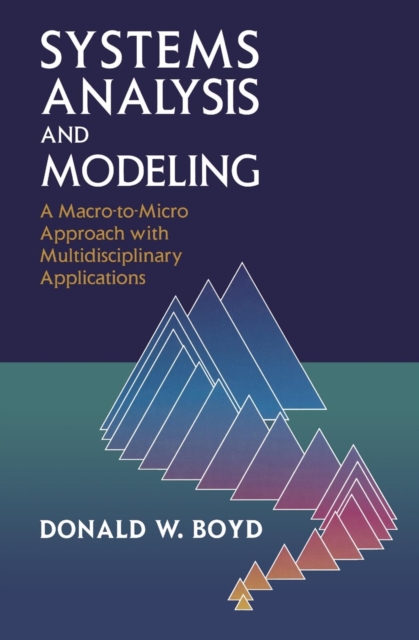
Systems Analysis and Modeling presents a fresh, new approach to systems analysis and modeling with a systems science flavor that stimulates systems thinking.
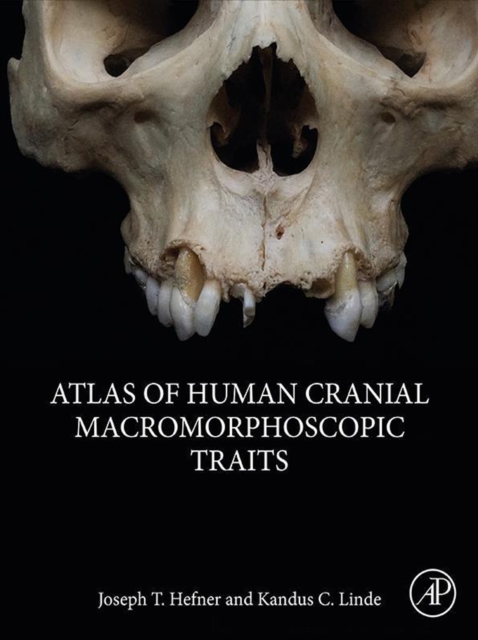
Atlas of Human Cranial Macromorphoscopic Traits synthesizes macromorphoscopic traits and their analysis in an accessible manner, providing detailed descriptions and examples of the various character state manifestations intended for use in classrooms, laboratories, and in the field.
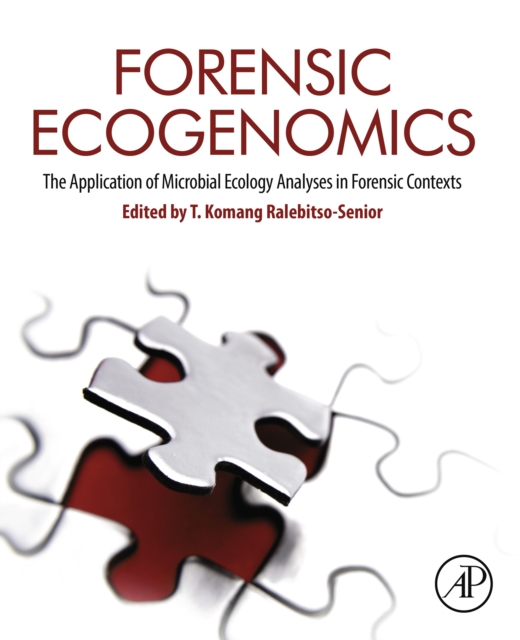
Forensic Ecogenomics: The Application of Microbial Ecology Analyses in Forensic Contexts provides intelligence on important topics, including environmental sample provenance, how to indicate the body decomposition timeline to support postmortem interval (PMI) and postmortem submersion interval (PMSI) estimates, and how to enhance identification of clandestine and transit grave locations.
Forensic Testimony: Science, Law and Expert Evidence-favored with an Honorable Mention in Law & Legal Studies at the Association of American Publishers' 2015 PROSE Awards-provides a clear and intuitive discussion of the legal presentation of expert testimony.
This practical field guide contains many of the checklists necessary to guide the first responder step-by-step through procedures, tactics, and forensic techniques used in sudden death and violent death investigations.
Trends of Environmental Forensics in Pakistan covers a variety of topics, including discussions on alterations in soil chemistry that are related to the malicious effects of pesticides, variations in biosphere and hydrosphere due to deviating toxicological responses, evidence and datasets to highlight potential crimes, and the advent of biological warfare and its effects across the globe, and exclusively in Pakistan.
Criminal Psychology: Forensic Examination Protocols is a compact practitioner's guide to essential forensic concepts and protocols related to the evaluation and assessment of crime and criminals.
This book covers analytic methods to solve one-dimensional and multi-dimensional problems with or without possible constraints, iterative numerical techniques based on the gradient calculation or its estimation, and numerical methods that do not require the knowledge of gradient and use only comparative iterative tests.
Innovation is the creation of new, technologically feasible, commercially realisable products and processes and, if things go right, it emerges from the ongoing interaction of innovative organisations such as universities, research institutes, firms, government agencies and venture capitalists.
This book delves into the mathematical theory of causal functions over discrete time, offering a fresh perspective on causality beyond its philosophical roots.