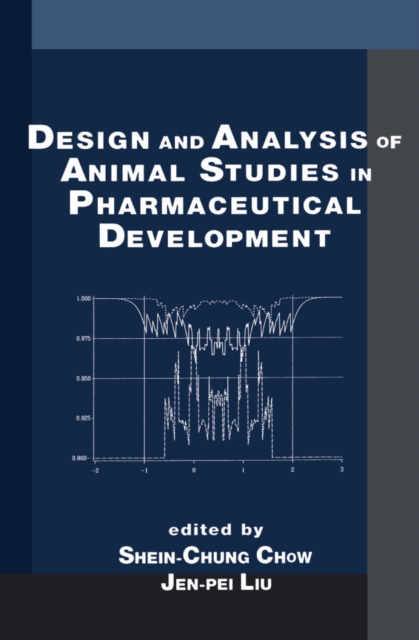
"e;Provides well-integrated, comprehensive coverage of all the major statistical designs and methods used for animal studies in pharmaceutical research and development.
Exploring the intersection of ethics and statistics, this comprehensive guide illustrates the proper use of probabilistic and statistical reasoning in the behavioral, social, and biomedical sciences.
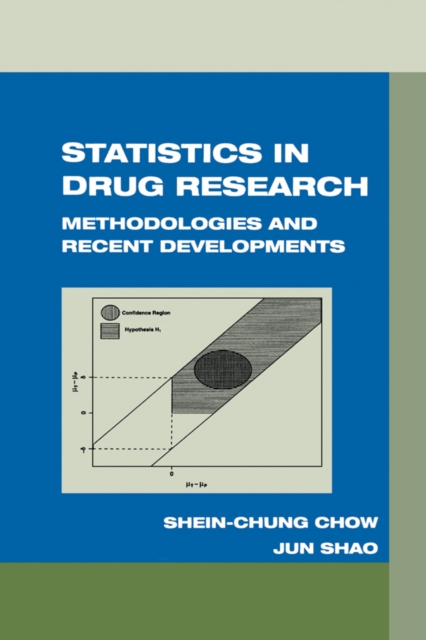
Emphasizing the role of good statistical practices (GSP) in drug research and formulation, this book outlines important statistics applications for each stage of pharmaceutical development to ensure the valid design, analysis, and assessment of drug products under investigation and establish the safety and efficacy of pharmaceutical compounds.
In the immersive tapestry of "e; Cigar Alchemy: Crafting Taste, Tradition, and Time,"e; readers are beckoned into the captivating world of cigars and tobacco—a world where the aromatic tendrils of history intertwine with the craftsmanship and rituals that define the aficionado's journey.
Adaptive Designs for Sequential Treatment Allocation presents a rigorous theoretical treatment of the results and mathematical foundation of adaptive design theory.
In the decade since the idea of adapting the evidence-based paradigm for software engineering was first proposed, it has become a major tool of empirical software engineering.
Structural Existential Analysis (SEA) is a qualitative research method which uses an existential-phenomenological framework that has been developed through decades of therapeutic and research practice.
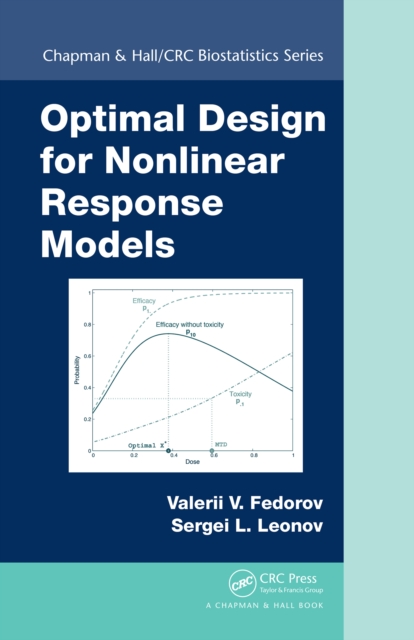
Optimal Design for Nonlinear Response Models discusses the theory and applications of model-based experimental design with a strong emphasis on biopharmaceutical studies.
Summarizes information scattered in the technical literature on a subject too new to be included in most textbooks, but which is of interest to statisticians, and those who use statistics in science and education, at an advanced undergraduate or higher level.
This innovative book explores how Q methodology offers a unique way to examine subjectivity, meaning people's viewpoints, in that it both differentiates and describes viewpoints, by blending qualitative and quantitative research methods.
Based on the modern approach of information theory, this book presents novel experimental techniques, tools, and data processing methods for physics applications.
As the development of medicines has become more globalized, the geographic variations in the efficacy and safety of pharmaceutical products need to be addressed.
Structural Existential Analysis (SEA) is a qualitative research method which uses an existential-phenomenological framework that has been developed through decades of therapeutic and research practice.
Writing and Other Familiar Things: Autoethnographic Possibilities puts on display a number of distinct ways of structuring essays that can be used in qualitative research and creative writing.
Ecologists sometimes have a less-than-rigorous background in quantitative methods, yet research within this broad field is becoming increasingly mathematical.
When scientists formulate their theories, expectations, and hypotheses, they often use statements like: ``I expect mean A to be bigger than means B and C"e;; ``I expect that the relation between Y and both X1 and X2 is positive"e;; and ``I expect the relation between Y and X1 to be stronger than the relation between Y and X2"e;.
"e;Offers a comprehensive, unified presentation of statistical designs and methods of analysis for all stages of pharmaceutical development--emphasizing biopharmaceutical applications and demonstrating statistical techniques with real-world examples.
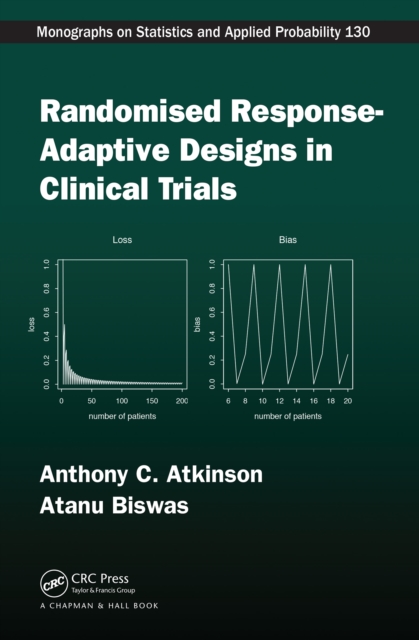
Randomised Response-Adaptive Designs in Clinical Trials presents methods for the randomised allocation of treatments to patients in sequential clinical trials.
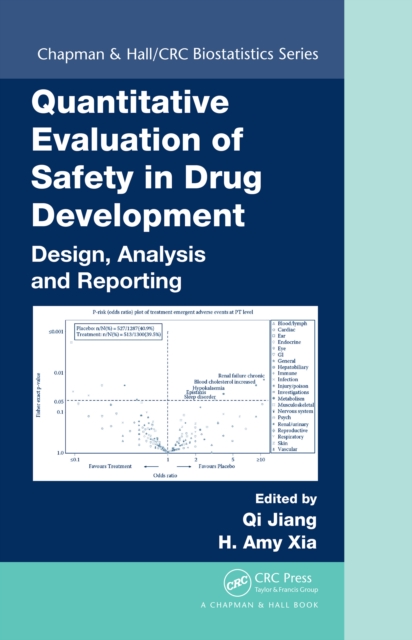
State-of-the-Art Methods for Drug Safety AssessmentResponding to the increased scrutiny of drug safety in recent years, Quantitative Evaluation of Safety in Drug Development: Design, Analysis and Reporting explains design, monitoring, analysis, and reporting issues for both clinical trials and observational studies in biopharmaceutical product deve
Fundamental QSARs for Metal Ions describes the basic and essential applications of quantitative structure-activity relationships (QSARs) for regulatory or industrial scientists who need to predict metal ion bioactivity.
Keith Devlin and Jonathan Borwein, two well-known mathematicians with expertise in different mathematical specialties but with a common interest in experimentation in mathematics, have joined forces to create this introduction to experimental mathematics.
Recipient of the 2026 Publication Award, National Art Education Association, Ecology and Environment Interest GroupThis book explores folk school pedagogies through craft as creative inquiry.
Early approaches to accelerated testing were based on the assumption that there was a simple acceleration factor that would correspond to a linear scaling of time from the operating stress to the accelerating stress.
Methods of Statistical Model Estimation examines the most important and popular methods used to estimate parameters for statistical models and provide informative model summary statistics.
Continuing advances in biomedical research and statistical methods call for a constant stream of updated, cohesive accounts of new developments so that the methodologies can be properly implemented in the biomedical field.
Achieve Technological Advancements in Applied Science and Engineering Using Efficient Experiments That Consume the Least Amount of ResourcesWritten by longtime experimental design guru Thomas B.
Using the same accessible, hands-on approach as its best-selling predecessor, the Handbook of Univariate and Multivariate Data Analysis with IBM SPSS, Second Edition explains how to apply statistical tests to experimental findings, identify the assumptions underlying the tests, and interpret the findings.
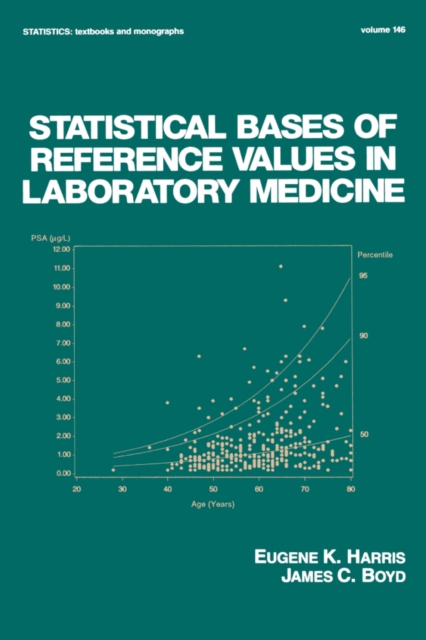
Examining the strengths and limitations of various standards of accuracy in clinical laboratory analyses, this detailed reference presents an in-depth study of important theoretical and empirical issues concerning the description, collection, and application of reference values in laboratory medicine.
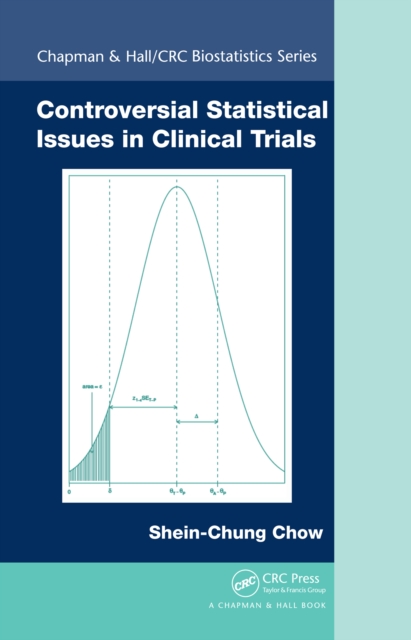
In clinical trial practice, controversial statistical issues inevitably occur regardless of the compliance with good statistical practice and good clinical practice.
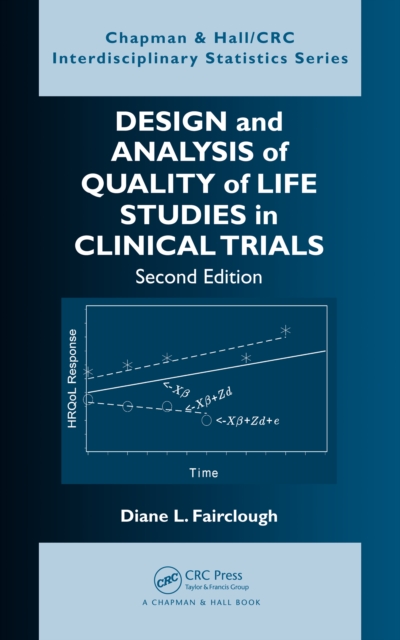
Design Principles and Analysis Techniques for HRQoL Clinical TrialsSAS, R, and SPSS examples realistically show how to implement methods Focusing on longitudinal studies, Design and Analysis of Quality of Life Studies in Clinical Trials, Second Edition addresses design and analysis aspects in enough detail so that readers can apply statistical meth
Recipient of the 2026 Publication Award, National Art Education Association, Ecology and Environment Interest GroupThis book explores folk school pedagogies through craft as creative inquiry.
Carefully designed for use by clinical and pharmaceutical researchers and scientists, Handbook of Regression Analysis and Modeling explores statistical methods that have been adapted into biological applications for the quickly evolving field of biostatistics.
This useful reference describes the statistical planning and design of pharmaceutical experiments, covering all stages in the development process-including preformulation, formulation, process study and optimization, scale-up, and robust process and formulation development.
Now in its fourth edition, Behavioral Research and Analysis: An Introduction to Statistics within the Context of Experimental Design presents an overview of statistical methods within the context of experimental design.
The increased use of non-inferiority analysis has been accompanied by a proliferation of research on the design and analysis of non-inferiority studies.
This volume comprises the investigation of factors that may predict the response to treatment, outcome, and survival by exploring: design considerations in molecular epidemiology, including:case-onlyfamily-basedapproaches for evaluation of genetic susceptibility to exposure and addiction pharmacogeneticsincorporation of biomarkers in clinical tria