With ever-rising healthcare costs, evidence generation through Health Economics and Outcomes Research (HEOR) plays an increasingly important role in decision-making about the allocation of resources.
By now, it is commonly accepted that investments in information and communication technologies (ICTs) can facilitate macroeconomic growth in developed countries.
Developing secure software requires the integration of numerous methods and tools into the development process, and software design is based on shared expert knowledge, claims, and opinions.
Adaptive survey designs (ASDs) provide a framework for data-driven tailoring of data collection procedures to different sample members, often for cost and bias reduction.
In recent years, many pharmaceutical companies and clinical research organizations have been focusing on the development of traditional Chinese (herbal) medicines (TCMs) as alternatives to treating critical or life-threatening diseases and as pathways to personalized medicine.
Fundamental Concepts for New Clinical Trialists describes the core scientific concepts of designing, data monitoring, analyzing, and reporting clinical trials as well as the practical aspects of trials not typically discussed in statistical methodology textbooks.
Risk assessment has been extensively developed in several scientific fields, such as environmental science, economics, and civil engineering, among others.
Cancer is a major healthcare burden across the world and impacts not only the people diagnosed with various cancers but also their families, carers, and healthcare systems.
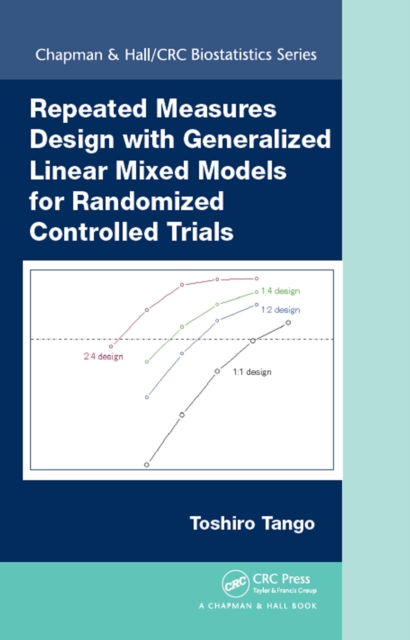
Repeated Measures Design with Generalized Linear Mixed Models for Randomized Controlled Trials is the first book focused on the application of generalized linear mixed models and its related models in the statistical design and analysis of repeated measures from randomized controlled trials.
The Data Book: Collection and Management of Research Data is the first practical book written for researchers and research team members covering how to collect and manage data for research.
Handbook of Methods for Designing, Monitoring, and Analyzing Dose-Finding Trials gives a thorough presentation of state-of-the-art methods for early phase clinical trials.
The past three decades have witnessed modern advances in statistical modeling and evidence discovery in biomedical, clinical, and population-based research.
This handbook will provide both overviews of statistical methods in sports and in-depth treatment of critical problems and challenges confronting statistical research in sports.
In our increasingly globally interconnected world, understanding and appreciating the sociocultural context within which individuals make their decisions is critical to developing successful partnerships.
Clinical Trial Optimization Using R explores a unified and broadly applicable framework for optimizing decision making and strategy selection in clinical development, through a series of examples and case studies.
This book provides practical knowledge to clinicians and biomedical researchers using biological and biochemical specimen/samples in order to understand health and disease processes at cellular, clinical, and population levels.
Offering a planned approach for determining cause and effect, DOE Simplified: Practical Tools for Effective Experimentation, Third Edition integrates the authors decades of combined experience in providing training, consulting, and computational tools to industrial experimenters.
Statistical Testing Strategies in the Health Sciences provides a compendium of statistical approaches for decision making, ranging from graphical methods and classical procedures through computationally intensive bootstrap strategies to advanced empirical likelihood techniques.
Power Analysis of Trials with Multilevel Data is a valuable reference for anyone who wants to perform power calculations on trials with hierarchical data.
Emphasizing the inductive nature of statistical thinking, Environmental and Ecological Statistics with R, Second Edition, connects applied statistics to the environmental and ecological fields.
Emphasizing the inductive nature of statistical thinking, Environmental and Ecological Statistics with R, Second Edition, connects applied statistics to the environmental and ecological fields.
For decades biology has focused on decoding cellular processes one gene at a time, but many of the most pressing biological questions, as well as diseases such as cancer and heart disease, are related to complex systems involving the interaction of hundreds, or even thousands, of gene products and other factors.
Uncertainty in the predictions of science when applied to the environment is an issue of great current relevance in relation to the impacts of climate change, protecting against natural and man-made disasters, pollutant transport and sustainable resource management.
"e;Taken together, the body of information contained in this book provides readers with a bird's-eye view of different aspects of exciting work at the convergence of disciplines that will ultimately lead to a future where we understand how immunity is regulated, and how we can harness this knowledge toward practical ends that reduce human suffering.
This book explores the challenges of presenting sustainability as a more actionable or practical concept and identifying approaches that might offer useful assistance in addressing the temporal and spatial representation of sustainability.
Presenting innovative research methods, this second edition of a bestseller describes a simple and practical methodology for conducting cutting-edge design science research (DSR).
This book provides a variety of answers in its description and discussion of new, sometimes radical approaches to `usability evaluation', now an increasingly common business tool.
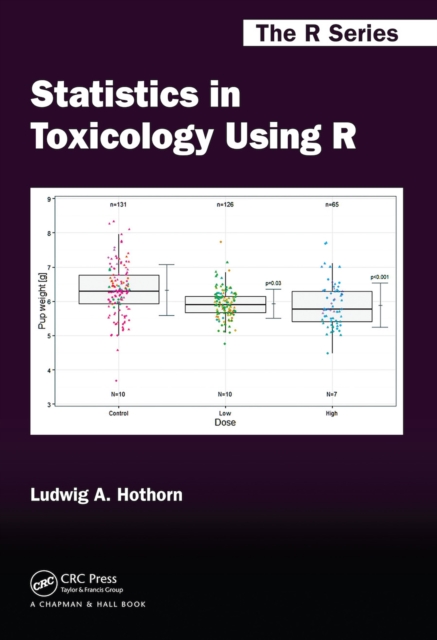
The apparent contradiction between statistical significance and biological relevance has diminished the value of statistical methods as a whole in toxicology.
Research Methods and Design Beyond a Single Discipline presents and discusses 15 research methods after an overview of each, an illustration of the research process, and an examination of related topics.
In a society that is still experiencing the crisis generated by the pandemic due to the spread of the SARS-CoV-2 virus, aggravated also by the conflict in Ukraine, it is necessary to rethink the concept of culture, which must be declined in its factual reality of everyday life, since the cultural system and its elements not only produce relationships (meaningful interactions) but also individual and collective social action, hence the use of the term rela(c)tion in the title.
This Business of Publishing has been hailed by literary agent Michael Larsen as "e;must reading for writers, agents and anyone else who cares about the future of publishing.
In this book, Rudakemwa shares with us intriguing questions which lead to thinking about the existence of a new way of communication used by living cells.
The 21st century is steeped in claims to interconnection, technological innovation, and new affective intensities amid challenges to the primacy and centrality of "e;the human"e;.
Creating Critical Research Poetry critically engages with the ways in which researchers can poetically approach textual representations that narrate the unnarratable and contest the uncontested.