Everyone wants privacy and security online, something that most computer users have more or less given up on as far as their personal data is concerned.
Precharge logic is used by a variety of industries in applications where processor speed is the primary goal, such as VLSI (very large systems integration) applications.
This edited collection is intended as a primer for core concepts and principles in research ethics and as an in-depth exploration of the contextualization of these principles in practice across key disciplines.
Numerical Methods using MATLAB, 3e, is an extensive reference offering hundreds of useful and important numerical algorithms that can be implemented into MATLAB for a graphical interpretation to help researchers analyze a particular outcome.
Crime Reconstruction, Second Edition is an updated guide to the interpretation of physical evidence, written for the advanced student of forensic science, the practicing forensic generalist and those with multiple forensic specialists.
Rape Investigation Handbook details specific investigative and forensic processes related to sex crimes casework invaluable to those in law enforcement, the legal community, and the private sector.
Quantum Information Processing and Quantum Error Correction is a self-contained, tutorial-based introduction to quantum information, quantum computation, and quantum error-correction.
Focused on Behavioral Evidence Analysis (BEA), a method of criminal profiling developed and refined by the author over the past 15 years, the fourth edition of Criminal Profiling maintains the same core foundation that made previous editions best sellers in the professional and academic community worldwide.
A new discipline, Quantum Information Science, has emerged in the last two decades of the twentieth century at the intersection of Physics, Mathematics, and Computer Science.
Shooting Incident Reconstruction, Second Edition, offers a thorough explanation of matters from simple to complex to help the reader understand the factors surrounding ballistics, trajectory, and shooting scenes.
As there is a need for careful analysis in a world where threats are growing more complex and serious, you need the tools to ensure that sensible methods are employed and correlated directly to risk.
Multidimensional Signal, Image, and Video Processing and Coding gives a concise introduction to both image and video processing, providing a balanced coverage between theory, applications and standards.
This comprehensive and state-of-the art approach to video processing gives engineers and students a comprehensive introduction and includes full coverage of key applications: wireless video, video networks, video indexing and retrieval and use of video in speech processing.
- Treats joint source and channel decoding in an integrated way- Gives a clear description of the problems in the field together with the mathematical tools for their solution- Contains many detailed examples useful for practical applications of the theory to video broadcasting over mobile and wireless networksTraditionally, cross-layer and joint source-channel coding were seen as incompatible with classically structured networks but recent advances in theory changed this situation.
While there is no such thing as a perfect match in the field of forensic comparative science, Forensic Comparative Science: Qualitative Quantitative Source Determination of Unique Impressions, Images, and Objects provides the experience, understanding, and judgment, necessary for concluding whether two unique images share common origin from a unique and persistent source.
Partial Differential Equations and Boundary Value Problems with Maple, Second Edition, presents all of the material normally covered in a standard course on partial differential equations, while focusing on the natural union between this material and the powerful computational software, Maple.
A Litigator's Guide to DNA educates both criminal law students and forensic science students about all aspects of the use of DNA evidence in criminal and civil trials.
Forensic Art Essentials teaches artists to extract information from a witness or victim about a face they have seen, and produce an image good enough to lead detectives to the criminal being described.
This monograph presents mathematical theory of statistical models described by the essentially large number of unknown parameters, comparable with sample size but can also be much larger.
The Newnes Know It All Series takes the best of what our authors have written to create hard-working desk references that will be an engineer's first port of call for key information, design techniques and rules of thumb.
In the field of forensics, there is a critical need for genetic tests that can function in a predictive or inferential sense, before suspects have been identified, and/or for crimes for which DNA evidence exists but eye-witnesses do not.
In the study of the computational structure of biological/robotic sensorimotor systems, distributed models have gained center stage in recent years, with a range of issues including self-organization, non-linear dynamics, field computing etc.
Rapid molecular identification and typing of micro-organisms is extremely important in efforts to monitor the geographical spread of virulent, epidemic or antibiotic-resistant pathogens.
Wahrheit, Lüge & Vernunft - Über die Macht der ManipulationWir alle sind Fakten und Emotionen ausgesetzt und nicht immer sind die Grenze zwischen Wahrheit und Täuschung klartrennbar.
Measurement, Judgment, and Decision Making provides an excellent introduction to measurement, which is one of the most basic issues of the science of psychology and the key to science.
The Guide to Human Genome Computing is invaluable to scientists who wish to make use of the powerful computing tools now available to assist them in the field of human genome analysis.
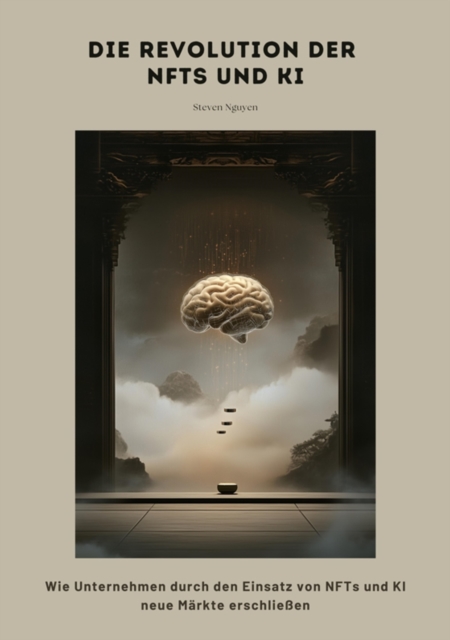
In einer Welt, die zunehmend von digitalen Innovationen geprägt ist, gewinnen zwei Technologien besonders an Bedeutung: Non-Fungible Tokens (NFTs) und Künstliche Intelligenz (KI).