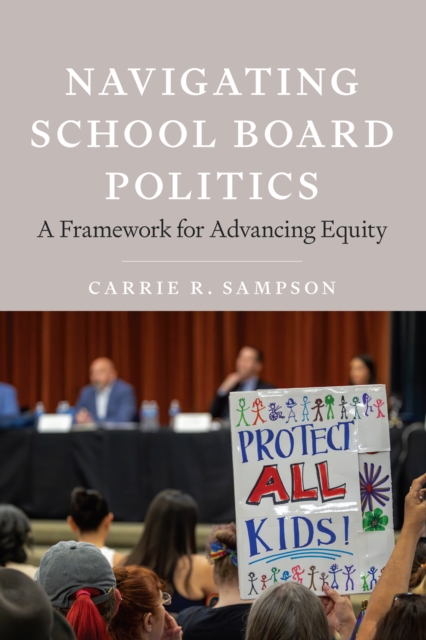
A visionary overview of the political role of publicly elected school boards and a proactive take on the work they can accomplish toward social justice
Unlock the Secrets to Winning Beyond Luck: 10 Strategies from the ExpertsDiscover the insider tactics that separate lottery success stories from the rest.
An evidence-based plan of action to achieve educational justice for K12 public school students from families whose income is 50% or more below the US poverty threshold
An evidence-based plan of action to achieve educational justice for K12 public school students from families whose income is 50% or more below the US poverty threshold
In "Thesis Sprint: Die 4-Wochen-Strategie zur perfekten Bachelor- oder Masterarbeit" findest du eine funktionierende Methode, um deine Abschlussarbeit in nur 4 Wochen zu schreiben.
This book utilises expectancy-value theory and undermining effect of extrinsic reward theory to examine the impact of the Central Government-Funded Teacher Education (CGFTE) policy on Chinese pre-service teachers' motivations for choosing the teaching profession.
This book advances the debate about paying "e;student"e; athletes in big-time college sports by directly addressing the red-hot role of race in college sports.
In 1993, Congress created a student loan repayment plan intended to enable high-debt graduates to accept low-income, public service jobs by reducing their loan payments and eventually forgiving part of their debts.
Explore this controversial approach to education, its practical applications, successes, and failures in a straightforward guide that covers every facet of the issue, from for-profit schools to outsourcing of school management to vouchers.
Tauchen Sie ein in die faszinierenden Szenarien von "Bitcoin-Sagas: 18 Sci-Fi Zukunftswelten", einer Sammlung von 18 einzigartigen Geschichten, die die Verbindung zwischen Technologie, Menschlichkeit und der Macht der Kryptowährungen erforschen.
How appropriate for today and for the future are the policies and practices of higher education that largely assume a norm of traditional-age students with minimal on-campus, or no, work commitments?