This book explores the impact of eLearning on the quality of teaching in higher education, focusing on three main issues: university teachers' perception of quality teaching, their strategies for achieving quality teaching in practice, and interventions that design and implement online collaborative activities in a large class.
This book presents a critical reimagining of education and educational research in addressing practices of representation and their relation to epistemology, subjectivity and ontology in the context of early childhood education.
This book is a Festschrift for Emeritus Professor Stephen Kemmis, who has a long and eminent career as an educational researcher and academic spanning over 40 years.
This book offers various perspectives on the complex and crosscutting concepts of the science, technology, engineering, and mathematics (STEM) disciplines in the classroom context.
This book creates a platform for music educators to share their experience and expertise in creative music teaching and learning with the international community.
This book offers a theoretical and epistemological-methodological framework as an alternative approach to the instrumental-descriptive methodology that has prevailed in psychology to date.
This book explores teacher well-being in light of the increasingly ethnically diverse profiles of schools and classrooms, focusing on socially and linguistically diverse teaching contexts.
This book provides an in-depth understanding of how children's development at different stages of their lives interfaces with the kind of education and support they need at school and home.
This book critically explores urgent questions that researchers, educators, and policy makers need to consider and address in order to better our understanding and capacity to transform education.
This volume brings together significant international research in technology education by focusing on contemporary postgraduate research, elaborating on the findings with the aim of making the content relevant to researchers, teachers and other potential researchers in the field.
The Sourcebook-IV provides training modules for rights-based integrated child protection service delivery systems at the secondary and tertiary prevention levels.
This book presents a novel conceptualisation of universal information processing systems based on studies of environmental interaction in both biological and non-biological systems.
This book explores the application of agile and lean techniques, originally from the field of software development and manufacturing, to various aspects of education.
This book tries to trace Dewey's intellectual history from his early years to the end, focusing on the themes of psychology and the psychological aspect of education in Dewey's lifelong writing.
Focusing on the two essential factors of the construction of risk, this book presents research revolving around the staging of and the coping with Internet addiction in China.
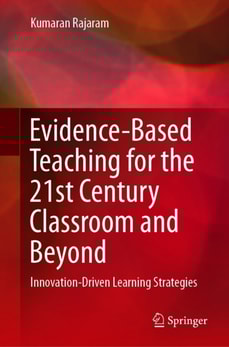
This book serves as an essential intervention where the innovative, evidence based and contemporary teaching, learning approaches, strategies and learning support systems to be incorporated in the learning process are presented, supported with findings.
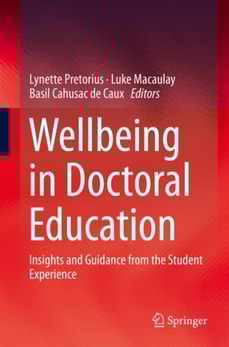
This book offers a range of personal and engaging stories that highlight the diverse voices of doctoral students as they explore their own learning journeys.
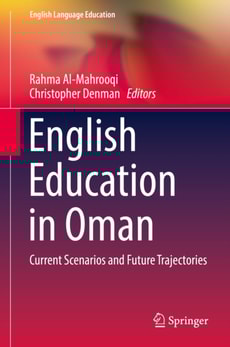
This book explores an area that has been somewhat overlooked in the literature to date - the current status and future trends of English education in Oman.
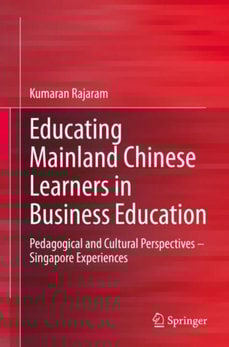
This book presents strategies and practices for facilitating effective learning for mainland Chinese students in western based education - regarding e.
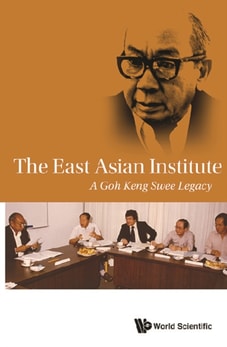
This book record achievements of the East Asian Institute (EAI), one of the top five think tanks in Asia under the leadership of Dr Goh Keng Swee, Professors Wang Gungwu, John Wong and Zheng Yongnian.
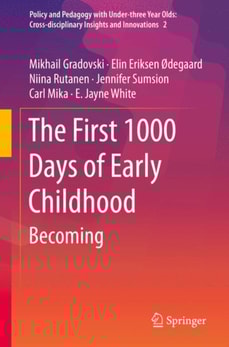
This book provides a philosophical, socio-political and theoretical understanding of the notion of Becoming in the context of the related concepts, and in contemplation of the notion of Being.
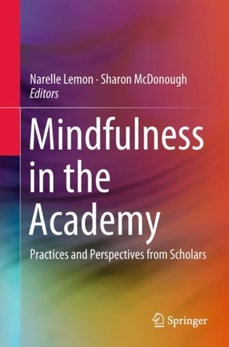
This book focuses on the way academics understand, embrace and enact the concepts of mindfulness in approaching their work in demanding and dynamic contemporary higher education environments.
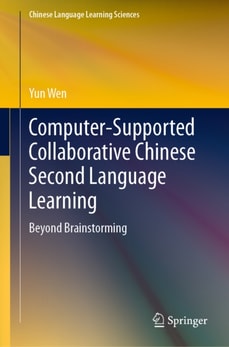
This book explores the implementation of an online representational tool, GroupScribbles, in Chinese-as-a-second-language classrooms from primary school to secondary school.
This book provides both a lost last word and a firm first foundation: seven lectures, given in the last months in the life of the Soviet thinker, teacher, and writer L.
This book addresses in detail a range of issues in connection with preparing individuals with disabilities or other special needs for gaining employment and planning a career path beyond school.
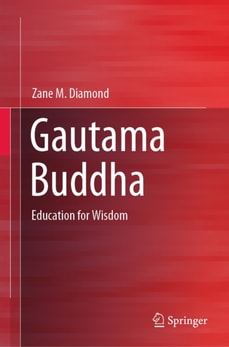
This book examines some of the key elements of Buddhist education theory, in particular about educating for wisdom, the ultimate goal of Buddhist education.
This book offers a set of learning principles to support the design of rich learning experiences in Science, Technology, Engineering and Mathematics (STEM) higher education, including detailed evaluations and discussions for a variety of science subjects.
The book is a collective investigation of the structuring of theses in education, the social sciences and other disciplines that commonly do not follow the standard procedures of the scientific method.
The revision of this innovative book provides school counseling students, practitioners, leaders, supervisors, and faculty with information and resources regarding the alignment and implementation of school counseling, specifically comprehensive school counseling programs.
From supply chain management to entrepreneurship and social responsibility, The 30 Day MBA in International Business provides a comprehensive insight into this fascinating sector.
The revision of this innovative book provides school counseling students, practitioners, leaders, supervisors, and faculty with information and resources regarding the alignment and implementation of school counseling, specifically comprehensive school counseling programs.
There can be a lack of understanding of the vulnerable situation of children with disabilities and their families, even among professional caregivers whose mission is to protect the health and wellbeing of these children.
From supply chain management to entrepreneurship and social responsibility, The 30 Day MBA in International Business provides a comprehensive insight into this fascinating sector.
Este libro nos invita a reflexionar sobre las dificultades sociales, emocionales y conductuales de niños, niñas y adolescentes que podrían interferir en las relaciones y en el aprendizaje.