This Springer brief explores the contribution of Nicolas de Condorcet in French higher education, the historical development of his work and its influence on the history of the French education system.
This handbook focuses on the education systems in the three Americas, North, Central and South America, and includes a chapter on most countries in the region.
In 2007, the Monash-Kings College London International Centre for the Study of Science and Mathematics Curriculum edited a book called The Re-emergence of Values in Science Education.
This contributed volume is devoted to the recent history and evolution of mathematics education in Eastern Europe, exploring how it was influenced by social and political changes in this part of the world.
This handbook explores the evolution of African education in historical perspectives as well as the development within its three systems-Indigenous, Islamic, and Western education models-and how African societies have maintained and changed their approaches to education within and across these systems.
This edited volume focuses on the historical role of the OECD (The Organisation for Economic Co-operation and Development) in shaping global education policy.
This book brings readers into classrooms and communities to explore critical curriculum issues in the United States throughout the twentieth century by focusing in on the voices of teachers, administrators, students, and families.
This volume explores the history of dance on the historically black college and university (HBCU) campus, casting a first light on the historical practices and current state of college dance program practice in HBCUs.
This book highlights some of Kenneth King's diverse contributions to international and comparative education, African studies and development studies over more than four decades.
This book introduces six pedagogues from the German context to an English-speaking audience, and demonstrates their significant contribution to the field of alternative education.
This book provides a history of the Quaker educator and intercultural education pioneer Rachel Davis DuBois (1892-1993) that explores the period in which DuBois lived and the key works she created.
This book offers the first full-length study of the education of children living within the Gaeltacht, the Irish-speaking communities in Ireland, from 1900 to the present day.
This edited collection explores the historical determinants of the rise of mass schooling and human capital accumulation based on a global, long-run perspective, focusing on a variety of countries in Europe, the Middle East, Asia, Africa and the Americas.
This book unravels the origins, continuities, and discontinuities of Finnish higher education as part of European higher education from the Middle Ages to the 21st century.
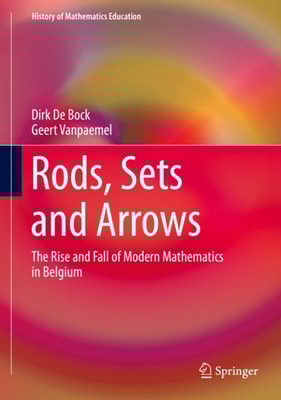
For anyone interested in the history and effects of the introduction of so-called "e;Modern Mathematics"e; (or "e;Mathematique Moderne,"e; or "e;New Mathematics,"e; etc.
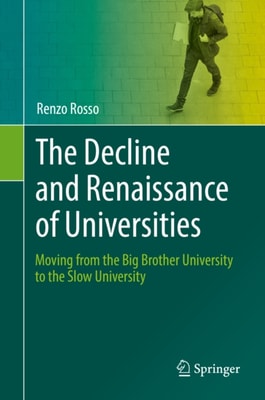
Instead of following the Magna Charta Universitatum, the declaration of the principles of knowledge signed in 1988 in Bologna, the academic approach pursued in Europe and the other continents over the past 30 years has strictly employed a utilitarian model of higher education.
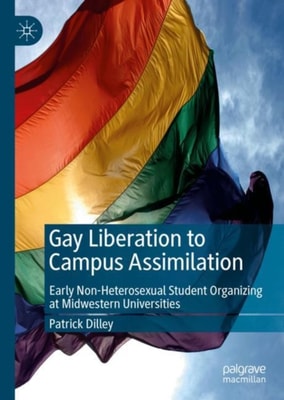
Association for the Study of Higher Education Outstanding Book Award Winner, 2020This book outlines the beginning of student organizing around issues of sexual orientation at Midwestern universities from 1969 to the early 1990s.
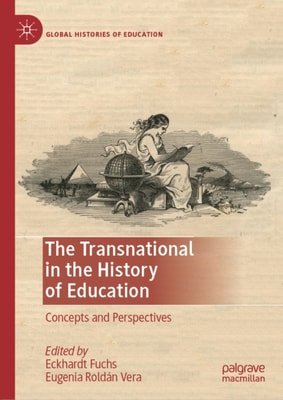
This edited volume reflects on how the "e;transnational"e; features in education as well as policies and practices are conceived of as mobile and connected beyond the local.
This book presents an innovative method to investigate the history of mathematics education using oral narratives to study different aspects related to the teaching and learning of mathematics.
In the mid-20th century, university-based business schools re-oriented themselves to increased alignment with the preferences of the university and decreased alignment with the preferences of business.
This book examines school acts in the long nineteenth century, traditionally considered as milestones or landmarks in the process of achieving universal education.
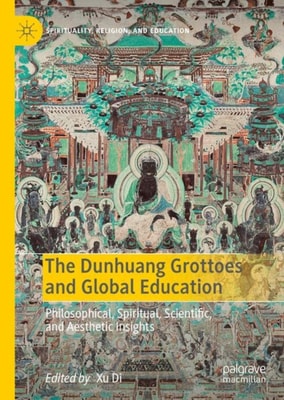
This book analyzes the murals and texts of the Dunhuang Grottoes, one of the most famous sites of cultural heritage on the Silk Road in Northwest China, from an educational perspective.
This book examines the origins of higher learning, and then traces education exchange to the aftermath of World War II, when the United States was internationally recognized as the epicenter of critical thinking and scientific discovery.
This book examines the developments of the UK Higher Education system, from a time of donnish dominion, progressive decline and the increasing role of the market via the introduction of tuition fees.
This book examines school and college fiction for girls in Britain and the United States, written in the first half of the twentieth century, to explore the formation and ideologies of feminine identity.
This Handbook provides a systematic and analytical approach to the various dimensions of international, ethnic and domestic conflict over the uses of national history in education since the end of the Cold War.
Association for the Study of Higher Education Outstanding Book Award Winner, 2020This book outlines the beginning of student organizing around issues of sexual orientation at Midwestern universities from 1969 to the early 1990s.
This book examines the history of formative assessment in the US and explores its potential for changing the landscape of teaching and learning to meet the needs of twenty-first century learners.
This book is an exposition of how political, cultural, historical, and economic structures and processes shape the nature and character of curriculum landscapes globally.
This contributed volume investigates the active role of the different contexts of mathematics teaching on the evolution of the practices of mathematical concepts, with particular focus on their foundations.
The National Council for Higher Education (NCHE) and the Growth of the University Sub-sector in Uganda, 2002-2012, narrates the experience of the Ugandan NCHE in the establishment, development and regulation of higher education institutions in Uganda from 2002 to 2012.