Institutional Advancement comprehensively reviews and evaluates the published empirical research on advancement in higher education of the last 23 years, covering fundraising, alumni relations, public relations, marketing, and the role of institutional leadership in all of these.
Featuring in-depth examinations of concepts of knowing, learning, and education from a range of cultures worldwide, this book offers a rich theory of indigenous concepts of education, their relation to Western concepts, and their potential for creating education that articulates the aspirations of communities and fosters humanity for all learners.
Through a rich ethnography of street and working children in Calcutta, India, this book offers the first sustained enquiry into postcolonial childhoods, arguing that the lingering effects of colonialism are central to comprehending why these children struggle to inhabit the transition from labour to schooling.
Analyzing the circumstances surrounding the creation and development of the Atlanta University System, this book shows how philanthropists' positive involvement created a unique higher educational center for black Americans that exists nowhere else in the nation.
O'Donoghue's book, which is written as a traditional historical narrative, while also utilizing a comparative approach, is concerned with the life of Catholic religious teaching brothers across the English-speaking world, especially for the period 1891 to 1965, which was the heyday of the religious orders.
A fresh analysis of the study of American foreign relations history, this book shows the ways in which international education has shaped the US relationship with the world.
The progressive raising of the school-leaving age has had momentous repercussions for our understanding of childhood and youth, for secondary education, and for social and educational inequality.
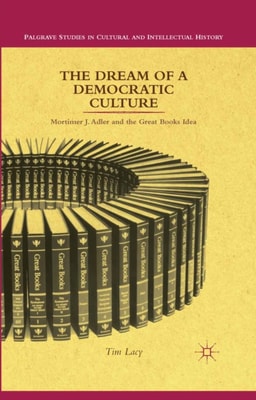
This book presents a moderately revisionist history of the great books idea anchored in the following movements and struggles: fighting anti-intellectualism, advocating for the liberal arts, distributing cultural capital, and promoting a public philosophy, anchored in mid-century liberalism, that fostered a shared civic culture.
John Dewey is considered not only as one of the founders of pragmatism, but also as an educational classic whose approaches to education and learning still exercise great influence on current discourses and practices internationally.
Through a case study in a Chicago public school, Means demonstrates that, despite the fragmentation of human security in low-income and racially segregated public schools, there exist positive social relations, knowledge, and desire for change that can be built upon to promote more secure and equitable democratic futures for young people.
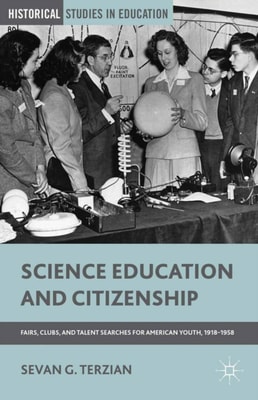
Science fairs, clubs, and talent searches are familiar fixtures in American education, yet little is known about why they began and grew in popularity.
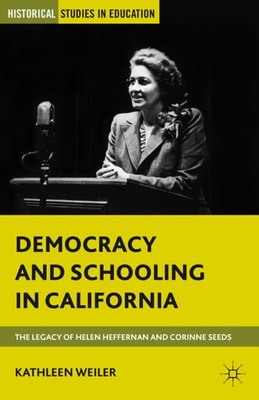
This book examines the struggle over public education in mid-twentieth century America through the lens of a joint biography of these two extraordinary women, Heffernan, the California Commissioner of Rural and Elementary Education between 1926 and 1965, and Seeds, the Director of the University Elementary school at UCLA between 1925 and 1957.
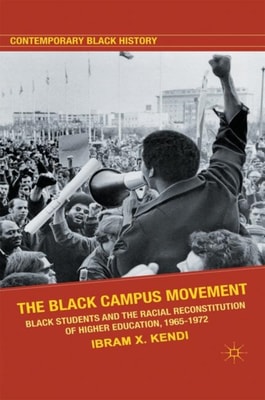
This book provides the first national study of this intense and challenging struggle which disrupted and refashioned institutions in almost every state.
This collection of historical essays on race develops lines of inquiry into race and social studies, such as geography, history, and vocational education.
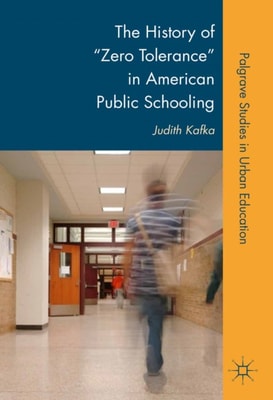
Through a case study of the Los Angeles city school district from the 1950s through the 1970s, Judith Kafka explores the intersection of race, politics, and the bureaucratic organization of schooling.
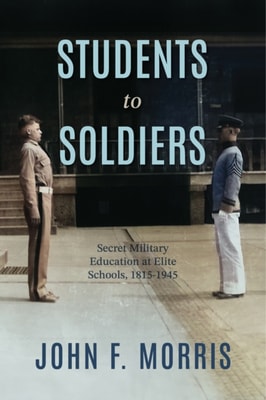
An expansive study of the brutal rites of initiation at elite institutions that shaped young men into military leaders Informed by his own experience as a cadet at West Point, John Morris offers the first transnational history of student life at elite military preparatory institutions in Europe and America and the unofficial, underground rituals, practices, and codes that formed a crucial part of the education there.