Studienarbeit aus dem Jahr 2022 im Fachbereich Soziale Arbeit / Sozialarbeit, Note: 2,3, (IU Internationale Hochschule) (Fernstudium Master Soziale Arbeit), Sprache: Deutsch, Abstract: Ziel der Arbeit wird es sein, zu beleuchten, inwiefern die Partizipation zur jetzigen Zeit mit all den Auswirkungen und Folgen der Lockdowns und Schulschließungen für Grundschulkinder in der OGS gelingen kann.
Bachelorarbeit aus dem Jahr 2021 im Fachbereich Soziale Arbeit / Sozialarbeit, Note: 1,7, (IU Internationale Hochschule), Sprache: Deutsch, Abstract: Die Arbeit legt den Fokus auf die herausfordernden Eigenschaften und Verhaltensweisen der Menschen, die an einer Borderline-Persönlichkeitsstörung leiden und auf die therapeutischen und unterstützenden Maßnahmen seitens der Psychotherapeuten und der Sozialarbeiter.
Studienarbeit aus dem Jahr 2023 im Fachbereich Soziale Arbeit / Sozialarbeit, Note: 1,0, Hochschule Fresenius; Koln, Sprache: Deutsch, Abstract: In der Arbeit erfolgt zunachst eine allgemeine und historische Einordnung Fruher Hilfen und eine Aufschlusselung des unter diesen Begriff fallenden Angebotsspektrums.
Studienarbeit aus dem Jahr 2021 im Fachbereich Soziale Arbeit / Sozialarbeit, Note: 1,3, Universität Siegen, Sprache: Deutsch, Abstract: In dieser Hausarbeit wird die Ausarbeitung eines Gruppentrainings sozialer Kompetenzen nach Hinsch und Pfingsten dargestellt.
Studienarbeit aus dem Jahr 2022 im Fachbereich Soziale Arbeit / Sozialarbeit, Note: 2,0, Katholische Fachhochschule Mainz, Sprache: Deutsch, Abstract: Warum wird konsumiert, welche Auswirkungen hat dies auf das Kohärenzgefühl und mit welchen sozialpädagogischen Interventionen können wir die Adressaten unterstützen?
Bachelorarbeit aus dem Jahr 2020 im Fachbereich Soziale Arbeit / Sozialarbeit, Hochschule Darmstadt, Sprache: Deutsch, Abstract: In dieser Arbeit wird der Frage nachgegangen, wie sich die Intersektion von Behinderung und Sexualität nicht-heterosexueller Orientierung gestaltet.
Studienarbeit aus dem Jahr 2021 im Fachbereich Soziale Arbeit / Sozialarbeit, Note: 1,3, Hochschule Emden/Leer, Veranstaltung: Theorien II, Sprache: Deutsch, Abstract: In der Hausarbeit soll eine Theorie der Sozialen Arbeit dargestellt und kritisch betrachtet werden.
Bachelorarbeit aus dem Jahr 2023 im Fachbereich Soziale Arbeit / Sozialarbeit, Note: 2,8, Duale Hochschule Baden-Württemberg, Stuttgart, früher: Berufsakademie Stuttgart (Sozialwesen), Veranstaltung: Modul 25, Sprache: Deutsch, Abstract: Gerade die Jugendhilfe hat viele Berührungspunkte mit digitaler Kommunikation, die ambulante Einzelfallhilfe noch mehr als der stationäre Bereich, denn im letzteren findet die Kommunikation durch ständige Präsenz der Fachkräfte zum Großteil noch immer persönlich, von Angesicht zu Angesicht statt.
Bachelorarbeit aus dem Jahr 2020 im Fachbereich Soziale Arbeit / Sozialarbeit, Note: 1,0, Hochschule für Angewandte Wissenschaften Hamburg, Sprache: Deutsch, Abstract: Die vorliegende Arbeit soll einen Beitrag zur aktuellen Auseinandersetzung mit Rassismus in der Sozialen Arbeit leisten.
Bachelorarbeit aus dem Jahr 2023 im Fachbereich Soziale Arbeit - Kinder- und Jugendhilfe, Note: 1,7, Ostfalia Hochschule für angewandte Wissenschaften Fachhochschule Braunschweig/Wolfenbüttel , Sprache: Deutsch, Abstract: In der vorliegenden Arbeit werden besonders die aktuellen gesetzlichen Rahmenbedingungen für ein Übergangsmanagement thematisiert.
Studienarbeit aus dem Jahr 2021 im Fachbereich Soziale Arbeit - Kinder- und Jugendhilfe, Note: 1,7, Hochschule Fresenius Frankfurt, Sprache: Deutsch, Abstract: Insbesondere liegt der Schwerpunkt dieser Arbeit auf der Umsetzung des Case Managements (CM) - Konzeptes im Jugendamt.
Seminar paper from the year 2021 in the subject Social Work, grade: 1,7, FHM University of Applied Sciences, course: Fachspezifisches Englisch, language: English, abstract: This paper focuses on the effects of child neglect on the development of children and specifically on its consequences on later academic performance and career.
Studienarbeit aus dem Jahr 2022 im Fachbereich Soziale Arbeit / Sozialarbeit, Note: 1,0, Hochschule Fresenius; Köln, Sprache: Deutsch, Abstract: Eine Bildungsgerechtigkeit soll durch den konstruktiven Umgang mit Diversität und einer individuellen Förderung ermöglicht werden.
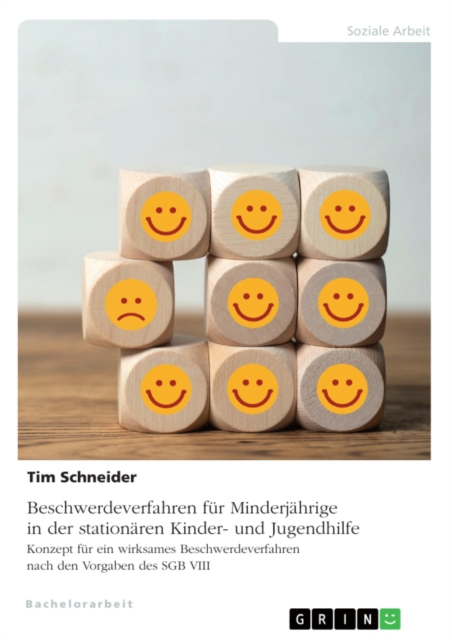
Bachelorarbeit aus dem Jahr 2022 im Fachbereich Soziale Arbeit - Kinder- und Jugendhilfe, Note: 2,1, FOM Essen, Hochschule fur Oekonomie & Management gemeinnutzige GmbH, Hochschulleitung Essen fruher Fachhochschule, Sprache: Deutsch, Abstract: Seit 2012 haben Kinder und Jugendliche, die in Einrichtungen der stationaren Jugendhilfe leben, ein Recht auf Beschwerde.
Studienarbeit aus dem Jahr 2020 im Fachbereich Soziale Arbeit / Sozialarbeit, Note: 1,0, Katholische Universität Eichstätt-Ingolstadt, Veranstaltung: Methodisches Arbeiten in den Feldern der Gefährdetenhilfe, Sprache: Deutsch, Abstract: Wie kann missbräuchlicher Alkoholkonsum im Jugendalter erklärt werden und mit welchen Methoden können eigene Ziele erreicht werden?
Studienarbeit aus dem Jahr 2021 im Fachbereich Soziale Arbeit / Sozialarbeit, Note: 1,0, Hochschule Fulda, Veranstaltung: Human- und Gesellschaftswissenschaften, Soziologie, Sprache: Deutsch, Abstract: Bei dieser Arbeit handelt es sich um eine Ausarbeitung uber qualitative Forschung und was die Ergebnisse uber einen Menschen aussagen konnen.
Studienarbeit aus dem Jahr 2021 im Fachbereich Soziale Arbeit / Sozialarbeit, Note: 14, Justus-Liebig-Universität Gießen (Institut für Kindheits- und Schulpädagogik), Veranstaltung: Essalltag in Familien, Kita & Grundschule im Dialog, Sprache: Deutsch, Abstract: Diese Hausarbeit zielt darauf ab, den Zusammenhang zwischen familiärer Armut und kindlichem Essverhalten zu beleuchten.
Studienarbeit aus dem Jahr 2021 im Fachbereich Soziale Arbeit / Sozialarbeit, Note: 1,3, Fachhochschule Erfurt (Fakultät Angewandte Sozialwissenschaften), Veranstaltung: Diversität und Inklusion/ Gender, Sprache: Deutsch, Abstract: Die vorliegende Arbeit soll die besonderen Herausforderungen für trans*Personen im Transitionsprozess darlegen und hier die Bedeutung der Wirksamkeit der Stimmangleichung bzw.
Akademische Arbeit aus dem Jahr 2020 im Fachbereich Soziale Arbeit / Sozialarbeit, Note: 1,7, Hochschule Mannheim, Sprache: Deutsch, Abstract: Die vorliegende Hausarbeit setzt sich mit der Fragestellung auseinander, inwiefern mittels des Anti-Aggressivitäts-Trainings (AAT) Gewaltprävention bei besonders gewaltbereiten Jugendlichen effektiv betrieben werden kann.
Studienarbeit aus dem Jahr 2020 im Fachbereich Soziale Arbeit / Sozialarbeit, Note: 2,0, Ostbayerische Technische Hochschule Regensburg, Sprache: Deutsch, Abstract: Die hier vorliegenden Studienarbeit hat die Gentrifizierung im Sozialraum zum Gegenstand.
Studienarbeit aus dem Jahr 2021 im Fachbereich Soziale Arbeit / Sozialarbeit, Note: 2,0, Fachhochschule Erfurt, Sprache: Deutsch, Abstract: Männer fallen auf in der Sozialen Arbeit.
Masterarbeit aus dem Jahr 2022 im Fachbereich Soziale Arbeit - Kinder- und Jugendhilfe, Note: 1,3, Hochschule Neubrandenburg (Soziale Arbeit, Bildung und Erziehung), Veranstaltung: Organisationsentwicklung und Inklusion, Sprache: Deutsch, Abstract: Die Masterarbeit ordnet die recht junge Profession der Kitasozialarbeit in das bestehende System der Kinder- und Jugendhilfe ein und stellt die unterschiedlichen Ausprägungen von Kitasozialarbeit in Deutschland dar.
Studienarbeit aus dem Jahr 2020 im Fachbereich Soziale Arbeit / Sozialarbeit, Note: 1,3, Ruprecht-Karls-Universität Heidelberg, Sprache: Deutsch, Abstract: In der vorliegenden Arbeit soll der Frage nachgegangen werden, welche Möglichkeiten die Soziale Arbeit aufweist, um positiv auf die Lebenslage demenzkranker Menschen und deren Angehörigen einzuwirken.
Essay aus dem Jahr 2020 im Fachbereich Soziale Arbeit - Kinder- und Jugendhilfe, Note: 1,0, Hochschule für angewandte Wissenschaften Augsburg, Sprache: Deutsch, Abstract: Ethische und moralische Fragen prägen die Anforderungen an die soziale Arbeit seit Anbeginn ihrer Existenz.
Studienarbeit aus dem Jahr 2022 im Fachbereich Soziale Arbeit / Sozialarbeit, Note: 1,0, (IU Internationale Hochschule), Veranstaltung: Berufsfeldentwicklung, Sprache: Deutsch, Abstract: Die vorliegende Hausarbeit befasst sich mit der Frage, inwieweit eine angewandte Trauerarbeit mit Menschen mit Demenz innerhalb der Palliative Care existiert.
Studienarbeit aus dem Jahr 2020 im Fachbereich Soziale Arbeit / Sozialarbeit, Note: 1,7, (IU Internationale Hochschule), Sprache: Deutsch, Abstract: Im Rahmen dieser literaturgestützten Hausarbeit wird das Thema, was Mädchenarbeit ist, erörtert.
Studienarbeit aus dem Jahr 2021 im Fachbereich Soziale Arbeit / Sozialarbeit, Note: 2,7, Universität Trier, Veranstaltung: AdressatInnen der Sozialpädagogik, Sprache: Deutsch, Abstract: Diese Hausarbeit beschäftigt sich mit Care Leavern als Adressat:innen der Sozialen Arbeit, geht auf die Herausforderungen der Statuspassage Leaving Care ein und arbeitet die zusammenhängende Bedeutung der Herkunftsfamilie heraus.
Studienarbeit aus dem Jahr 2020 im Fachbereich Soziale Arbeit / Sozialarbeit, Note: 1,7, Universität Duisburg-Essen, Sprache: Deutsch, Abstract: Wie und mit welchen Methoden kann die Soziale Arbeit mit Suchterkrankungen umgehen?
Studienarbeit aus dem Jahr 2022 im Fachbereich Soziale Arbeit / Sozialarbeit, Note: 2,3, (IU Internationale Hochschule), Sprache: Deutsch, Abstract: In der folgenden Arbeit soll ein Handlungsfeld der Sozialen Arbeit breitgefächert dargestellt werden.
Studienarbeit aus dem Jahr 2022 im Fachbereich Soziale Arbeit / Sozialarbeit, Note: 2,0, Universität Siegen, Sprache: Deutsch, Abstract: In der vorliegenden Hausarbeit soll sich besonders mit der Machtbeziehung zwischen den Klient*innen und den Fachkräften im Allgemeinen Sozialen Dienst des Jugendamts beschäftigt werden.
Studienarbeit aus dem Jahr 2022 im Fachbereich Soziale Arbeit / Sozialarbeit, Note: 1,0, Hochschule Fresenius Idstein, Sprache: Deutsch, Abstract: Ziel dieser Hausarbeit ist es, die Folgen von Heteronormativitat auf die Identitatsentwicklung von nicht-heterosexuellen Jugendlichen zu erforschen.
Bachelorarbeit aus dem Jahr 2022 im Fachbereich Soziale Arbeit / Sozialarbeit, Note: 2,4, Ruhr-Universitat Bochum (Sozialwissenschaft), Veranstaltung: Sozialpsychologie, Sprache: Deutsch, Abstract: Das vorrangige Ziel dieser Bachelorarbeit ist es, Handlungsempfehlungen zu erarbeiten, die zum einen die soziale Identitatsentwicklung von Kindern und Jugendlichen unterstutzen und die zum anderen die Bildung von Vorurteilen wahrend der Identitatsentwicklung vermeiden.
Studienarbeit aus dem Jahr 2020 im Fachbereich Didaktik - Ethik, Note: 1,7, Universität Koblenz-Landau, Sprache: Deutsch, Abstract: Die Arbeit befasst sich mit dem gesellschaftlichen Phänomen der Anerkennung und wie diese mit dem Ich und der Identität zusammenhängt.
Studienarbeit aus dem Jahr 2022 im Fachbereich Soziale Arbeit / Sozialarbeit, Note: 2,7, Hochschule Darmstadt, Sprache: Deutsch, Abstract: Die Traumapädagogik ermöglicht Fachkräften, mit traumatisierten Kindern zusammenzuarbeiten, durch Fort- und Weiterbildungen in ihrem Handeln und Aufgaben zu unterstützen.
Bachelorarbeit aus dem Jahr 2021 im Fachbereich Soziale Arbeit / Sozialarbeit, Note: 1,3, Fachhochschule Dortmund, Sprache: Deutsch, Abstract: Bei dieser Bachelorarbeit handelt es sich um eine theoretisch-empirische Studie anhand von Teilnehmenden des Dortmunder Förderzentrums im Rahmen der Habitustheorie Bourdieus.
Studienarbeit aus dem Jahr 2021 im Fachbereich Soziale Arbeit / Sozialarbeit, Note: 1,3, Alice-Salomon Hochschule Berlin , Sprache: Deutsch, Abstract: Diese Hausarbeit wird sich im Rahmen einer Gruppenarbeit mit der gesundheitsbezogenen Sozialarbeit auseinandersetzen und unterteilt sich in zwei Hauptteile.
Essay aus dem Jahr 2021 im Fachbereich Soziale Arbeit / Sozialarbeit, Note: 1,7, FOM Essen, Hochschule für Oekonomie & Management gemeinnützige GmbH, Hochschulleitung Essen früher Fachhochschule, Veranstaltung: Interkulturelle Soziale Arbeit, Sprache: Deutsch, Abstract: In diesem Essay werden die kulturellen Unterschiede in der Erziehung erläutert.
Studienarbeit aus dem Jahr 2021 im Fachbereich Soziale Arbeit / Sozialarbeit, Note: 1,8, HAWK Hochschule für angewandte Wissenschaft und Kunst - Fachhochschule Hildesheim, Holzminden, Göttingen, Sprache: Deutsch, Abstract: Sprechangst besitzt viele Facetten in Ausprägung und Entstehungshintergrund.
Bachelorarbeit aus dem Jahr 2022 im Fachbereich Soziale Arbeit / Sozialarbeit, Note: 1,0, Hochschule Coburg (FH), Sprache: Deutsch, Abstract: Die Intention der vorliegenden Arbeit ist es, mogliche Entwicklungsverlaufe aufzuzeigen und die Konsequenzen fur das professionelle Handeln in der Praxis der Sozialen Arbeit darzulegen.
Seminar paper from the year 2020 in the subject Social Work, grade: 1,0, University of Ljubljana (Faculty of social work), course: Concepts of social work with young people, language: English, abstract: "e;Christiane F.
Masterarbeit aus dem Jahr 2021 im Fachbereich Soziale Arbeit / Sozialarbeit, Note: 1,7, Ostbayerische Technische Hochschule Regensburg, Sprache: Deutsch, Abstract: Das Ziel der vorliegenden Masterarbeit ist es, den Erfolg der AfD in den neuen Bundesländern zu erklären.
Studienarbeit aus dem Jahr 2021 im Fachbereich Soziale Arbeit / Sozialarbeit, Note: 1,0, Universität Hildesheim (Stiftung), Sprache: Deutsch, Abstract: Diese Arbeit beschäftigt sich mit der Frage, ob die Soziale Arbeit auch eine Verantwortung in der Klimakrise trägt.
Studienarbeit aus dem Jahr 2021 im Fachbereich Soziale Arbeit / Sozialarbeit, Note: 1,0, Fachhochschule Potsdam, Sprache: Deutsch, Abstract: Die Hausarbeit beschäftigt sich mit der sozialen Inklusion von Kindern und Jugendlichen und den Auswirkungen der sozialen Milieuzugehörigkeit.
Forschungsarbeit aus dem Jahr 2020 im Fachbereich Soziale Arbeit / Sozialarbeit, Note: 1,0, Hochschule Darmstadt, Sprache: Deutsch, Abstract: In diesem Forschungsbericht werden die Ergebnisse einer eigens geführten Umfrage, welche sich mit der Frage beschäftigt, ob sich der gesellschaftliche Zusammenhalt und die Solidarität durch die Corona Pandemie verändert hat, vorgestellt.
Studienarbeit aus dem Jahr 2022 im Fachbereich Soziale Arbeit / Sozialarbeit, Note: 1,3, , Sprache: Deutsch, Abstract: Diese Arbeit beschäftigt sich mit dem Thema Inklusion in der Offenen Kinder- und Jugendarbeit und stellt die Herausforderungen und Chancen von Inklusion bezogen auf Kinder und Jugendliche mit Behinderungen dar.