After working in the field of early childhood education extensively, Jill McFarren Aviles and Erika Amadee Flores concluded that coaching educators from a holistic, culturally responsive, and strength-based perspective are three of the most powerful tools that will enhance the lives of young children and their families and contribute to equity in early childhood settings.
In Creating a Reggio-Inspired STEM Environment for Young Children, the newest addition in the Redleaf Press Quick Guide series, award-winning educator Vicki Carper Bartolini offers practical suggestions and resources for rethinking your early learning environment with a focus on STEM, using the Reggio Emilia approach lens honoring a student-centered, self-guided curriculum based on principles of respect, responsibility, and community through exploration and play.
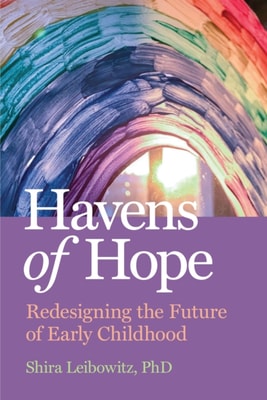
Havens of Hope shares the hopeful energy and positive transformation that is emerging through the early childhood education field in this historic time of pandemic, economic uncertainty, and protests for racial equity.
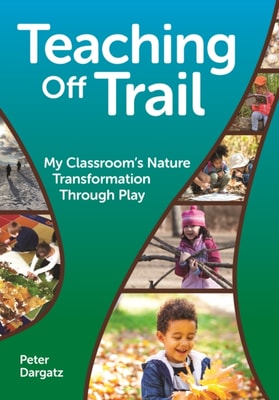
Teaching Off Trail describes the transformation of Peter Dargatz, a national board-certified teacher, and public school coordinator, from an anxious assessor to a fair and fun facilitator of learning.
Transforming Your Outdoor Early Learning Environment invites center and home-based educators to reimagine and reconstruct their image of conventional children's play yards as they know them and to create beautiful outdoor learning spaces on a limited budget with natural elements and loose parts that offer children opportunity for irresistible engaging explorations.
Emergent Curriculum with Toddlers addresses and defines the practice of emergent curriculum and its specialization and integration into toddler programs.
With new chapters and updates from early childhood leaders Deb Curtis and Margie Carter invite early childhood educators to learn the art and skill of observation.
Design in Mind outlines a framework for a design thinking process that helps educators tackle complex challenges in their educational ecosystems step by step to quickly find fresh ideas and solutions.
Kindergarten teacher Deanna Pecaski McLennan, PhD, takes readers on a journey through her own kindergarten classroom and how she's actively cultivating computational thinking in her students through a Reggio Emilia lens and emergent curriculum.
Positive Behavior Interventions & Supports (PBIS) is an evidence-based framework for preventing and addressing challenging behaviors in the classroom; it has shown to be effective from preschool through high school.
Trauma-Responsive Strategies for Early Childhood offers an overview of trauma and its impact on young children, as well as specific strategies and techniques educators and administrators can use to create classroom and school communities that improve the quality of care for this vulnerable population.
The benefits of an optimistic thinking style have slowly been seeping into early childhood teaching practice through research on resiliency, leadership, health, and what has been termed "e;grit.
<i> Why Temperament Matters: Guidance Strategies for Young Children</i> addresses early childhood behavior guidance strategies related to children's specific temperament traits.
For as long as there have been heroes and villains in our books, on our TVs, and in our everyday lives, children have been imitating them in their play.
Family Child Care Contracts and Policies, Fourth Edition offers the most up-to-date tools for family child care providers to establish and enforce contracts and policies.
Transformational Coaching for Early Childhood Educators is a reflective workbook designed to help early childhood professionals strengthen their coaching skills and their ability to facilitate transformational learning in others.
After studying the current research on literacy learning for young children, delving into the beliefs and schools of Reggio Emilia, and discovering the Maker Movement, the authors created StoryMaking.
Nature-Based Learning for Every Preschool Setting is designed to provide ideas for all early childhood educators ranging from novice nature educators to highly experienced nature educators in a wide range of ecosystems, including forests, cities, prairies, coastal, and deserts.
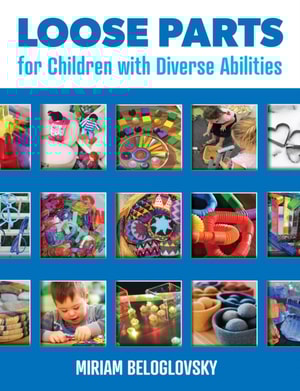
Loose parts are natural or synthetic found, bought, or upcycled materials-acorns, hardware, stones, aluminum foil, fabric scraps, for example-that children can move, manipulate, control, and change within their play.
Attention seeking is seen as misbehavior in young children, and giving them the attention they need is often times interpreted as reinforcement of bad behavior.
With more than 50 inquiry-based and child-centered activities and exercises, A Little Drama will help teachers (including those with no theater experience of their own) develop the body, voice, mind, and heart of young children.
This is a user-friendly book that speaks to the realities, challenges, and needs of daily life with rambunctious, enthusiastic, unpredictable toddlers in group settings, thus increasing the quality of toddler care.
Graceful Leadership in Early Childhood Education is a book to turn to when there is a challenge that needs tackling, when you need a boost of inspiration, or when you just want to reflect on your own journey.
RIGOROUS DAP in the Early Years: From Theory to Practice provides teachers with a roadmap for teaching that helps children meet academic expectations and maintains focus on the appropriate development of the whole child.
<i>Working Well with Babies</i> describes the comprehensive competencies (including the knowledge, dispositions, and skills) that educators of infants and toddlers must have to provide optimal support for infants and toddlers.