This book provides a narrative account of the experiences of twenty former scholarship students from historically disadvantaged communities who attended elite public and private secondary schools.
This book explores the formation of human capital in education, interrogating its social and ethical implications, and examining its role in generating policies and practices that govern curriculum studies as an academic field.
This volume examines how several key components of the mathematics education system in the United States fail to provide teachers with adequate and effective tools to teach mathematics in K-12 classrooms.
Cutting through the political rhetoric about the power of sport as a tool for social change and personal improvement, this book offers insight into how and why participating in sport can be good for children and young people.
This book deals with the general principles, policy instruments, sustainability of supply chain, and business of health-care waste (HCW) management including inputs on exercise in immune health defense against COVID 19.
Not much has been written about the private education sector in Singapore despite the fact that the sector houses about 300 private education institutions (PEIs) and enrolls about 150,000 students.
Child and Adolescent Psychology provides an accessible and thorough introduction to human development by integrating insights from typical and atypical development.
Moving beyond the traditional focus on curriculum and pedagogy, this volume explores hidden dimensions of sexuality education in schools and how sexual meanings are produced.
Bringing together international research on nature of science (NOS) representations in science textbooks, the unique analyses presented in this volume provides a global perspective on NOS from elementary to college level and discusses the practical implications in various regions across the globe.
This collection of engaging and simple to use activities will help teachers to develop children's mental and emotional wellbeing while also including the thinking skills necessary for learning.
This volume presents a selection of some of the most exciting new perspectives on moral development that have emerged over the last decade and have transformed our understanding of the field.
Responding to the issues and challenges of teaching and learning about climate change from a science education-based perspective, this book is designed to serve as an aid for educators as they strive to incorporate the topic into their classes.
The professional learning framework this book presents is designed to support teachers' understandings of how language functions in their academic disciplines.
Coaching Emotional Intelligence in the Classroom is a practical resource to help Key Stage 2 and Key Stage 3 teachers explore and understand a range of concepts, principles and techniques gathered under the term 'emotional intelligence', and the way that this powerfully influences pupils' behaviour and learning in the classroom.
Now in its second edition, Teaching and Learning through Reflective Practice is a practical guide to enable all those involved in educational activities to learn through the practices of reflection.
Children's Creative Music-Making with Reflexive Interactive Technology discusses pioneering experiments conducted with young children using a new generation of music software for improvising and composing.
Narrowing the Achievement Gap proposes a radical change to our conception of learning, education and schooling, arguing that parental engagement is the best lever we have for school improvement and closing the achievement gap.
Runner up in Teach Secondary's Technology and Innovation Awards 2014 sponsored by Lego, Brilliant Ideas for using ICT in the Inclusive Classroom provides lots of simple practical ideas showing teachers and support staff how they can use ICT to boost the achievement of all pupils.
Written to explain why children need to play and offering practical guidance on how to best support children's development through play, this fully updated third edition includes a wealth of new information to reflect recent changes in the curriculum and early years qualifications.
How to Teach Fiction Writing is a practical manual to help teachers of junior classes to focus on the key aspects of developing children's storywriting.
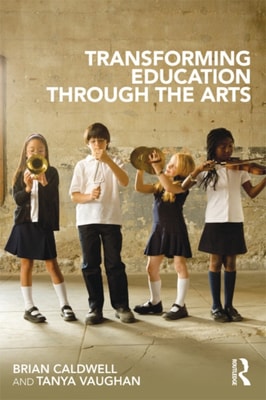
This timely book takes up the challenge of maintaining programs in the arts in the face of unrelenting pressure from two directions; the increasing focus on literacy and numeracy in schools, teamed with the cut-backs in public funding that often affect the arts most severely.
Despite variations of educational systems, when transitions in education occur, the pedagogical challenges that teachers and pupils undergo are quite similar across the globe.
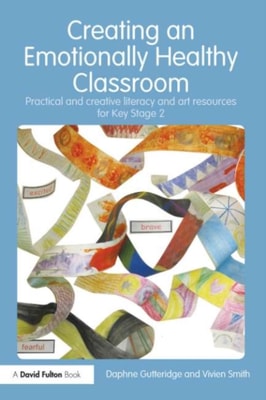
This practical resource book for Key Stage 2 explores a range of emotions using both original poetry and well-known artworks to stimulate discussion in the classroom.
This book takes a fresh look at secondary urban English classrooms and at what happens when students and their teachers explore literature collaboratively.
Interdisciplinary Perspectives on Learning to Read brings together different disciplinary perspectives and studies on reading for all those who seek to extend and enrich the current practice, research and policy debates.
Offering a philosophy, methodology, and examples for history instruction that are active, imaginative, and provocative, this text presents a fully developed pedagogy based on problem-solving methods that promote reasoning and judgment and restore a sense of imagination and participation to classroom learning.
With the increased focus on providing for children's mental health, there is ever more demand for resources that will support educational settings to help children develop the skills needed to cope in today's world.
This book concentrates exploring the landscape of private education in contemporary China, including pre-schools, compulsory education, high schools, and higher education.
This book investigates the preparation of secondary history and social studies (SS) teachers to teach English language learners (ELLs) in twenty-first century classrooms.