Aimed at politics students in their final year of secondary education or beginning their degrees, this highly readable book is the ideal introduction to politics.
Critical Thinking Skills for your Education Degree provides you with a sound knowledge and understanding of: the nature of critical thinking, and its relevance and importance in HE how to adopt a critical approach to all aspects of your studies within education the importance of active, critical reading, and how it allows you an efficient, principled, effective assessment of the literature in your field the need to adopt a critical approach to writing, characterised by analytical and evaluative use of sources and the development of your own 'voice' If you are embarking on a university education or teaching degree, the books in this series will help you acquire and develop the knowledge, skills and strategies you need to achieve your goals.
Most international students need to write essays and reports for exams and coursework, but writing good academic English is one of the most demanding tasks students face.
Most international students need to write essays and reports for exams and coursework, but writing good academic English is one of the most demanding tasks students face.
The most comprehensive and up-to-date source available for college reading and study strategy practitioners and administrators, the Third Edition of the Handbook of College Reading and Study Strategy Research reflects and responds to changing demographics as well as politics and policy concerns in the field since the publication of the previous edition.
The most comprehensive and up-to-date source available for college reading and study strategy practitioners and administrators, the Third Edition of the Handbook of College Reading and Study Strategy Research reflects and responds to changing demographics as well as politics and policy concerns in the field since the publication of the previous edition.
An Adventure in Service-Learning argues that education can provide not just knowledge and skills but it can also encourage the development of values and responsibility Service-Learning is a teaching method unlike any other.
An Adventure in Service-Learning argues that education can provide not just knowledge and skills but it can also encourage the development of values and responsibility Service-Learning is a teaching method unlike any other.
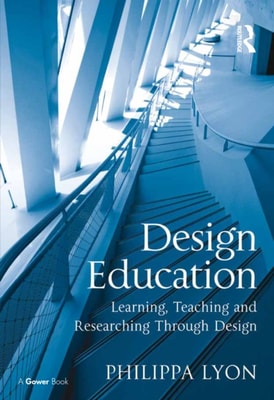
Embracing the richness, complexity and possibilities of learning and teaching in design, Design Education takes the vantage point of the 'outsider' and explores what makes design so compulsively fascinating for those who teach and study it.
Embracing the richness, complexity and possibilities of learning and teaching in design, Design Education takes the vantage point of the 'outsider' and explores what makes design so compulsively fascinating for those who teach and study it.
Despite ubiquitous powerful technologies such as networked computers, global positioning systems, and cell phones; human failures in decision-making and performance continue to have disastrous consequences.
Despite ubiquitous powerful technologies such as networked computers, global positioning systems, and cell phones; human failures in decision-making and performance continue to have disastrous consequences.
Growing student numbers, increased student expectations, new approaches to learning, and fast-paced technological advances all contribute to the need for universities to take a more strategic approach to their buildings, including formal and informal learning spaces.
Growing student numbers, increased student expectations, new approaches to learning, and fast-paced technological advances all contribute to the need for universities to take a more strategic approach to their buildings, including formal and informal learning spaces.
Recent years have witnessed growing interest in a series of issues related to migration, including identity formation and change, the role of social capital and social networks, ethnic discrimination, racism and xenophobia, socio-political participation and mobilisation and the complex nature of the causal mechanisms linked to migration - issues that are better highlighted and investigated using qualitative methods.
Recent years have witnessed growing interest in a series of issues related to migration, including identity formation and change, the role of social capital and social networks, ethnic discrimination, racism and xenophobia, socio-political participation and mobilisation and the complex nature of the causal mechanisms linked to migration - issues that are better highlighted and investigated using qualitative methods.
Academics often direct their research 'across' in order to examine issues that grip members of the middle classes, or 'down' in order to understand the difficulties workers and other marginalized groups endure.
Academics often direct their research 'across' in order to examine issues that grip members of the middle classes, or 'down' in order to understand the difficulties workers and other marginalized groups endure.
After widespread neglect over many years, the study of human sexuality has recently come to the forefront of many of the most important debates in contemporary society and culture.
After widespread neglect over many years, the study of human sexuality has recently come to the forefront of many of the most important debates in contemporary society and culture.
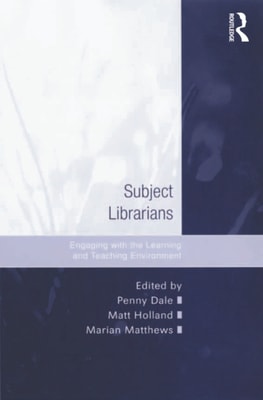
The university subject librarians' role is at the centre of new models of teaching and learning, yet further debate and published contributions are still needed to shape its future direction.
The university subject librarians' role is at the centre of new models of teaching and learning, yet further debate and published contributions are still needed to shape its future direction.
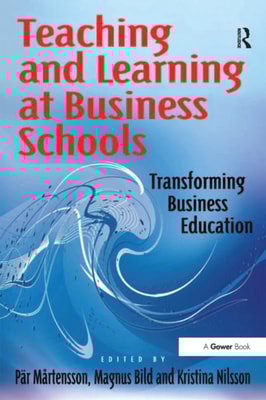
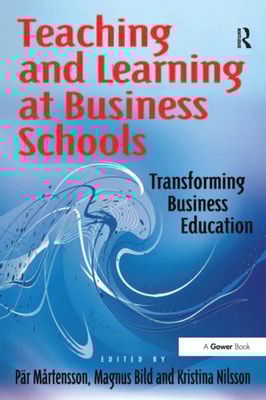
Business schools are facing ever increasing internationalization: students are far less homogenous than before, faculty members come from different countries, and teaching is carried out in second (or even third) languages.
Business schools are facing ever increasing internationalization: students are far less homogenous than before, faculty members come from different countries, and teaching is carried out in second (or even third) languages.
Because the mentoring process involves a number of distinct stages, a wide range of skills are needed throughout the process and these skills are situational.