Bachelorarbeit aus dem Jahr 2020 im Fachbereich Didaktik - Sport, Sportpädagogik, Note: 1,0, Universität Münster, Sprache: Deutsch, Abstract: Ziel dieser Arbeit ist es, aufbauend auf der theoriebasierten Grundlage des Inklusionsansatzes und des Schwimmens bei einer körperlichen Behinderung, die Herausforderungen eines inklusiven Unterrichts herauszuarbeiten und eine inklusive Unterrichtstunde zum Thema Gleiten im Rahmen des Anfängerschwimmens in der Grundschule zu entwickeln.
Studienarbeit aus dem Jahr 2021 im Fachbereich Padagogik - Sozialpadagogik, Note: 1,3, IBA Berlin: Internationale Berufsakademie der F+U Unternehmensgruppe gGmbH, Sprache: Deutsch, Abstract: Sprache ist eine der wichtigsten Grundlagen der Kinder, um sich in allen Bildungsbereichen zu entwickeln und um einen optimalen Start in der Schule und bestmogliche Voraussetzungen fur den spateren Bildungsweg zu bekommen.
Bachelorarbeit aus dem Jahr 2021 im Fachbereich Pädagogik - Sozialpädagogik, Libera Università di Bolzano, Sprache: Deutsch, Abstract: Inwieweit haben das Bewusstsein und die Auseinandersetzung mit de persönlichen Stärken, Potentialen sowie der eigenen Resilienz Auswirkungen auf die Arbeit eines Sozialpädagogen?
Bachelorarbeit aus dem Jahr 2020 im Fachbereich Didaktik für das Fach Deutsch - Deutsch als Zweitsprache, DaZ, Note: 2,0, Friedrich-Schiller-Universität Jena (Deutsch als Fremdsprache), Sprache: Deutsch, Abstract: Diese Arbeit befasst sich mit Thema Rassismus an deutschen Schulen.
Forschungsarbeit aus dem Jahr 2020 im Fachbereich Didaktik - Mathematik, Note: 1,7, Humboldt-Universität zu Berlin, Sprache: Deutsch, Abstract: In diesem Projekt soll der Frage nachgegangen werden, wie Grundschulkinder Muster in operativ strukturierten Übungen beschreiben.
Unterrichtsentwurf aus dem Jahr 2023 im Fachbereich Didaktik - Lesen, Note: 1,0, , Sprache: Deutsch, Abstract: Das Stundenziel und somit Kern der Unterrichtssequenz, stellt die Weiterentwicklung der Lesefähigkeiten der Schüler:innen dar, indem diese trainieren, mit einem spezifisch erarbeiteten Kriterium ("wie ein/e Schauspieler:in = betont lesen) ausgewählte Texte sinngestaltend vorzulesen.
Studienarbeit aus dem Jahr 2020 im Fachbereich Didaktik für das Fach Deutsch - Deutsch als Fremdsprache, DaF, Note: 1,0, Rheinische Friedrich-Wilhelms-Universität Bonn, Sprache: Deutsch, Abstract: Diese Arbeit beschäftigt sich damit, welche Ziele eine Sprachlernberatung verfolgt und wie eine erfolgreiche Sprachlernberatung aussehen kann.
Bachelorarbeit aus dem Jahr 2022 im Fachbereich Pädagogik - Sozialpädagogik, Note: 2,0, Fachhochschule Dresden, Sprache: Deutsch, Abstract: Im Rahmen der Bachelorarbeit werden elterliche Trennungsprozesse und das Wohlergehen der beteiligten Kinder näher betrachtet, darüber hinaus werden die Beratungsmöglichkeiten in der Sozialen Arbeit aufgezeigt.
Masterarbeit aus dem Jahr 2020 im Fachbereich Didaktik für das Fach Deutsch - Deutsch als Fremdsprache, DaF, Note: 16, Université de Yaoundé I (Department of Germanic Languages, Literatures and Civilizations), Veranstaltung: Linguistique et Didactiques de l'Allemand, Sprache: Deutsch, Abstract: In der vorliegenden Arbeit geht es darum, die kooperationsfördernden Sozialformen, also diejenigen Formen, bei denen Lernende sprachlich und inhaltlich kooperativ arbeiten, zu untersuchen, da diese die Schüleraktivität im Unterricht begünstigen und ein besseres Lernen fördern sollten.
Unterrichtsentwurf aus dem Jahr 2021 im Fachbereich Didaktik - Sport, Sportpadagogik, Note: 1,0, , Sprache: Deutsch, Abstract: Dieser Unterrichtentwurf beschaftigt sich mit der zentralen Rolle des Stellspielers fur den Angriffsaufbau uber Position III im Volleyball und richtet sich an die Oberstufen des Gymnasiums.
Fachbuch aus dem Jahr 2023 im Fachbereich Didaktik für das Fach Deutsch - Deutsch als Zweitsprache, DaZ, Note: 2,0, , Veranstaltung: Online Zusatzqualifizierung für Lehrkräfte in Berufssprachkursen im Fachbereich DaZ, Sprache: Deutsch, Abstract: Das Portfolio dient dazu, die erworbenen Kenntnisse und Fähigkeiten zu dokumentieren und den erfolgreichen Abschluss der Zusatzqualifizierung nachzuweisen.
Unterrichtsentwurf aus dem Jahr 2020 im Fachbereich Didaktik fur das Fach Deutsch - Deutsch als Zweitsprache, DaZ, Note: 1,0, , Sprache: Deutsch, Abstract: Portfolio, bestehend aus Unterrichtsfeinplanung, Lehrwerksanalyse und Selbsteinschatzung der Lehrerfahrung, als Nachweis der erfolgreichen Teilnahme an der Zusatzqualifizierung fur Lehrkrafte im Bereich Deutsch als Zweitsprache.
Bachelorarbeit aus dem Jahr 2020 im Fachbereich Pädagogik - Sozialpädagogik, Note: 2,5, Fachhochschule des Mittelstands, Sprache: Deutsch, Abstract: Im Wandel der heutigen Gesellschaft sind besonders die digitalen Medien unabdingbar.
Bachelorarbeit aus dem Jahr 2021 im Fachbereich Padagogik - Integration, Note: 2,0, Deutsche Hochschule fur Gesundheit und Sport (vormals H:G Hochschule fur Gesundheit & Sport, Technik & Kunst), Sprache: Deutsch, Abstract: Diese Forschungsarbeit befasst sich mit der wahrgenommenen Diskriminierung und ihren Folgen fur die Betroffenen.
Unterrichtsentwurf aus dem Jahr 2021 im Fachbereich Didaktik - Mathematik, Pädagogische Hochschule Karlsruhe (Institut für Mathematik und Informaitk), Sprache: Deutsch, Abstract: Dieser ausführliche Unterrichtsentwurf entstand im Semesterpraktikum an einer Gemeinschaftsschule in BW.
Studienarbeit aus dem Jahr 2020 im Fachbereich Didaktik - Geschichte, Note: 1,7, Bergische Universität Wuppertal, Sprache: Deutsch, Abstract: Anhand der berühmten Fotografie Alfred Eisenstaedts "V-J Day in Times Square" von 1945 soll mithilfe einer schrittweisen Bilderschließung veranschaulicht werden, wie die Vorteile und Chancen des Mediums Bild für den Geschichtsunterricht genutzt und die Nachteile beziehungsweise Risiken vermieden werden können.
Masterarbeit aus dem Jahr 2020 im Fachbereich Didaktik für das Fach Deutsch - Deutsch als Fremdsprache, DaF, Note: 1,15, Universität Kassel (Deutsch als Fremd- und Zweitsprache), Sprache: Deutsch, Abstract: Als chinesische Muttersprachlerin mit mehrjähriger Deutschlernerfahrung und einiger Deutschlehrerfahrung in China beobachtet die Verfasserin der vorliegenden Arbeit häufig die Besonderheiten der Aussprache chinesischer Deutschlernender.
Akademische Arbeit aus dem Jahr 2021 im Fachbereich Pädagogik - Leseerziehung, Note: 1,0, Universität Regensburg, Sprache: Deutsch, Abstract: Das Erlernen von Lesen und einem Verständnis für Texte und Geschriebenes geschieht meist schon im Kindheitsalter und Menschen behalten diese wichtige Fertigkeit ihr Leben lang bei.
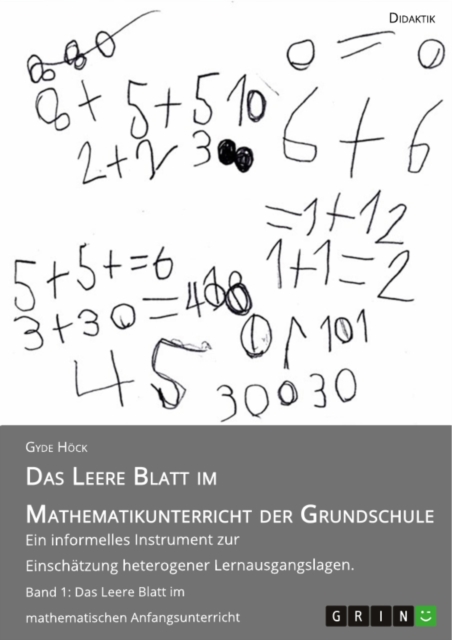
Fachbuch aus dem Jahr 2021 im Fachbereich Didaktik - Mathematik, , Sprache: Deutsch, Abstract: Der Anspruch an einen aktuellen Mathematikunterricht in der Grundschule ist in den vergangenen Jahrzehnten enorm gewachsen.
Masterarbeit aus dem Jahr 2021 im Fachbereich Didaktik - Mathematik, Note: 1,3, Carl von Ossietzky Universität Oldenburg (Pädagogik), Sprache: Deutsch, Abstract: In dieser Masterarbeit soll der Fokus auf die Förderung von leistungsstarken Schülerinnen speziell im Mathematikunterricht liegen.
Akademische Arbeit aus dem Jahr 2021 im Fachbereich Didaktik für das Fach Deutsch - Deutsch als Fremdsprache, DaF, , Sprache: Deutsch, Abstract: In der Entdeckung der Menschenideen trägt eigentlich die Musik zum Anspornen und sogar zur Begeisterung der breitesten Welt bei.
Studienarbeit aus dem Jahr 2022 im Fachbereich Pädagogik - Kunstpädagogik, Note: 1,0, Universität Osnabrück, Sprache: Deutsch, Abstract: Die Forschungen der Pädagogik kommen zu einem Konsens, dass neben den anderen Lernenden und der Lehrkraft der Raum selbst als dritte Instanz erheblichen Einfluss auf Lehr-Lernarrangements hat.
Studienarbeit aus dem Jahr 2020 im Fachbereich Didaktik - Mathematik, Note: 1,0, Pädagogische Hochschule Freiburg im Breisgau, Sprache: Deutsch, Abstract: Diese Hausarbeit beschäftigt sich speziell mit der Rolle von Schulbüchern im Mathematikunterricht.
Unterrichtsentwurf aus dem Jahr 2022 im Fachbereich Didaktik - Mathematik, , Sprache: Deutsch, Abstract: Die Schüler und Schülerinnen sind in der Lage, zwei- und dreistufige kombinatorische Aufgabenstellungen zu lösen (zunächst durch Ausprobieren, später zunehmend systematisch), verschiedene Herangehensweisen zum Lösen kombinatorischer Aufgabenstellungen zu nutzen und zu vergleichen und eigene Vorgehensweisen beim Lösen kombinatorischer Aufgabenstellungen zu beschreiben.
Studienarbeit aus dem Jahr 2020 im Fachbereich Padagogik - Inklusion, Note: 2,0, (IU Internationale Hochschule), Sprache: Deutsch, Abstract: Diese Hausarbeit beschaftigt sich damit, wie die Durchfuhrung der Inklusion in Bezug auf Menschen mit einer Autismus-Spektrum-Storung gelingt.
Studienarbeit aus dem Jahr 2021 im Fachbereich Didaktik - Sport, Sportpädagogik, Note: 1,3, , Veranstaltung: Sportwissenschaftliche und Sportunterrichtliche Arbeitsmethoden und Inklusion, Sprache: Deutsch, Abstract: In der vorliegenden Arbeit gilt es die Fragestellung, ob Asthma bronchiale ein Grund für den Ausschluss aus dem Schwimmunterricht darstellt, zu thematisieren.
Studienarbeit aus dem Jahr 2020 im Fachbereich Didaktik - Lesen, Note: 1,7, Leuphana Universität Lüneburg (Sprache), Sprache: Deutsch, Abstract: Die vorliegende Arbeit setzt ihren Fokus auf die Förderung der Leseflüssigkeit.
Bachelorarbeit aus dem Jahr 2021 im Fachbereich Pädagogik - Sozialpädagogik, Note: 1,6, , Sprache: Deutsch, Abstract: Die vorliegende Bachelorarbeit widmet sich der Umsetzung der Entwicklungstherapie/Entwicklungspädagogik (ETEP) im Kontext des Kompetenzzentrums für Kinder mit Sprach- und/oder Sprechstörungen.
Studienarbeit aus dem Jahr 2022 im Fachbereich Pädagogik - Sozialpädagogik, Note: 2,0, Universität Hamburg, Veranstaltung: Seminar Vertiefung, Sachunterricht, Sprache: Deutsch, Abstract: Gegenstand dieser Hausarbeit ist die Betrachtung der Bildungschancen der Migrantenkinder im Vergleich zu den einheimischen.
Studienarbeit aus dem Jahr 2020 im Fachbereich Didaktik - Mathematik, Note: 1,0, Dresden International University, Sprache: Deutsch, Abstract: Bei dieser Arbeit handelt es sich um einen ausführlichen Unterrichtsentwurf für das Fach Mathematik in der Grundschule.
Unterrichtsentwurf aus dem Jahr 2020 im Fachbereich Didaktik - Sport, Sportpädagogik, Note: 1,3, Universität Hamburg, Sprache: Deutsch, Abstract: Das Ziel dieser Arbeit ist es, eine Möglichkeit sowie Methode im Turnen aufzuzeigen, welche im Schulsport ausgeübt werden sollen.
Studienarbeit aus dem Jahr 2021 im Fachbereich Didaktik für das Fach Deutsch - Deutsch als Fremdsprache, DaF, Note: 2,7, Friedrich-Schiller-Universität Jena, Sprache: Deutsch, Abstract: Das Ziel dieser Arbeit ist es, Qualitätskriterien für die berufsorientierten DaF-Lehrwerke auf dem B1-Sprachniveau zu entwickeln, die die ausländischen Bewerber auf ein Vorstellungsgespräch in Deutschland vorbereiten.
Essay aus dem Jahr 2020 im Fachbereich Pädagogik - Inklusion, Note: 1,0, FOM Hochschule für Oekonomie & Management gemeinnützige GmbH, Neuss früher Fachhochschule, Sprache: Deutsch, Abstract: Der erste Teil dieser Arbeit widmet sich der terminologischen Klärung.
Bachelorarbeit aus dem Jahr 2020 im Fachbereich Pädagogik - Inklusion, Note: 2,0, , Sprache: Deutsch, Abstract: Die folgende Arbeit beschäftigt sich mit dem Inklusionskonzept im Zuge der UN-Behindertenrechtskonvention und den Maßnahmen, die für die Ermöglichung eines inklusiven Schulsystems notwendig sind.
Bachelorarbeit aus dem Jahr 2020 im Fachbereich Pädagogik - Sozialpädagogik, Note: 1,0, Hamburger Fern-Hochschule, Sprache: Deutsch, Abstract: Die Autorin hat in 22 Berufsjahren in der stationären Vollversorgung einige Veränderungen miterlebt und mitgetragen.
Bachelorarbeit aus dem Jahr 2022 im Fachbereich Pädagogik - Sozialpädagogik, Note: 1,3, Steinbeis-Hochschule Berlin (NRW), Sprache: Deutsch, Abstract: Die Bachelorthesis beschäftigte sich mit der Planung, Durchführung und Evaluation eines viertägigen Seminars zum Thema "Sekundäre Methoden der Sozialen Arbeit" im Rahmen des Bachelorstudienganges an der Steinbeis Hochschule NRW in Essen-Kupferdreh.
Bachelorarbeit aus dem Jahr 2020 im Fachbereich Pädagogik - Sozialpädagogik, Note: 2,0, Fachhochschule des Mittelstands (staatlich anerkannte, private FHM), Sprache: Deutsch, Abstract: Die vorliegende Bachelorarbeit beschäftigt sich mit der Trauer jüngerer Kinder, speziell aber mit Kindern, die einen Elternteil verloren haben.
Fachbuch aus dem Jahr 2020 im Fachbereich Pädagogik - Inklusion, Note: 1,0, Universität Erfurt (Förderpädagogik), Veranstaltung: Modul Bachelorarbeit Geistige Entwicklung, Sprache: Deutsch, Abstract: Eine Arbeit, die die Gelingensbedingungen für geistig behinderte Personen zu mehr selbstbestimmter Teilhabe am gesellschaftlichen Leben hinsichtlich Sprachbarrieren und weiteren Hürden in der Thematik Aufklärung/Verhütung/Geschlechtskrankheiten beleuchtet.
Studienarbeit aus dem Jahr 2022 im Fachbereich Didaktik - Mathematik, Note: 1,3, Technische Universität Carolo-Wilhelmina zu Braunschweig, Sprache: Deutsch, Abstract: In dieser Arbeit wird das mathematische Problemlösen genauer betrachtet, wobei zu Beginn wissenschaftliche Hintergrundinformationen zu dieser Kompetenz geliefert werden.
Akademische Arbeit aus dem Jahr 2022 im Fachbereich Padagogik - Sozialpadagogik, Note: 1,25, , Sprache: Deutsch, Abstract: Das Ziel dieser Arbeit ist es herauszustellen, inwiefern die Selbstregulation der Kinder durch die padagogische Fachkraft gefordert werden kann, sodass ein langfristiger Erfolg gesichert wird.
Masterarbeit aus dem Jahr 2020 im Fachbereich Pädagogik - Sozialpädagogik, Note: 1,3, Universität Hildesheim (Stiftung), Sprache: Deutsch, Abstract: In dieser Arbeit wird hinterfragt, wie Sozialpädagog_innen bestmöglich mit „Systemsprenger_innen“ arbeiten können.
Bachelorarbeit aus dem Jahr 2022 im Fachbereich Didaktik - Sport, Sportpädagogik, Note: 1,0, Kirchliche Pädagogische Hochschule Wien / Krems, Sprache: Deutsch, Abstract: Der Schwerpunkt dieser Arbeit liegt vorwiegend der Frage zugrunde, wie Mädchen für die Sportart Fußball nachhaltig begeistert werden können.
Studienarbeit aus dem Jahr 2021 im Fachbereich Didaktik - Mathematik, , Sprache: Deutsch, Abstract: Das Thema dieser Unterrichtseinheit lautet: "Rechnen mit Geldscheinen und dessen Nutzung in der Tausenderstruktur".
Unterrichtsentwurf aus dem Jahr 2021 im Fachbereich Didaktik - Mathematik, Note: 1,0, , Sprache: Deutsch, Abstract: Diese Arbeit stellt einen Unterrichtsentwurf im Fach Mathematik zum Thema "Die Kellerzahlen spielen verrückt!
Bachelorarbeit aus dem Jahr 2022 im Fachbereich Didaktik - Sport, Sportpädagogik, Note: 1,7, Georg-August-Universität Göttingen (Sportwissenschaften), Sprache: Deutsch, Abstract: Diese Arbeit beschäftigt sich mit der Entstehung, den Formen und den Ursachen von Angst, aber besonders damit, wie Lehrer*innen den Sportunterricht angstreduzierend gestalten und den Schüler*innen einen geeigneten Umgang mit der Angst vermitteln können.
Examensarbeit aus dem Jahr 2021 im Fachbereich Didaktik für das Fach Deutsch - Deutsch als Zweitsprache, DaZ, Note: 1,00, , Sprache: Deutsch, Abstract: Die Arbeit befasst sich mit dem Ausbau der mündlichen Sprachkompetenz von Jugendlichen einer 6.
Studienarbeit aus dem Jahr 2023 im Fachbereich Pädagogik - Integration, Note: 1, Donau-Universität Krems - Universität für Weiterbildung, Sprache: Deutsch, Abstract: Die vorliegende Arbeit setzt sich mit dem Thema Intersektionalität auseinander.
Projektarbeit aus dem Jahr 2021 im Fachbereich Didaktik für das Fach Deutsch - Deutsch als Zweitsprache, DaZ, Note: 2,0, Universität zu Köln (Mercator Institut), Sprache: Deutsch, Abstract: Im Rahmen meines Praxissemesters durfte ich drei Monate lang den Religionsunterricht einer fünften Klasse übernehmen.
Unterrichtsentwurf aus dem Jahr 2021 im Fachbereich Didaktik - Sport, Sportpädagogik, Note: 1,4, Martin-Luther-Universität Halle-Wittenberg, Veranstaltung: Laufbahnprüfung Vorbereitungsdienst, Sprache: Deutsch, Abstract: In der vorliegenden Unterrichtsstunde schulen die SuS mit Hilfe von Laufspielen und verschiedenen Laufstationen ihre Ausdauerfähigkeit und können dabei Empfindungen und Reaktionen des eigenen Körpers wahrnehmen und deuten.