Neuroscience tells us that the products of the mind--thought, emotions, artistic creation--are the result of the interactions of the biological brain with our senses and the physical world: in short, that thinking and learning are the products of a biological process.
Just-in-Time Teaching (JiTT) is a pedagogical approach that requires students to answer questions related to an upcoming class a few hours beforehand, using an online course management system.
Eine immer wichtigere Form des Unterrichts: Selbstgesteuertes Lernen steht schon seit den Reformpädagogen im Fokus, wurde in der Corona-Krise unverzichtbar und gehört angesichts des rasanten technologischen und gesellschaftlichen Wandels zu den »21st century skills«, die die UNESCO ermittelt hat.
This collection brings together perspectives from emerging and established scholars, working from empirical data from real-life classroom experiences, to investigate pedagogical issues in the application of EMI across a range of educational contexts in Asia.
This timely and informative volume centres how global Black feminist narratives of care are important to our contemporary theorizing and highlights the transgressive potential of a critical transnational Black feminist pedagogical praxis.
Taking Flight synthesizes research on best practices for running centers of teaching and learning, providing practical guidance and resources for educational developers who are looking to open new centers; revitalize an underperforming center; or sustain and enhance an effective center.
At a time when many aspects of the faculty role are in question, Harriet Schwartz, the author of Connected Teaching, argues that the role of teachers is as important as ever and is evolving profoundly.
Every year, more online or technology-enhanced learning experiences are added to the landscape of education, and the number of students taking online courses on residential campuses continues to grow.
Policy documents from the Organisation for Economic Co-operation and Development (OECD) and UNESCO have stressed the need to prepare students for what has been termed a VUCA (Volatile, Uncertain, Complex, and Ambiguous) world.
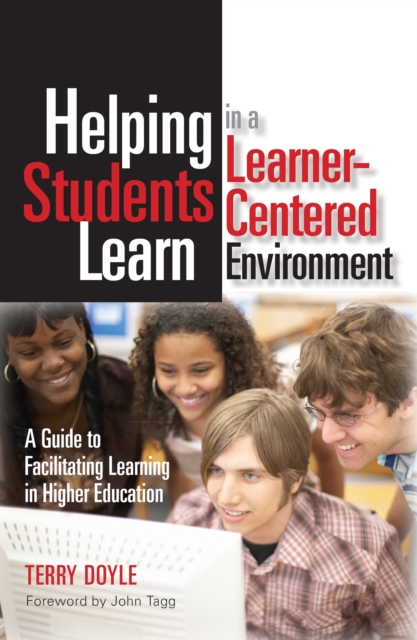
This book presents the research-based case that Learner Centered Teaching (LCT) offers the best means to optimize student learning in college, and offers examples and ideas for putting it into practice, as well the underlying rationale.
Students in grades 36 need to use increasingly sophisticated comprehension skills and strategies as they read and build knowledge across disciplinary content areas.
Published in association with This book has two goals: First, to show the value of significant project-based work for first-year undergraduate students; and Second, to share how to introduce this work into first year programs.
Every year, more online or technology-enhanced learning experiences are added to the landscape of education, and the number of students taking online courses on residential campuses continues to grow.
This is a substantially expanded and enhanced revision of Phyllis Blumberg's acclaimed and bestselling book, Developing Learner-Centered Teaching: A Practical Guide for Faculty (Jossey-Bass, 2009).
Characteristics and Conditions for Innovative Teachers: International Perspectives is a must-read for all those with an interest in teacher education and in enabling teacher innovation.
This edited collection of presentations by major speakers at AAHE's 1999 and 2000 Assessment Conferences offers cutting-edge ideas from: Jorge Klor de Alva; Noel Entwistle; James Anderson; Victor Borden; Jean MacGregor, Vincent Tinto, Jerri Holland Lindblad; Barbara Wright; and others.
Are students coming to your class lacking focus, having difficulty connecting with you and their peers, falling behind, or acting out when you instinctively feel they could do better?
Deep and lasting learning results when we teach human brains in ways responsive to how they're structured and how they function, which is not how we imagine they work or wish they would work.
Characteristics and Conditions for Innovative Teachers: International Perspectives is a must-read for all those with an interest in teacher education and in enabling teacher innovation.
Adults seek out learning for very different reasons in different contexts, and this book is intended to support adult educators' development in responding to this rich array.
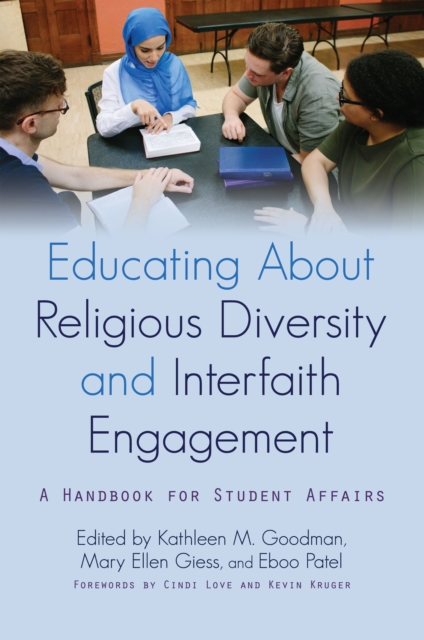
This book arises out of a recognition that student affairs professionals have little preparation or guidance in dealing with matters of spirituality, religion, secularity, and interfaith work at a time of greater diversity in students' beliefs and, from a broad recognition that there is a need to engage with this aspect of student life.
Synthesizing the best current thinking about learning, course design, and promoting student achievement, this is a guide to developing college instruction that has clear purpose, is well integrated into the curriculum, and improves student learning in predictable and measurable ways.
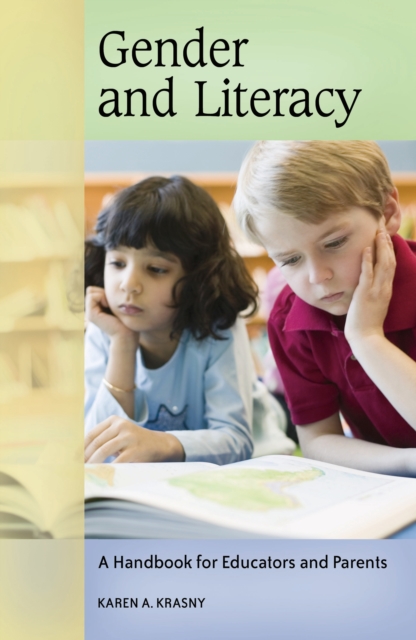
This work offers parents, educators, and librarians a practical guide to discovering the ways gender identities are constructed through literacy practices, providing recommendations for addressing gender inequities in schools and in the community at large.
** An acclaimed educator presents hands-on advice on teaching that meets today's emphasis on learning outcomes and assessment** Informed by the most up-to-date research on how people learn** For all instructors in higher education--as well as high school teachersLaurie Richlin has been running a workshop on course design for higher education for over fifteen years, modifying and improving it progressively from the feedback of participants, and from what they in turn have taught her.
The fruit of the authors' more than 15 years of using and writing about ePortfolios in general education and disciplinary programs and courses, this book is a comprehensive and practical guide to the use of the ePortfolio as a pedagogy that facilitates the integrative learning that is a central goal of higher education.
While a common goal of higher education is to improve student learning to prepare young adults for the professional, civic and personal challenges of their lives, few institutions have a model to facilitate these outcomes.
While a common goal of higher education is to improve student learning to prepare young adults for the professional, civic and personal challenges of their lives, few institutions have a model to facilitate these outcomes.
At this time of a renewed call for colleges and universities to create campus cultures that support and develop students' understanding and commitment to civic participation, what is known about the design of service learning courses and their effectiveness to achieve this goal?
This concise guidebook is intended for faculty who are interested in engaging their students and developing deep and lasting learning, but do not have the time to immerse themselves in the scholarship of teaching and learning.
How do you develop students' capacities as independent learners, build their confidence and motivation to identify their own research agendas, and facilitate their critical thinking and research skills for effectively exploring their chosen topic?
Practicing librarians and library educators demonstrate the power of inquiry to achieve the Common Core State Standards (CCSS) and promote school librarians as key partners in implementing this type of critical teaching and learning in K-12 schools.
Difficult Subjects: Insights and Strategies for Teaching about Race, Sexuality and Gender is a collection of essays from scholars across disciplines, institutions, and ranks that offers diverse and multi-faceted approaches to teaching about subjects that prove both challenging and often uncomfortable for both the professor and the student.
A year's worth of ideas and activities at your fingertipsSince its debut four years ago, The Teacher's Calendar has become a fixture in classrooms and school libraries across the country, thanks to its fresh ideas and limitless teaching opportunities.
This book focuses on how current and prospective teachers worldwide are prepared for the significant task of teaching geography, given the important role of teachers.
This book provides curriculum planners, materials developers, and language educators with curricular perspectives and classroom activities in order to address the needs of learners of English as a global lingua franca in an increasingly globalized and interdependent world.