The Economic Process transforms economic theory from a linear, sequential discipline into a structure in which events happen simultaneously and are strictly interrelated.
The Steelworkers' Retirement Security System: A Worker-based Model for Community Investment articulates a new model for economic security based upon steelworkers' pension provisions and labor politics after World War II.
Rise, Decline and Renewal tells the remarkable story of the Maine Democratic Party - how it suddenly rose from irrelevance in 1954 with the election of Governor Ed Muskie, successfully challenged the ruling Republican Party over the next two decades, and initiated a creative period of wide-ranging reforms that produced a model government for a state long perceived as a cultural and economic backwater.
An optimistic exploration of how, through radical economic reform, the United Kingdom can prosper and flourish in the new global economy Taking a refreshingly realistic approach, Alex Brummer outlines how our current moment can be reshaped into an unprecedented opportunity for economic prosperity.
The relative effectiveness of various institutions, such as the market or government, is based on the ability for individuals to access and use dispersed knowledge in society and the incentives that steer their actions.
Media and research tend to focus on social problems in today's world - from terrorism and natural disasters to environmental degradation, conflict and economic decline.
A Fragile Enterprise recounts true stories the front lines of the struggle between the entitled few and the marginalized many in America's public schools.
In a world where the human experience is increasingly overshadowed by diversity and danger and which is currently confronting the twin challenges of a global recession and pandemic, this book provides an insight into the fundamental idea of public value which represents the 'humanisation' of public policy and practice.
The stunning political upheavals witnessed across the western world over the past year have raised the question of whether the neoliberal economic system that has dominated since the 1980s is about to unravel.
In recent years, the digitalisation of retail financial services - retail payments, current/savings accounts, consumer/housing credit, car insurance, property insurance and health insurance - has accelerated significantly.
Sandford Borins addresses the enduring significance of innovation in government as practiced by public servants, analyzed by scholars, discussed by media, documented by awards, and experienced by the public.
The ups and downs in housing markets over the past two decades are without precedent, and the costs financial, psychological, and social have been enormous.
A Brookings Institution Press and Ash Center for Democratic Governance and Innovation publicationWhile governments around the world struggle to maintain service levels amid fiscal crises, social innovators are improving social outcomes for citizens by changing the system from within.
Imaging the Other: Essays on Diversity emerged from Nancy Porter's essay in Conn and McGuire's second collection of essays, Not Etched in Stone: Essays on Ritual Memory, Soul, and Society.
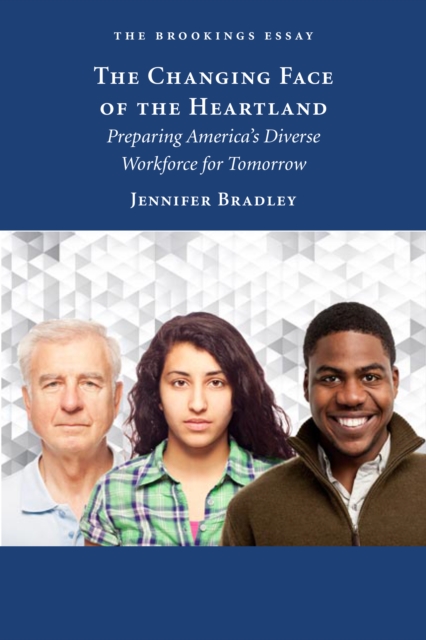
As baby boomers retire over the coming decades, one of the big questions facing the American economy is whether the younger, more diverse generation will be prepared to fill the demands of the workforce.
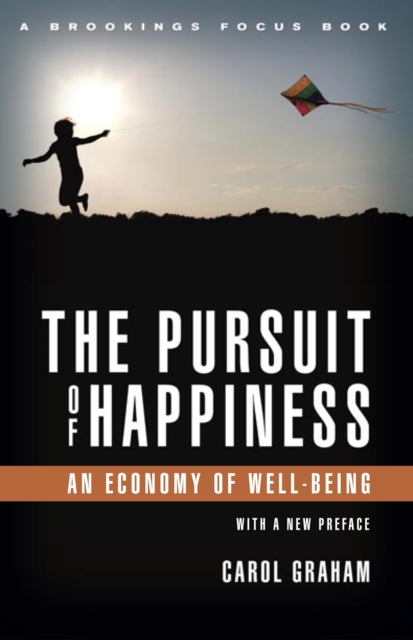
In The Pursuit of Happiness, renowned economist Carol Graham explores what we know about the determinants of happiness and clearly presents both the promise and the potential pitfalls of injecting the "e;"e;economics of happiness"e;"e; into public policymaking.
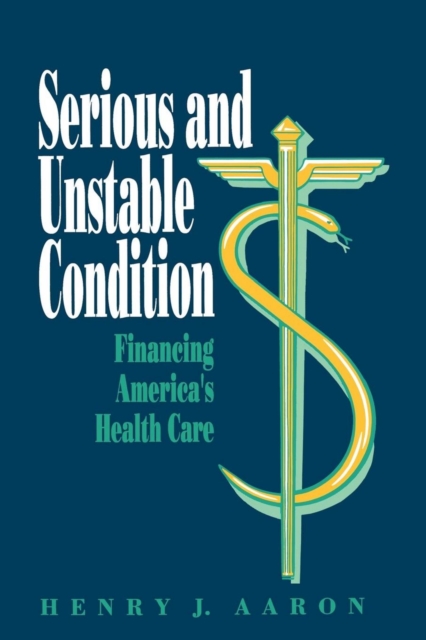
The United States spends more on health care than any other nation in the world, yet millions of Americans cannot afford basic care for acute illnesses, few are insured against the costs of long-term care, and many frequently used medical procedures have never been fully evaluated.
Herbert Hoover and World Peace summarizes Hoover's career-long efforts to preserve peace in the world and to help America avoid unnecessary wars, from his opposition to our entry into World War I to his proposed - and rejected - Cold War strategy, which would have avoided the Vietnam War.
The book makes serious theoretical contribution to the field of political economy in indigenous development, public policy, sociology and development studies.
A positive agenda for achieving the Sustainable Development Goals by 2030All 193 member nations of the United Nations agreed in September 2015 to adopt a set of seventeen "e;Sustainable Development Goals,"e; to be achieved by 2030.
The second edition of Crime Policy in America describes the process of policy-making and the substantive nature of policy directions in crime and justice in America, particularly from the beginning of the 1970s.
To penetrate the United States and Britain's markets with illicit drugs, Jamaican traffickers employed diverse and novel transportation methods and techniques in the post-1990 era that were more sophisticated than the trafficking of the 1980's.
Universities in Decline examines the declining role of universities in policy generation and analyzes the increasing political influence of Washington-based institutions.
This book examines "e;eternal colonialism,"e; a term used to describe the policies that were designed by the Western world and the United States in order to keep most of the world in a permanently subordinate political, economic, social, and military state.
Media and Technology in Emerging African Democracies is a standard text that will give students an opportunity to familiarize themselves with some of the best literature in media technology impact in emerging African democracies with relevant concentration on information and communication technology (ICT).
From inside the book:"e;Since 1980, the economy has been growing, and productivity has been growing, but trickle-down values-that we, the American people promote, pursuant to the Republican Party's conservative ideology-have rigged the economy to continuously upwardly redistribute those revenues attributable to our increased productivity, yielding a productivity/wage disconnect, resulting in increased concentration of income and wealth at the top, in corporations and among older Americans (beneficiaries of income from Social Security, pensions and investments and continuing income due to delaying retirement), and the lowest percentage of GDP attributable to wages and highest attributable to profits since World War II.