Alexis de Tocqueville (1805-59) has long been recognized as a major political and social thinker as well as historian, but his writings also contain a wealth of little-known insights into economic life and its connection to the rest of society.
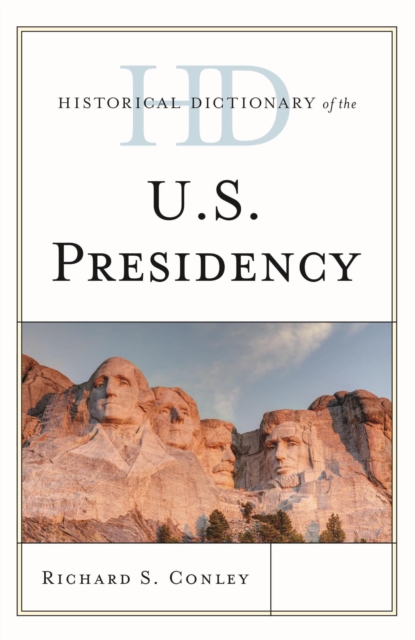
How the early presidents shaped America's highest officeFrom George Washington's decision to buy time for the new nation by signing the less-than-ideal Jay Treaty with Great Britain in 1795 to George W.
Why so many of America's public university students are not graduating-and what to do about itThe United States has long been a model for accessible, affordable education, as exemplified by the country's public universities.
How governments can do a better job of supporting entrepreneurship and venture capitalSilicon Valley, Singapore, Tel Aviv-the global hubs of entrepreneurial activity-all bear the marks of government investment.
"e;Luck egalitarianism"e;--the idea that justice requires correcting disadvantages resulting from brute luck--has gained ground in recent years and is now the main rival to John Rawls's theory of distributive justice.
When the Supreme Court in 2003 struck down a Texas law prohibiting homosexual sodomy, it cited the right to privacy based on the guarantee of "e;substantive due process"e; embodied by the Constitution.
Liberty and the News is Walter Lippman's classic account of how the press threatens democracy whenever it has an agenda other than the free flow of ideas.
After decades of hand-wringing and well-intentioned efforts to improve inner cities, ghettos remain places of degrading poverty with few jobs, much crime, failing schools, and dilapidated housing.
A groundbreaking classic that lays out and defends a democratic theory of educationWho should have the authority to shape the education of citizens in a democracy?
From the author's preface: Sublime Porte--there must be few terms more redolent, even today, of the fascination that the Islamic Middle East has long exercised over Western imaginations.
An in-depth look at the history, leadership, and structure of the Federal Reserve BankThe independence of the Federal Reserve is considered a cornerstone of its identity, crucial for keeping monetary policy decisions free of electoral politics.
*THE TOP-TEN BESTSELLER* From theNew York Timesbestselling author ofSorcery of ThornsandAn Enchantment of Ravenscomes a thrilling new YA fantasy about a teen girl with mythic abilities.
How American political participation is increasingly being shaped by citizens who wield more resourcesThe Declaration of Independence proclaims equality as a foundational American value.
"e;Luck egalitarianism"e;--the idea that justice requires correcting disadvantages resulting from brute luck--has gained ground in recent years and is now the main rival to John Rawls's theory of distributive justice.
The Canal du Midi, which threads through southwestern France and links the Atlantic to the Mediterranean, was an astonishing feat of seventeenth-century engineering--in fact, it was technically impossible according to the standards of its day.
Why America's public-private mortgage giants threaten the world economy-and what to do about itThe financial collapse of Fannie Mae and Freddie Mac in 2008 led to one of the most sweeping government interventions in private financial markets in history.
Why churches in some democratic nations wield enormous political power while churches in other democracies don'tIn some religious countries, churches have drafted constitutions, restricted abortion, and controlled education.
How poor countries can ignite economic growth without waiting for global action or the creation of ideal local conditionsContrary to conventional wisdom, countries that ignite a process of rapid economic growth almost always do so while lacking what experts say are the essential preconditions for development, such as good infrastructure and institutions.
Alexis de Tocqueville (1805-59) has long been recognized as a major political and social thinker as well as historian, but his writings also contain a wealth of little-known insights into economic life and its connection to the rest of society.
A groundbreaking and surprising look at contemporary censorship in ChinaAs authoritarian governments around the world develop sophisticated technologies for controlling information, many observers have predicted that these controls would be ineffective because they are easily thwarted and evaded by savvy Internet users.