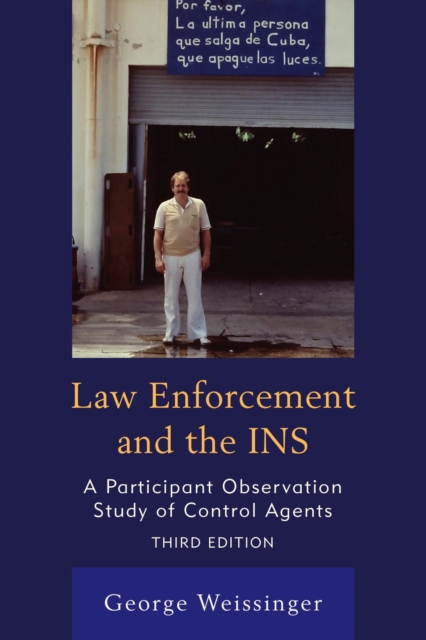
This book updates prior research that utilized the perceptions of criminal investigators of the Immigration & Naturalization Service (INS), and compares these perceptions with immigration enforcement priorities that were implemented post 911, through the Obama Administration up to the Trump presidency.
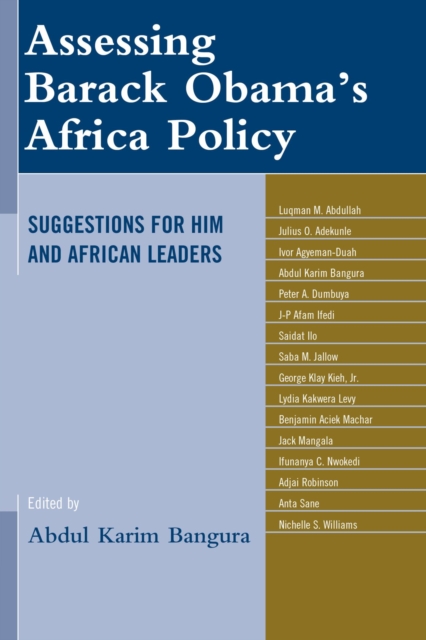
This book contains critical analyses of President Barack Obama's foreign policy instruments toward Africa and suggests how to continue, strengthen, and modify these policy instruments.
This book provides social work practitioners and allied professionals with an applied understanding of the formal legislation, policy and guidance relating to young people who are considered 'at risk' of, accused of, or convicted of involvement in offending or anti-social behaviour.
A Different Perspective on the Patient Protection and Affordable Care Act provides a brief history of health insurance within the United States, offering an accessible perspective on the highly contentious Patient Protection and Affordable Care Act (PPACA).
While everything appears to be collapsing around us -- ecodamage, genetic engineering, virulent diseases, the end of cheap oil, water shortages, global famine, wars -- we can still do something about it and create a world that will work for us and for our children’s children.
The second edition of Crime Policy in America describes the process of policy-making and the substantive nature of policy directions in crime and justice in America, particularly from the beginning of the 1970s.
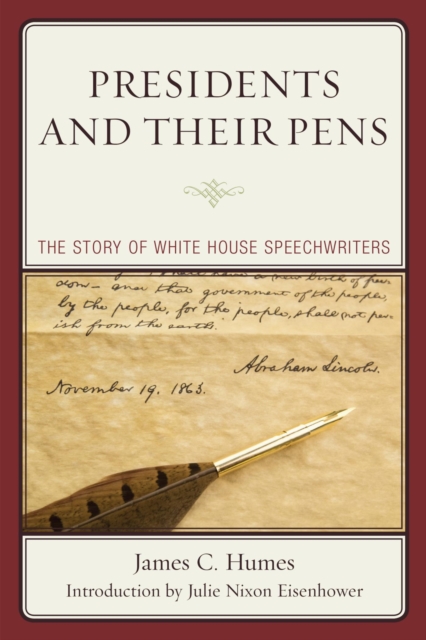
Presidents and Their Pens: The Story of White House Speechwriters explores 23 presidencies through the detailed analysis of speeches including Lincoln's Gettysburg Address, Teddy Roosevelt's "e;Big Stick"e; speech, Eisenhower's farewell to the nation, and Bill Clinton's compassionate words in the wake of tragedy.
In this new perspective, Iran's quest for nuclear power-in the context of the global energy challenge and the Cold War-era nuclear arms race-takes on new dimension.
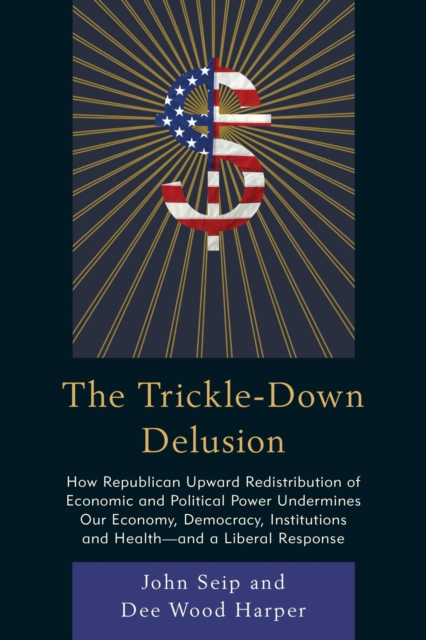
From inside the book:"e;Since 1980, the economy has been growing, and productivity has been growing, but trickle-down values-that we, the American people promote, pursuant to the Republican Party's conservative ideology-have rigged the economy to continuously upwardly redistribute those revenues attributable to our increased productivity, yielding a productivity/wage disconnect, resulting in increased concentration of income and wealth at the top, in corporations and among older Americans (beneficiaries of income from Social Security, pensions and investments and continuing income due to delaying retirement), and the lowest percentage of GDP attributable to wages and highest attributable to profits since World War II.
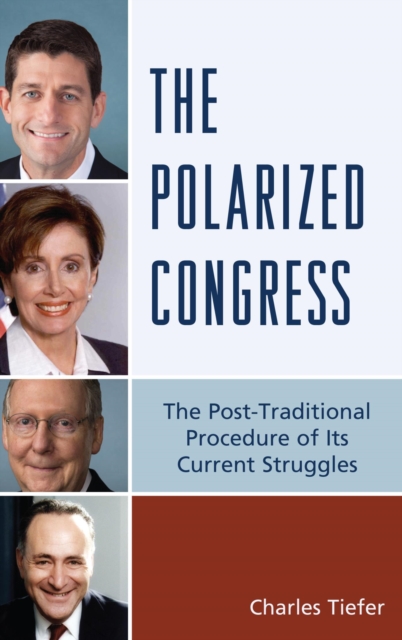
The Polarized Congress: The Post-Traditional Procedure of Its Current Struggles argues that the rise of the polarized Congress means a totally different Congressional procedure, especially after 2007, compared to the accustomed "e;traditional"e; one.
On Christendom's Far Shore describes and explains American society by first illuminating its foundational stones: the traditional western (Judeo-Christian) faith in God and the West's once common understanding of the natural order and the nature and destiny of man.
Universities in Decline examines the declining role of universities in policy generation and analyzes the increasing political influence of Washington-based institutions.
This book highlights important but insufficiently documented dimensions of the experience of English-speaking Caribbean immigrants in the United States.
This book presents an insider's view of the federal government's dual mission to stop the flow of illegal drugs across our borders and to prevent streams of drug money from financing drug cartels, insurgents, and terrorists.
During 2008, the Democrats achieved in Florida a goal that had eluded them in all but three of the national elections since 1964: victory in the presidential race.
To penetrate the United States and Britain's markets with illicit drugs, Jamaican traffickers employed diverse and novel transportation methods and techniques in the post-1990 era that were more sophisticated than the trafficking of the 1980's.
Presidential Lessons in Leadership crystallizes the methods of leadership from six of America's greatest presidents during moments of personal challenge and turns them into concrete lessons that business leaders, and anyone interested in becoming a more effective leader, can use each day.
In Taiwan's Democracy on Trial, Professor Copper assesses the process of democratization in Taiwan during the Chen Shui-bian Era (2000 to 2008) and after.
The Third World cities have been reinvented by the forces of globalization as the destinations of new investments, causing the migration of a teeming million to the major urban centers without any corresponding increase in the creation of new jobs and other basic amenities required for decent living.
Forgotten Reformer traces criminal justice practice and reform developments in late nineteenth-century America through the life and career of Robert McClaughry, a leading reformer.
From Balewa's declaration, 'Today is Independence Day,' to Azikiwe's impassioned plea, 'Let us bind the nation's wound and let us heal the breaches of the past so that in forging our nation there shall emerge on this continent a hate-free, fear-free, and greed-free people,' to Buhari's patriotic fervor, 'This generation [of Nigerians].
Land Management as Public Policy discusses goals, plans, and implementation means concerning public interference in land management after a more principal discussion of how far this ought to stretch itself and to what degree market forces and inputs of individuals predominate.
Media and Technology in Emerging African Democracies is a standard text that will give students an opportunity to familiarize themselves with some of the best literature in media technology impact in emerging African democracies with relevant concentration on information and communication technology (ICT).
Herbert Hoover and World Peace summarizes Hoover's career-long efforts to preserve peace in the world and to help America avoid unnecessary wars, from his opposition to our entry into World War I to his proposed - and rejected - Cold War strategy, which would have avoided the Vietnam War.
In Moral Desert, Howard Simmons notes that the idea that we deserve to be praised or rewarded for good behavior and blamed or punished when we act badly seems central to everyone's moral deliberation and practices.
This book examines "e;eternal colonialism,"e; a term used to describe the policies that were designed by the Western world and the United States in order to keep most of the world in a permanently subordinate political, economic, social, and military state.
In his five-plus years as president of the United States, Lyndon Johnson witnessed dramatic power struggles within and between the Soviet Union, the People's Republic of China, and the United States of America.
Oblivion or Utopia: the Prospects for Africa explains that most of the problems on the continent stem from the fact that, although the continent may be politically independent, it is not economically independent.