'A leading figure in critical legal studies and renowned scholar of comparative constitutionalism, Frankenberg urges us forward, offering a new taxonomy for critical work.
The first half of the 20th century saw the rise of political organizations characterized by clearly identifiable ideologies rooted in local communities, the so-called mass parties; however, this organizational model is now widely assumed to belong to the past.
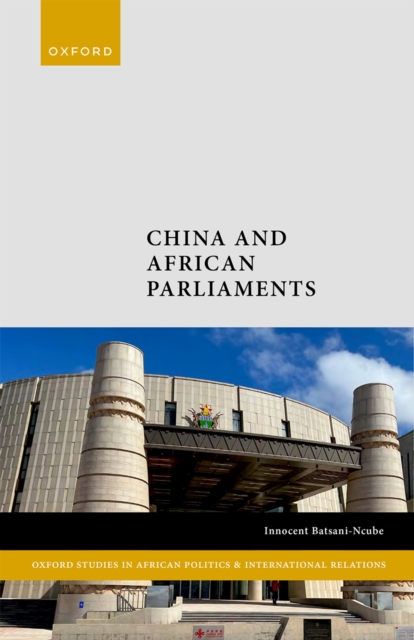
China and African Parliaments maps the political controversies surrounding the designing, making, and utilisation of three parliament buildings in Southern Africa that were financed and constructed by the People's Republic of China (China).
This volume provides a comprehensive analysis of the many different facets of the Swiss political system and of the major developments in modern Swiss politics.
Offshore financial centers such as Luxembourg, the Cayman Islands or the City of London provide non-residents with a legal framework that is strong on property rights and soft on taxation and regulation.
Offshore financial centers such as Luxembourg, the Cayman Islands or the City of London provide non-residents with a legal framework that is strong on property rights and soft on taxation and regulation.
In the last half century since the height of the rights revolution - a period marked by significant rights expansions but limited government capacity to enforce them - efforts to defend individuals' and communities' rights have hinged on the effectiveness of the "e;litigation state:"e; a fragile but sometimes powerful mode of governance that relies on private litigants and their attorneys, rather than agencies, to enforce the laws of the land.
The new generation of African constitutions crafted in the 1990s marked the beginning of a trend that promised a radical transformation of the continent's governance landscape.
Civil Society Activism in the Middle East analyzes the impact of repression on civil society activism in the Middle East through analyzing the cases of Egypt and Jordan.
Democracy is in decline and the share of world's population living in freedom under democratic government has decreased considerably as authoritarian practices proliferate.
The Cairo School of an Islamic Civilizational Paradigm in International Relations: The Building Process traces the intellectual evolution of a multi-generational scholarly project developed at Cairo University's Faculty of Economics and Political Science over four decades.
'A leading figure in critical legal studies and renowned scholar of comparative constitutionalism, Frankenberg urges us forward, offering a new taxonomy for critical work.
The second edition of Drones: What Everyone Needs to Know(R) provides a comprehensive and updated look at the rapidly evolving world of drones, otherwise known as unmanned or uncrewed aerial vehicles (UAVs).
The second edition of Drones: What Everyone Needs to Know(R) provides a comprehensive and updated look at the rapidly evolving world of drones, otherwise known as unmanned or uncrewed aerial vehicles (UAVs).
In Monopoly Politics, Erik Peinert provides a macro-historical explanation for why American and international markets are today monopolized by an ever-narrowing group of companies.
The Cairo School of an Islamic Civilizational Paradigm in International Relations: The Building Process traces the intellectual evolution of a multi-generational scholarly project developed at Cairo University's Faculty of Economics and Political Science over four decades.
Natural resource extraction, once promoted by international lenders and governing elites as a promising development strategy, is beginning to hit a wall.
Natural resource extraction, once promoted by international lenders and governing elites as a promising development strategy, is beginning to hit a wall.
This book challenges the assumption that authoritarianism is necessarily a phenomenon located at the level of the state, and that states as a whole are therefore either democratic or authoritarian.
Political parties are nothing without their people and candidates are essential to parties' core functions - contesting elections, filling political offices, and shaping policy.