Few developments in the recent history of Central Europe have been more momentous than the emergence, or more precisely the re-emergence, of civil society, of organized citizen activity outside the boundaries of the state and the market.
1 Research Idea: History and Regional Diversity Post-socialist societies in Europe can be assigned to three "e;historical regions"e; (Sziicz 1990) corresponding to their path of historical development.
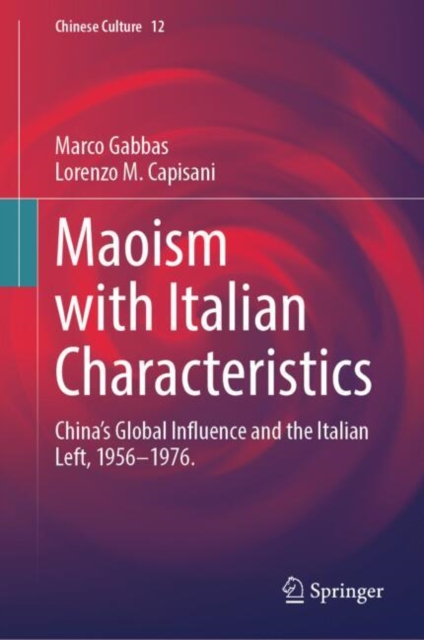
This book is, primarily, a historical study that investigates why Mao's thought took root in Italy, how it developed, and its emergence in opposition to the Italian Communist Party, with a focus on the years 1956-1976.
This book explores the independence of official statistics and describes the various legal and professional norms, institutional arrangements, instruments and practices that statisticians have developed over recent decades to protect their work from political interference.
This book documents and analyses the differentiated control policies, the determinant factors behind, social resilience, and international relations during the pandemic from a comparative perspective in a facts-based, data-supporting manner.
This book provides a tour through a novel theoretical approach to understanding the political economy of authoritarianism and the international market for capital investment.
This book examines labor market policy and institutional reforms and their impact on outcomes in the Chinese labor market, utilizing both institutional and empirical study perspectives.
This book focuses on the making and implication of AUKUS for Australians in their relations with their own state and governance, the Asia-Pacific region and the rest of the world.
This book examines how emerging environmental challenges are situated within existing International Relations (IR) theoretical understandings of ‘security’.
This book provides a tour through a novel theoretical approach to understanding the political economy of authoritarianism and the international market for capital investment.
This book explores the political, economic, defence, and cultural relations of Poland with South Asia-Afghanistan, Bangladesh, Bhutan, India, Myanmar, Nepal, Pakistan, and Sri Lanka-since the late 1940s to the present.
This book focuses on the making and implication of AUKUS for Australians in their relations with their own state and governance, the Asia-Pacific region and the rest of the world.