Basing her work on extensive study of Montreal's city records, Dagenais gives us a view of city government from inside city hall, showing how the city's institutions really functioned.
In No Justice, No Peace David Rapaport uses detail, insights, and anecdotes from over 150 interviews - with picket line captains, local executives, union leadership, journalists, mediators, and union and management negotiators among others - to provide an insider's view of the strike and its political and economic contexts, often told in the strikers' own voices.
In Community Besieged Garth Stevenson describes the unusual circumstances that allowed English-speaking Quebecers to live in virtual isolation from their francophone neighbours for almost a century after Confederation.
As governments attempt to focus more on service delivery, it has become apparent that little is known about the people who actually provide the services.
Le Bureau federal de la statistique a balise l'evolution du Canada d'une economie de base a une puissance industrielle adulte, au seuil de l'ere de l'information.
Using a variety of documentary sources, including hundreds of petitions, letters, and reports to the government, Little traces the complex relationship between community life and government regulation.
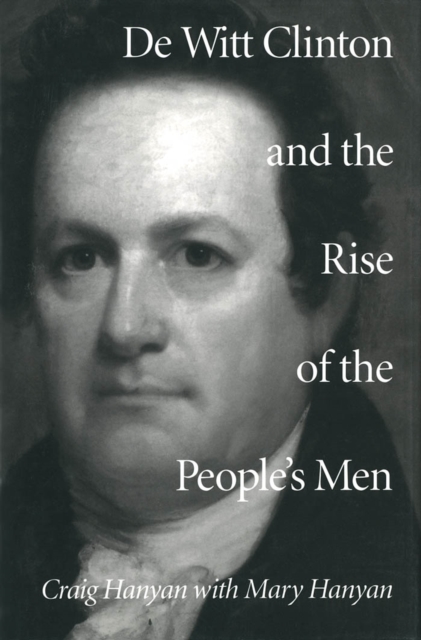
The authors not only provide an in-depth analysis of the interplay of interests and ideology behind the People's movement but also establish relationships between the emergent political culture that bolstered that movement and the Whig and Democratic parties of the later second-party system.
Social democrats have always understood that business will act differently if the rules governing economic life are changed: it is not because they share a commitment to gender equality that Scandinavian employers pay women and men wages that are virtually equal -- they do so because those are the rules.
The ALN gained widespread business, popular, and church support by promising francophones both control of a modern Quebec economy and preservation of the traditional social order.
Beginning with brief accounts of the origins of Confederation and the economic, social, and political characteristics of late nineteenth-century Canada, Stevenson recounts the major issues that occupied the intergovernmental agenda.
This volume of historical essays explores the full ramifications of the beginnings and development of the various branches of higher education in the area of London.
From Bloomberg, the authority on municipal bond valuation, this is the first book to give issuers (municipalities and their officers, attorneys, and other advisers) step-by-step tips on (1) lowering the cost of financing and (2) how to do it right and avoid trouble--with the press, with the market, with constituents, and with the Securities and Exchange Commission.
From Bloomberg, the authority on municipal bond valuation, this is the first book to give issuers (municipalities and their officers, attorneys, and other advisers) step-by-step tips on (1) lowering the cost of financing and (2) how to do it right and avoid trouble--with the press, with the market, with constituents, and with the Securities and Exchange Commission.
This book deals with the perennial tensions between ethnic groups and the modern nation-state and does so from the perspective of a leading Mexican anthropologist with deep and long experience in these matters.
This book deals with the perennial tensions between ethnic groups and the modern nation-state and does so from the perspective of a leading Mexican anthropologist with deep and long experience in these matters.
Originally published in 1956, the main emphasis of the book is on the complex age-set organization which constitutes the framework within which the life of every Kikuyu is regulated from infancy to old age.
Originally published in 1956, the main emphasis of the book is on the complex age-set organization which constitutes the framework within which the life of every Kikuyu is regulated from infancy to old age.
Key Features:Provides clear and authoritative recommendations for managing fire in ecological and social contexts Authors are all international leaders in their fields and include not only academics but also leaders of Indigenous communities Explains Indigenous cultural and knowledge systems to a degree that has rarely been accessible to lay and academic readers outside specialized disciplines like AnthropologyResponds to growing need for new approaches to managing human-ecological systems that are in greater sympathy with Australia's natural environments/climate, and value the knowledge of Indigenous people Timely for scholarly and interest groups intervention, as the Australian government is again looking to 'develop the north'Sustainable Land Sector Development in Northern Australia sets out a vision for developing North Australia based on a culturally appropriate and ecologically sustainable land sector economy.
Key Features:Provides clear and authoritative recommendations for managing fire in ecological and social contexts Authors are all international leaders in their fields and include not only academics but also leaders of Indigenous communities Explains Indigenous cultural and knowledge systems to a degree that has rarely been accessible to lay and academic readers outside specialized disciplines like AnthropologyResponds to growing need for new approaches to managing human-ecological systems that are in greater sympathy with Australia's natural environments/climate, and value the knowledge of Indigenous people Timely for scholarly and interest groups intervention, as the Australian government is again looking to 'develop the north'Sustainable Land Sector Development in Northern Australia sets out a vision for developing North Australia based on a culturally appropriate and ecologically sustainable land sector economy.
First published in 1998, this volume responds to the increase in performance review driven by government policies and examines the performance environment and processes for local government.
First published in 1998, this volume responds to the increase in performance review driven by government policies and examines the performance environment and processes for local government.
Indigenous, ethnic and rural peoples throughout the world struggle to effectively deal with the challenges triggered by outside economic and social intervention.
Indigenous, ethnic and rural peoples throughout the world struggle to effectively deal with the challenges triggered by outside economic and social intervention.
What are Latin America's prospects for the twenty-first century, in the face of rapidly changing international conditions and increasing internal social pressures?
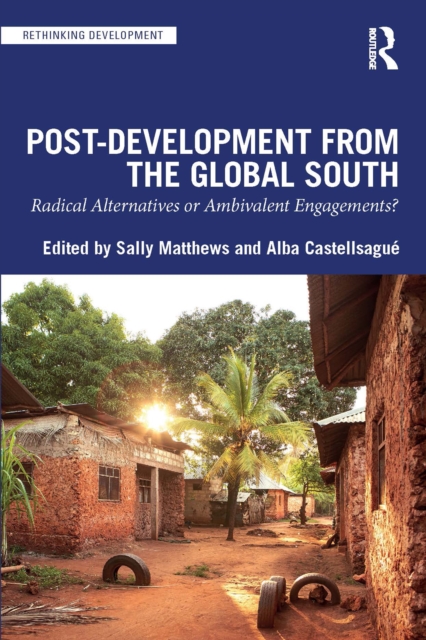
Post-development advocates and decolonial thinkers are calling for radical alternatives to development, but how do these ideals sit with the day-to-day reality of marginalised communities struggling with poverty, precarity, and the deprivation of human rights?
What are Latin America's prospects for the twenty-first century, in the face of rapidly changing international conditions and increasing internal social pressures?
Providing a critical ethnography of five different tribal movements fighting against the mega-industrialization projects in Odisha, India, the book presents a thick description of the confrontation of the tribals to the authoritative forces of state domination.
Providing a critical ethnography of five different tribal movements fighting against the mega-industrialization projects in Odisha, India, the book presents a thick description of the confrontation of the tribals to the authoritative forces of state domination.
From their experience in nonprofit operations and their understanding of the realities of urban politics, the editors of this wide-ranging volume and their contributors dig into issues seldom explored in the literature.
This book corrects the tendency in scholarly work to leave Indigenous peoples on the margins of discussions of environmental inequality by situating them as central activists in struggles to achieve environmental justice.
This book corrects the tendency in scholarly work to leave Indigenous peoples on the margins of discussions of environmental inequality by situating them as central activists in struggles to achieve environmental justice.