More than 30 years after its birth, the Schengen area of free movement is under siege in Europe: new barriers are being erected along land borders, military assets are increasingly deployed to patrol the Mediterranean, while sophisticated surveillance tools are used to keep track of the flows of people crossing into European space.
More than 30 years after its birth, the Schengen area of free movement is under siege in Europe: new barriers are being erected along land borders, military assets are increasingly deployed to patrol the Mediterranean, while sophisticated surveillance tools are used to keep track of the flows of people crossing into European space.
This book explores the emergence and assertion of Africa as a significant actor and stakeholder in global affairs and the transformation of the India-Africa relationship.
This book explores the emergence and assertion of Africa as a significant actor and stakeholder in global affairs and the transformation of the India-Africa relationship.
This book examines how the rise of China has influenced its cross-regional foreign policy toward non-Arab countries in the Middle East between 2001 and 2011.
This book examines how the rise of China has influenced its cross-regional foreign policy toward non-Arab countries in the Middle East between 2001 and 2011.
This book examines the evolution of China's maritime security strategy, and questions what has made China shift from a constrained to a more assertive strategy.
This book examines the evolution of China's maritime security strategy, and questions what has made China shift from a constrained to a more assertive strategy.
China has emerged as a dominant power in Eurasian affairs that not only exercises significant political and economic power, but increasingly, ideational power too.
China has emerged as a dominant power in Eurasian affairs that not only exercises significant political and economic power, but increasingly, ideational power too.
This book analyzes the Chinese-centered globalization 'from below' brought about by China's entrepreneurial migrants and conceived of as a projection of Chinese power in the Belt and Road Initiative partner states.
This book analyzes the Chinese-centered globalization 'from below' brought about by China's entrepreneurial migrants and conceived of as a projection of Chinese power in the Belt and Road Initiative partner states.
This book addresses the subject of critical development alternatives for the Caribbean Community (CARICOM) states in a post-neoliberal, new multipolar world order based on competition and co-operation by the United States, the European Union, China, and Russia for natural resources and markets.
This book addresses the subject of critical development alternatives for the Caribbean Community (CARICOM) states in a post-neoliberal, new multipolar world order based on competition and co-operation by the United States, the European Union, China, and Russia for natural resources and markets.
This book analyses the ways in which foreign policy actors in Asia have responded to the emerging great power conflict between the US and the People's Republic of China focusing on medium and small states across the Indo-Pacific.
This book analyses the ways in which foreign policy actors in Asia have responded to the emerging great power conflict between the US and the People's Republic of China focusing on medium and small states across the Indo-Pacific.
China's Belt and Road Initiative (BRI), China's globe-girdling infrastructure and trade corridor project, is a rare watershed in international affairs.
China's Belt and Road Initiative (BRI), China's globe-girdling infrastructure and trade corridor project, is a rare watershed in international affairs.
The book explores how technological competition is linked to the geopolitical contest between the US and China, and why Europe and the European Union (EU) have become involved in this competition for technological supremacy.
The book explores how technological competition is linked to the geopolitical contest between the US and China, and why Europe and the European Union (EU) have become involved in this competition for technological supremacy.
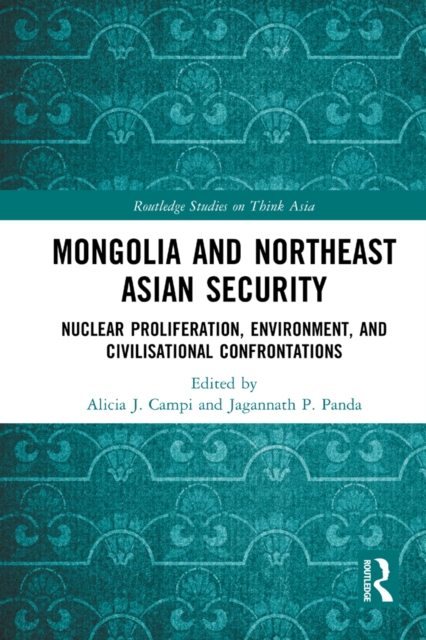
This book assesses Mongolia's position in the security calculus of Northeast Asia and presents the policy outlooks of major powers vis-a-vis the region, including the United States, Japan, China, Russia, and India.
This book assesses Mongolia's position in the security calculus of Northeast Asia and presents the policy outlooks of major powers vis-a-vis the region, including the United States, Japan, China, Russia, and India.
This book discusses the ideological and historical relevance of the term 'Eurasia' as a concept in the global geopolitical and ethno-cultural discourse.
This book discusses the ideological and historical relevance of the term 'Eurasia' as a concept in the global geopolitical and ethno-cultural discourse.
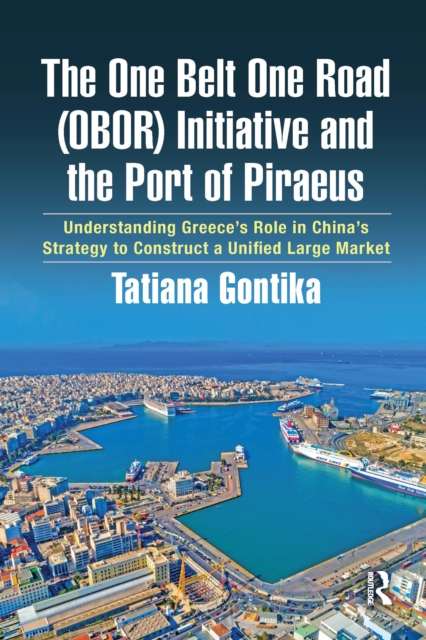
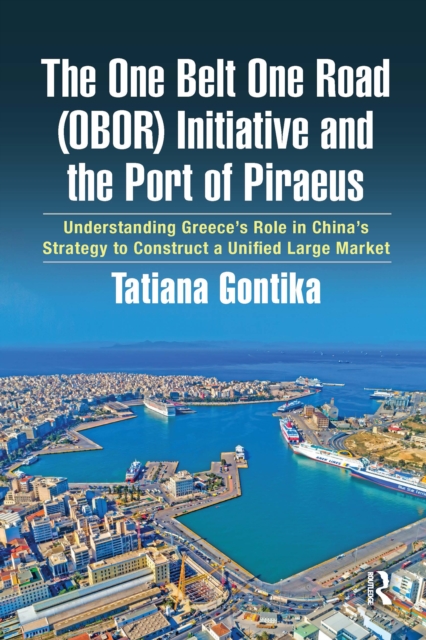
This book provides the reader with a better understanding of the One Belt One Road (OBOR) initiative, its various projects around the world, and its consequences at a local as well as an international level.
More than 30 years after their momentous book "e;Projekt Mitteleuropa"e;, which had been written before the fall of the Iron Curtain, Emil Brix and Erhard Busek revisit the political space between Germany, Russia and the Mediterranean.
This book provides the reader with a better understanding of the One Belt One Road (OBOR) initiative, its various projects around the world, and its consequences at a local as well as an international level.
More than 30 years after their momentous book "e;Projekt Mitteleuropa"e;, which had been written before the fall of the Iron Curtain, Emil Brix and Erhard Busek revisit the political space between Germany, Russia and the Mediterranean.
Three trends have dominated the political economy of integration during the last two decades: globalization, economic nationalism, and regionalization.
Three trends have dominated the political economy of integration during the last two decades: globalization, economic nationalism, and regionalization.
This book explores key elements of European Union (EU) engagement with the Belt Road Initiative (BRI), drawing on the expertise of leading practitioners and scholars of EU-China relations.