The years of the French Revolution and the Napoleonic conquest of Europe revealed an undeniable conjunction between international war and internal revolution, a combination which both repelled and attracted contemporary and successive generations.
Using authoritative extracts from the relevant and important sources at the time, this volume, originally published in 1972, deals with the problems and difficulties of maintaining peace in the world.
The years of the French Revolution and the Napoleonic conquest of Europe revealed an undeniable conjunction between international war and internal revolution, a combination which both repelled and attracted contemporary and successive generations.
In order to better understand how the world viewed the US 2016 presidential election, the issues that mattered around the world, and how nations made sense of how their media systems constructed presentations of the presidential election, Robert S.
Soviet global strategy, long established and well understood by the Kremlin leaders, is to intimidate weak and fearful governments, exploit indigenous difficulties, disrupt social order, and promote communist revolutions.
This study moves from a history of the American-Israeli strategic relationship since 1967 to an assessment of the permanency of US-Israeli strategic ties, their purpose in the eyes of both partners, and their susceptibility to future pressures.
This book, based on information consolidated to cover the calendar years 1978 and 1979, assesses the power of nations in the international context as a basis for planning American defense and foreign policy.
With the astonishing transformations in the geopolitics of the world since the collapse of the Soviet Union, Turkey has been profoundly affected by the changes on its periphery.
This book contains the papers on Soviet foreign policy, concentrating on the constants that form the bedrock of Soviet policy and the Soviet variant of a policy of detente.
Focusing on a persistent crux of Sino-American relations, the author shows how an essentially new Taiwan has emerged in terms of political, economic, diplomatic and security developments.
This book maps the convergence of governance and connectivity within Asia established through the spatial dynamics of trade, capital, conflict, borders and mobility.
The emergence of religious fundamentalism in a globalized, post-colonial world poses a significant challenge to the "e;End of History"e; narratives common in academic and non-academic literature alike.
In order to better understand how the world viewed the US 2016 presidential election, the issues that mattered around the world, and how nations made sense of how their media systems constructed presentations of the presidential election, Robert S.
Soviet global strategy, long established and well understood by the Kremlin leaders, is to intimidate weak and fearful governments, exploit indigenous difficulties, disrupt social order, and promote communist revolutions.
This study moves from a history of the American-Israeli strategic relationship since 1967 to an assessment of the permanency of US-Israeli strategic ties, their purpose in the eyes of both partners, and their susceptibility to future pressures.
This book, based on information consolidated to cover the calendar years 1978 and 1979, assesses the power of nations in the international context as a basis for planning American defense and foreign policy.
With the astonishing transformations in the geopolitics of the world since the collapse of the Soviet Union, Turkey has been profoundly affected by the changes on its periphery.
This book contains the papers on Soviet foreign policy, concentrating on the constants that form the bedrock of Soviet policy and the Soviet variant of a policy of detente.
Focusing on a persistent crux of Sino-American relations, the author shows how an essentially new Taiwan has emerged in terms of political, economic, diplomatic and security developments.
This book maps the convergence of governance and connectivity within Asia established through the spatial dynamics of trade, capital, conflict, borders and mobility.
This volume, titled ,Africa,s Growing Role in World Politics,, includes a selection of papers dedicated to the problems of the contemporary international relations and foreign policies of the African states.
Tracing the development journey of the Arabian Gulf region with a forward-looking perspective, this book describes how a combination of good fortune, creative experimentation, and determination has enabled the region to achieve prosperity.
Economic sanctions continue to play an important role in the response to terrorism, nuclear proliferation, military conflicts, and other foreign policy crises.
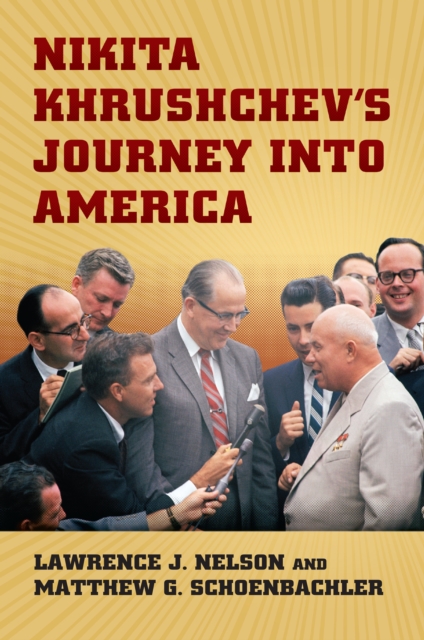
When Nikita Khrushchev toured America in 1959the first Russian leader ever to set foot in the Western Hemisphere, let alone the United Statesthe country was enjoying a period of unprecedented prosperity, just as the Cold War and the possibility of thermonuclear annihilation were causing widespread, bone-deep dread throughout the land.
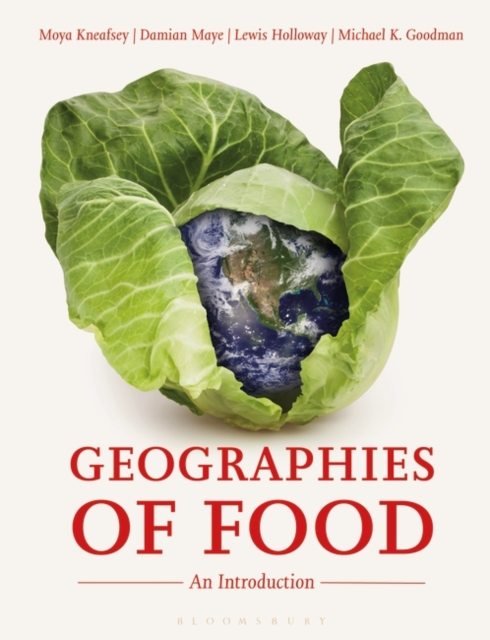
What is the future of food in light of growing threats from the climate emergency and natural resource depletion, as well as economic and social inequality?
Despite the central importance that water has held for civilizations both ancient and modern, its social significance has made surprisingly little impact on our contemporary understanding of human history and development.
A strategic outpost in the Eastern Mediterranean, Cyprus was vital to British imperial ambitions in the East as the Ottoman Empire grew increasingly fragile in the nineteenth century.
Lebanon, together with the province of Hatay in Turkey (containing Antakya) and the Golan Heights were all part of French mandate Syria, but are now all outside the boundaries of the modern Syrian state.