This book provides a quantitative and qualitative overview of the overall impact that the COVID-19 pandemic had on the capacity of Brazil, Russia, India, China, and South Africa (BRICS countries) to reshape global climate governance and explore areas for mutual cooperation.
How a new understanding of warfare can help the military fight today's conflicts more effectivelyThe way wars are fought has changed starkly over the past sixty years.
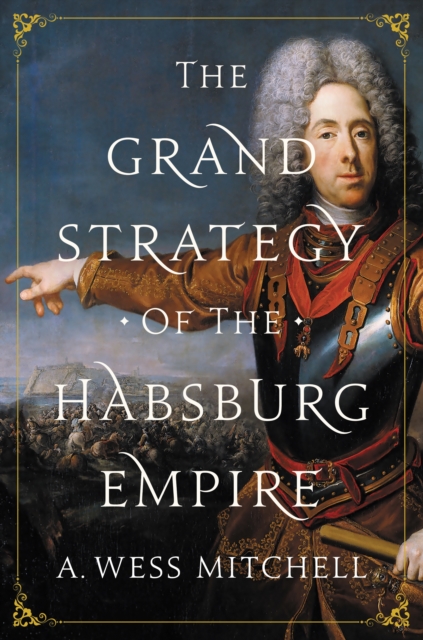
The Habsburg Empire's grand strategy for outmaneuvering and outlasting stronger rivals in a complicated geopolitical worldThe Empire of Habsburg Austria faced more enemies than any other European great power.
A provocative reassessment of the rule of law in world politicsConventionally understood as a set of limits on state behavior, the "e;rule of law"e; in world politics is widely assumed to serve as a progressive contribution to a just, stable, and predictable world.
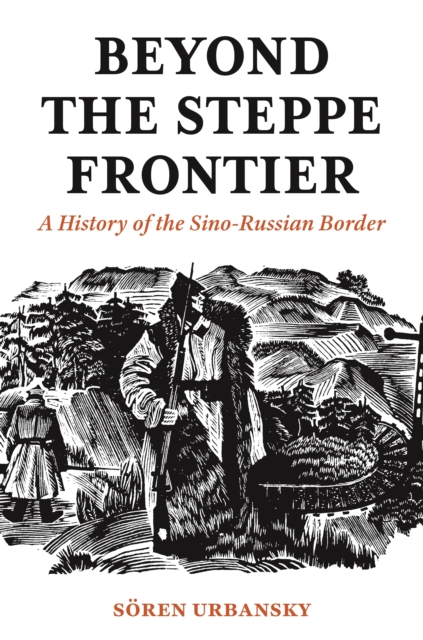
A comprehensive history of the Sino-Russian border, one of the longest and most important land borders in the worldThe Sino-Russian border, once the world's longest land border, has received scant attention in histories about the margins of empires.
This book analyses the categories of thought underpinning Russia's strategic decision-making and military operations, unpacking their nature, development, and interaction.
How to sustain an international system of cooperation in the midst of geopolitical struggleCan the international economic and legal system survive today's fractured geopolitics?
How societies can preserve democracy with a human-directed social contractThe recent rise of populist movements, especially in Western democracies, has prompted considerable thoughtful analysis.
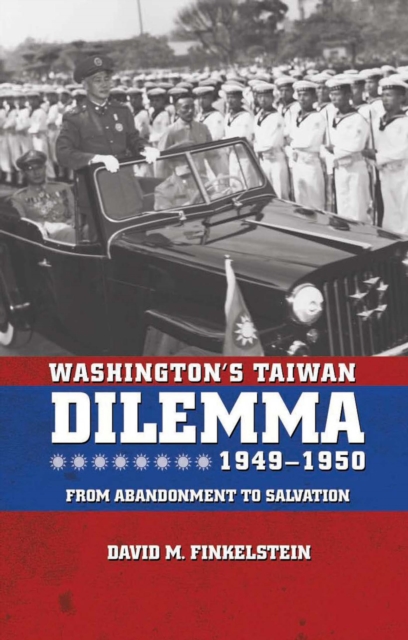
The declaration of the People's Republic of China in October 1949 presented American foreign policy officials with two dilemmas: How to deal with the communist government on the mainland and what to do about Chiang Kai-shek's Nationalist regime on Taiwan.
Between the mid-eighteenth and mid-nineteenth centuries, Qing rulers, officials, and scholars fused diverse, fragmented perceptions of foreign territory into one integrated worldview.
Is the idea of the "e;Middle East"e; simply a geopolitical construct conceived by the West to serve particular strategic and economic interests-or can we identify geographical, historical, cultural, and political patterns to indicate some sort of internal coherence to this label?
In September 1978, William Quandt, a member of the White House National Security Council staff, spent thirteen momentous days at Camp David, the presidential retreat in Maryland, where three world leaders were holding secret negotiations.
Corporate Couplooks at the attempted overthrow of the elected government of Venezuela, an intervention which, despite open backing by the United States, failed spectacularly.
This edited volume examines the competitive dynamics of two order-building projects in the Indo-Pacific, namely China's Belt and Road Initiative (BRI) and the US-led Free and Open Indo-Pacific (FOIP).
This book presents a novel examination of Marine Protected Areas within a security context, bridging science, policy, and geopolitics, and addressing the often-under-emphasized aspect of environmental justice.
*Shortlisted for the British Academy Book Prize*'A powerful prescription for change' Observer, Book of the Week'An eye-opening contribution to the global discourse on women's health and a call for change' The Lancet'Important, timely, often fascinating' Sunday IndependentWe know the causes of death and disease among women all over the world.
This book discusses the influence and impact of Shinzo Abe, Japan's youngest and longest-serving Prime Minister in the post-Second World War, on international relations between India and Japan.
First published in 1986, Korea and the West examines the political culture and the economic development of the two Koreas, as well as the state of the military balance on the peninsula.
This book introduces the concept of "e;oceanic strategy,"e; expanding beyond traditional maritime and naval perspectives to include political, economic, socio-cultural, and ecological dimensions.
How America's vulnerable frontier allies-and American power-are being targeted by rival nationsFrom the Baltic to the South China Sea, newly assertive authoritarian states sense an opportunity to resurrect old empires or build new ones at America's expense.
This edited volume examines the competitive dynamics of two order-building projects in the Indo-Pacific, namely China's Belt and Road Initiative (BRI) and the US-led Free and Open Indo-Pacific (FOIP).
Rozman and Glosserman follow a momentous decade in the transformation of Japanese foreign policy from 2013 to 2023 that unveils Japan in a new light as a leading power more closely aligned with the United States than ever before but with distinct aspirations.
The purpose of this book is to examine the strategies and practices of the Han Chinese Nationalists vis-a-vis post-Qing China's ethnic minorities, as well as to explore the role they played in the formation of contemporary China's Central Asian frontier territoriality and border security.
This edited collection examines changes in national security culture in the wake of international events that have threatened regional or global order, and analyses the effects of these divergent responses on international security.
First published in 1986, Korea and the West examines the political culture and the economic development of the two Koreas, as well as the state of the military balance on the peninsula.