When considering the structures that drive the global diffusion of human rights norms, Brian Greenhill argues that we need to look beyond institutions that are explicitly committed to human rights and instead focus on the dense web of international government organizations (IGOs)-some big, some small; some focused on human rights; some not-that has arisen in the last two generations.
Geopolitical shifts, increasing demands for accountability, and growing competition have been driving the need for change within transnational nongovernmental organizations (TNGOs).
Geopolitical shifts, increasing demands for accountability, and growing competition have been driving the need for change within transnational nongovernmental organizations (TNGOs).
Nearly three decades after the fall of the Berlin Wall, early hopes for the integration of the post-Soviet states into a "e;Europe whole and free"e; seem to have been decisively dashed.
Nearly three decades after the fall of the Berlin Wall, early hopes for the integration of the post-Soviet states into a "e;Europe whole and free"e; seem to have been decisively dashed.
Investment treaty arbitration (sometimes called investor-state dispute settlement or ISDS) has become a flashpoint in the backlash against globalization, with costs becoming an area of core scrutiny.
Investment treaty arbitration (sometimes called investor-state dispute settlement or ISDS) has become a flashpoint in the backlash against globalization, with costs becoming an area of core scrutiny.
Over forty years of service to the United Nations - the last ten as Secretary-General - Kofi Annan has been at the centre of the major geopolitical events of our time.
This book gives a new compelling meaning to the metaphor of 'Global South' against the background of the global political challenge to international order, driven not only through the BRICS grouping, but also by the activities of middle powers striving to alter the political status quo.
Geoffrey Robertson QC, acclaimed author of The Case of the Pope, presents a freshly updated version of his masterwork, Crimes Against HumanityIn this fresh edition of the book that has inspired the global justice movement, Geoffrey Robertson QC explains why we must hold political and military leaders accountable for genocide, torture and mass murder - the crimes against humanity that have disfigured the world.
This edited book examines European external interventions in human security, in order to illustrate the evolution and nature of the European Union as a global political actor.
"e;This book is a timely reminder of the ties that join Russia and the European Union and the opportunities that still exist to improve a troubled relationship.
This book offers a general framework for a better understanding of the differences and similarities between the institutional rules of intergovernmental organizations that include parliamentary elements, and analyzes the role of various types of international parliamentary assemblies in the system of global governance, as well as insights into the process known as "e;parliamentarization of international organizations.
One of the genuinely remarkable but relatively unnoticed developments of the last half-century is the blossoming of an international humanitarian order - a complex of norms, informal institutions, laws, and discourses that legitimate and compel various kinds of interventions by state and nonstate actors with the explicit goal of preserving and protecting human life.
"e;If one wants to understand why, from its modest beginnings, the European Parliament has become a major player in EU decision-making, look no further than this book.
This book is based on the findings, conclusions and recommendations of the Global Space Governance study commissioned by the 2014 Montreal Declaration that called upon civil society, academics, governments, the private sector, and other stakeholders to undertake an international interdisciplinary study.
This compelling history brings to life the watershed year of 1948, when the United States reversed its long-standing position of political and military isolation from Europe and agreed to an "e;entangling alliance"e; with ten European nations.
How American industries rose to dominate the economic landscape in the twentieth centuryFor much of the twentieth century, American corporations led the world in terms of technological progress.
A guide to the early decisions that can make or break startup venturesOften downplayed in the excitement of starting up a new business venture is one of the most important decisions entrepreneurs will face: should they go it alone, or bring in cofounders, hires, and investors to help build the business?
Women and Gender Perspectives in the Military compares the integration of women, gender perspectives, and the women, peace, and security agenda into the armed forces of eight countries plus NATO and United Nations peacekeeping operations.
Domestic courts are entrusted with the application of the European Convention on Human Rights (ECHR), as faithful trustees of the rights protected in the Convention.
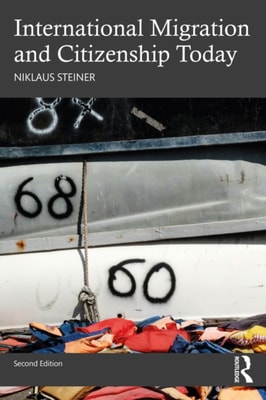
This completely revised and updated textbook explores the moral, economic, political, and cultural dimensions of the movement of people across international borders.
This completely revised and updated textbook explores the moral, economic, political, and cultural dimensions of the movement of people across international borders.
This book describes the current innovative tendencies characteristic of multifaceted scientific research and practical developments in the field of international business development and sustainable management.
Almost fifteen years after the end of the Cold War, the process of creating a "Europe whole and free" is incomplete and likely to be so for the foreseeable future.