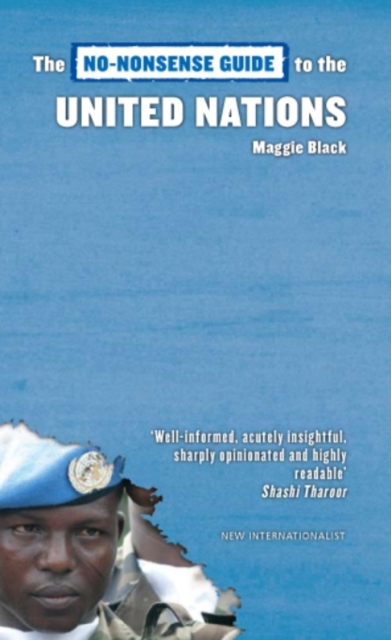
In the first book to distill the entire history of the United Nations into one accessible volume, Maggie Black explains how this complex organization works and explores its successes, failings, and current limitations.
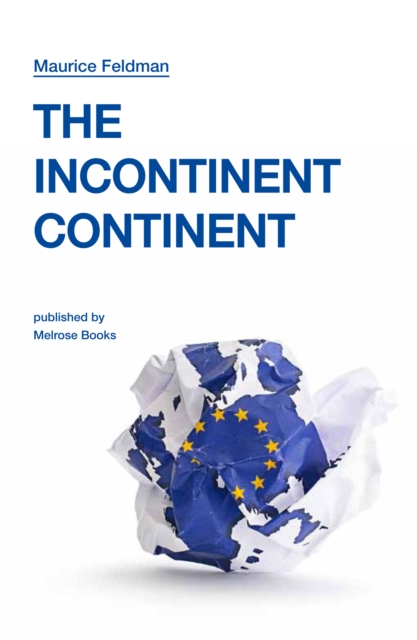
The Incontinent Continent tries to show how the EU has allowed politicians to create a separate world where instead of serving their constituents, they serve each other.
This edited volume examines the competitive dynamics of two order-building projects in the Indo-Pacific, namely China's Belt and Road Initiative (BRI) and the US-led Free and Open Indo-Pacific (FOIP).
This book sketches an institutional political economy framework to discuss the interaction between development and foreign policy in the global South with reference to Turkey.
This edited volume examines the competitive dynamics of two order-building projects in the Indo-Pacific, namely China's Belt and Road Initiative (BRI) and the US-led Free and Open Indo-Pacific (FOIP).
This book deals with the questions of how global governance can and ought to effectively address serious global problems, such as financial instability, military conflicts, distributive injustice and increasing concerns of ecological disasters.
This edited collection examines changes in national security culture in the wake of international events that have threatened regional or global order, and analyses the effects of these divergent responses on international security.
Based on the case of the ILO, both as an actor and driver of international social policy, this collection explores the internationalization process of social rights, in a number of national and international contexts.
Using a unique analytical framework, the UN Secretariat's Influence on the Evolution of Peacekeeping reveals deep insights in the UN's peacekeeping decision-making and shows that even international bureaucracies with limited autonomy can shape international politics.
La creación de la Unión Europea es uno de los procesos históricos más importantes de la Historia moderna pues supuso la superación de muchos problemas y antagonismos en un continente siempre enfrentado a sí mismo y escenario de numerosas conflagraciones.
Si en América Latina las leyes destinadas a eliminar la corrupción, el clientelismo electoral, la discriminación racial o la violencia contra la mujer, a redistribuir los ingresos a los pobres o a proteger el medio ambiente efectivamente se cumplieran a lo largo del tiempo, las consecuencias sociales y políticas serían impactantes.
"Algo huele mal en Dinamarca", la frase que pronuncia el centinela Marcelo en Hamlet se torna gráfica para expresar las causas y consecuencias de la corrupción.
Asia and Europe have become increasingly interconnected over the last few decades; this growth in mutual interest is due largely to their economic, political, cultural, and historical ties to one another.
The main aim of this book is to assess the importance of international rules for foreign direct investment and the major challenges to international harmonization of those rules.
ASEAN 50: Regional Security Cooperation through Selected Documents curates key official documents that establish ASEAN as the foundation of Southeast Asia's peace and security.
This book describes the current innovative tendencies characteristic of multifaceted scientific research and practical developments in the field of international business development and sustainable management.
This book focuses on the recent rise of new regional economic institutions such as the Chiang Mai Initiative Multilateralisation, the Asian Infrastructure Investment Bank, and the Regional Comprehensive Economic Partnership, which were established, in part, as a result of dissatisfaction of dynamic emerging markets with global economic institutions such as the IMF, the World Bank, and the GATT/WTO.
This book explores the establishment process, mechanism design, and role orientation of the Asian Infrastructure Investment Bank (AIIB) under the new background of global economic governance.
This book reviews Southeast Asia's National Human Rights Institutions (NHRIs) as part of an emerging assessment of a nascent regional human rights architecture that is facing significant challenges in protecting human rights.
This book explores the transformation of India's relations with Central and Eastern Europe from being a subset of Indo-Soviet relations during the Cold War to the rediscovery and rebuilding of relations with the region almost from scratch in the post-Cold War era.