Chattoraj and contributors explore the concept of privileged migration in the context of globalization, shedding light on the experiences of a demographic often overshadowed in migration discourse.
This book explores criminal threat to commercial security and the problem of the ethical control of political and criminal risk alongside and in the absence of government.
European Unity (1968) examines how the European Economic Community and other European international organisations transformed the relations between the countries of Western Europe in political, economic and defence affairs.
This book critically examines Abdullah Ocalan's proposal of "e;democratic confederalism,"e; introduced in 2005, and its theoretical and practical implications.
The Islamic Republic of Iran, although it has become famous for its foreign policy choices and actions on the international scene, it remains an enigma for the West.
The Cold Warthat long ideological conflict between the world's two superpowershad a profound effect not only on nations but on individuals, especially all those involved in setting and implementing the policies that shaped the struggle.
The Islamic Republic of Iran, although it has become famous for its foreign policy choices and actions on the international scene, it remains an enigma for the West.
This book critically examines Abdullah Ocalan's proposal of "e;democratic confederalism,"e; introduced in 2005, and its theoretical and practical implications.
This book examines the normalization of Private Military and Security Companies (PMSCs), and analyses US media discourse around the Nisour Square incident in Iraq as a pivotal case.
This book examines the effects of norm contestation on EU foreign policy through three significant empirical cases: arms control, migration, and gender equality.
Une classe politique desorientee, des atteintes incessantes aux valeurs republicaines, une souverainete fragilisee, des tensions religieuses et migratoires exacerbees, ainsi qu'une ecologie deconnectee, sont autant de symptomes d'un malaise intense, enracine depuis des decennies, qui precipite le declin de la France.
This book introduces a new framework of Security Webs, which unifies the traditional state security approach with the human security approach and applies this framework to emerging security concerns in the 21st century.
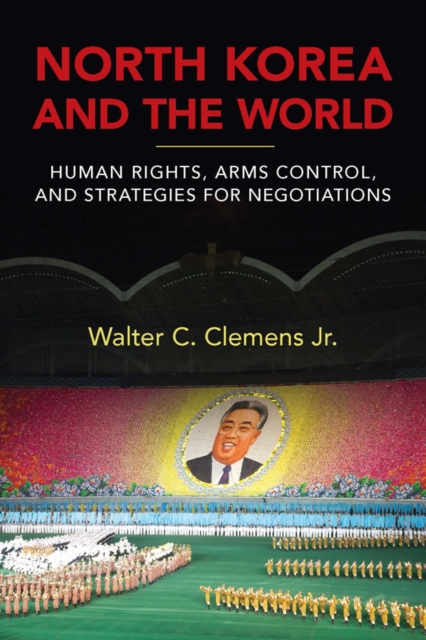
With nearly twenty-five million citizens, a secretive totalitarian dictatorship, and active nuclear and ballistic missile weapons programs, North Korea presents some of the world's most difficult foreign policy challenges.
This book’s aim is to determine empirically whether Europeans see their multiple security needs best advanced by a consistent reliance on the EU’s security policies or by differentiating allies according to their capacity to deal with different types of security threats, economic, military, and climate change.
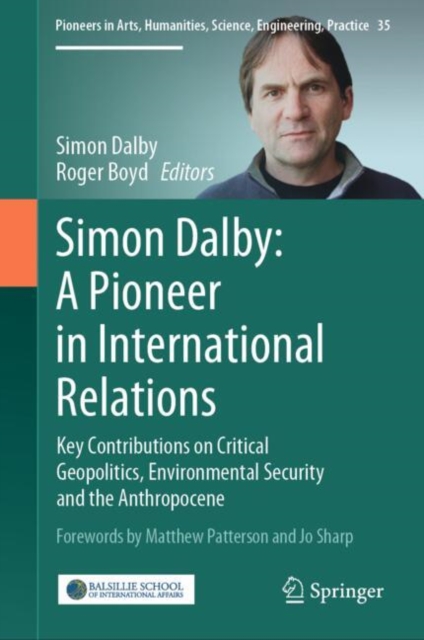
This book profiles Simon Dalby's academic contributions in the fields of critical geopolitics, environmental security and the intersection of international relations and the Anthropocene.
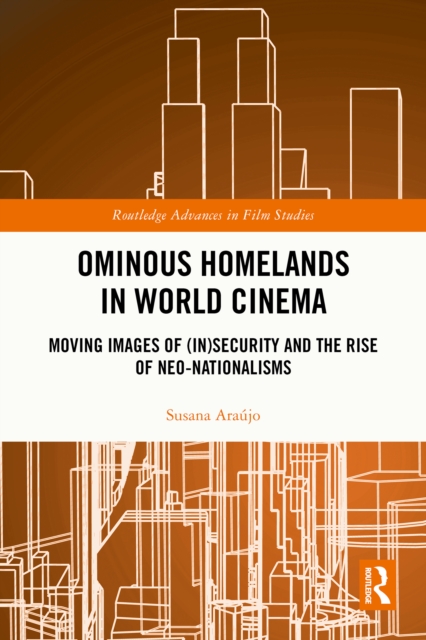
Winner of the 2026 Faculty of Arts and Humanities of the University of Coimbra International Publications Prize (Premio Publicacoes Internacionais da FLUC)Ominous Homelands in World Cinema examines contemporary films from a range of national settings that expose and critically engage with representations of "e;Homeland"e; - a term that resurfaced with renewed intensity in the United States through the establishment of the Department of Homeland Security after 9/11 and gained traction across Europe, contributing to the formation of new securitarian configurations whose impact has resonated globally.
This book’s aim is to determine empirically whether Europeans see their multiple security needs best advanced by a consistent reliance on the EU’s security policies or by differentiating allies according to their capacity to deal with different types of security threats, economic, military, and climate change.
This book explores neoliberalism’s emergence as a global ideology, contextualizing its rise within the broader capitalist restructuring that followed the decline of the Keynesian state.
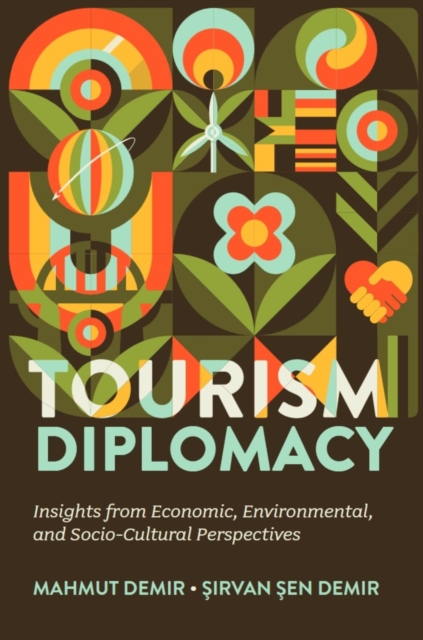
Tourism Diplomacy: Insights from Economic, Environmental, and Socio-Cultural Perspectives examines how tourism serves as a powerful diplomatic tool, fostering cultural exchange, economic cooperation, and international collaboration.
This book explores neoliberalism’s emergence as a global ideology, contextualizing its rise within the broader capitalist restructuring that followed the decline of the Keynesian state.
This book examines how cross-border mobility across the eastern border of Poland with Russia, Belarus and Ukraine, driven by external shocks, influences different territorial units.
A Framework for Development (1981) focusses on the link between the European Economic Community and the 60 African, Caribbean and Pacific (ACP) states.
This book excavates the diverse and mostly unnoticed political meanings made available to American and German audiences by the blockbuster films helmed by transplanted West German directors Roland Emmerich and Wolfgang Petersen.
Seit Juni 2013 hat der US-Geheimdienstmitarbeiter Edward Snowden aufgedeckt, dass die US-Sicherheitsbehörde NSA die Gesamtbevölkerung des Globus geheim überwacht.
After 1992 (1989) argues that the changes of 1992 will precipitate the transformation of the European Community into a full political and economic union, organized according to federal principles.
This book offers an unique analysis of small states in international relations from the perspective of Nepal, which lies at a strategic geopolitical position between China and India.
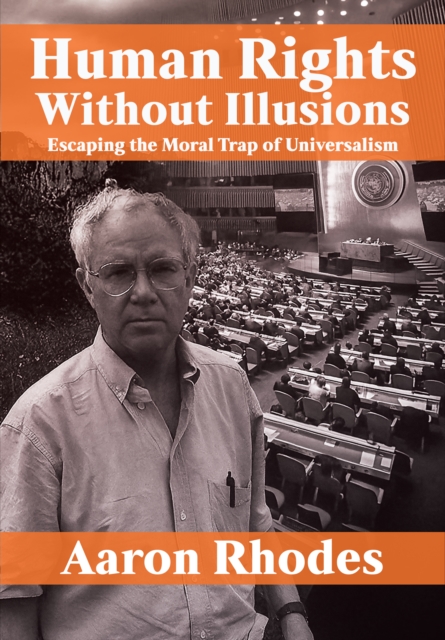
In Human Rights Without Illusions, leading human rights advocate Aaron Rhodes traces the political and religious traditions that have led to prioritizing consensus among diverse nations as a prerequisite for upholding universal principles.
As World War II drew to a close, the United States and the Soviet Union began to maneuver for position in postwar Europe, in the first exploratory moves of what would soon become a worldwide contest for power and prestige.
This book argues that the transformation of Japan's defense since 2012 has been triggered by the emergence of the first threat to Japan's territorial integrity since 1945, namely China's continual challenging of Japan's control of the Senkaku Islands.
This book argues that the transformation of Japan's defense since 2012 has been triggered by the emergence of the first threat to Japan's territorial integrity since 1945, namely China's continual challenging of Japan's control of the Senkaku Islands.