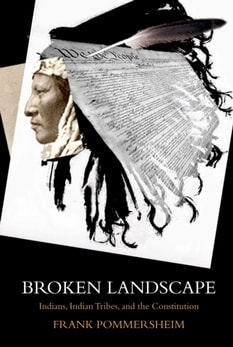
Broken Landscape is a sweeping chronicle of Indian tribal sovereignty under the United States Constitution and the way that legislators have interpreted and misinterpreted tribal sovereignty since the nation's founding.
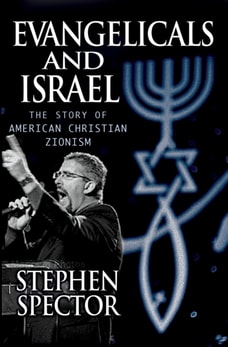
Most observers explain evangelical Christians' bedrock support for Israel as stemming from the apocalyptic belief that the Jews must return to the Holy Land as a precondition for the second coming of Christ.
Conservative evangelicalism has transformed American politics, disseminating a sometimes fearful message not just through conventional channels, but through subcultures and alternate modes of communication.
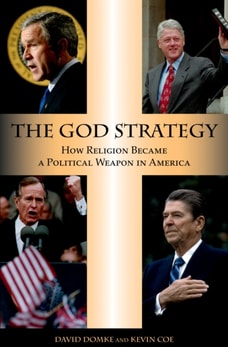
This volume offers a timely and dynamic study of the rise of religion in American politics, examining the public messages of political leaders over the past seventy-five years.
The explosive growth of the immigrant population since the 1960s has raised concerns about its impact on public life, but only recently have scholars begun to ask how religion affects the immigrant experience in our society.
In the face of ongoing religious conflicts and unending culture wars, what are we to make of liberalism's promise that it alone can arbitrate between church and state?
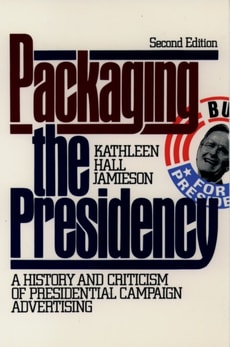
In a book that blends anecdote with analysis, Kathleen Hall Jamieson--author of the award-winning Packaging the Presidency--offers a perceptive and often disturbing account of the transformation of political speechmaking.
With the growth of the global economy over the past two decades, foreign direct investment (FDI) laws, at both the national and international levels, have undergone rapid development in order to strengthen the protection standards for foreign investors.
Packaging the Presidency, Third Edition, is now completely updated to offer the only comprehensive study of the history and effects of political advertising in the United States.
The Agnostic Age: Law, Religion, and the Constitution is a book for lawyers, law professors, law students, lawmakers, and any citizen who cares about church-state conflict and about the relationship between religion and liberal democracy.
On Palm Sunday 1964, at the Second Presbyterian Church in Memphis, a group of black and white students began a "e;kneel-in"e; to protest the church's policy of segregation, a protest that would continue in one form or another for more than a year and eventually force the church to open its doors to black worshippers.
The Philokalia (literally "e;love of the beautiful or good"e;) is, after the Bible, the most influential source of spiritual tradition within the Orthodox Church.
The Arbitration Institute of the Stockholm Chamber of Commerce has become an important forum for international commercial arbitration, with parties from more than 30 countries, especially Western European countries and increasingly Russia, other Eastern European Countries, and China.
Islam has been part of the increasingly complex American religious scene for well over a century, and was brought into more dramatic focus by the attacks of September 11, 2001.
The First Amendment guarantee that "e;Congress shall make no law respecting an establishment of religion"e; rejected the millennium-old Western policy of supporting one form of Christianity in each nation and subjugating all other faiths.
Traditional understandings of the genesis of the separation of church and state rest on assumptions about "e;Enlightenment"e; and the republican ethos of citizenship.
Winner of an Award of Merit in the Christianity Today Book Awards, History/Biography categoryOn January 17, 1776, one week after Thomas Paine published his incendiary pamphlet Common Sense, Connecticut minister Samuel Sherwood preached an equally patriotic sermon.
Joyce Dalsheim's ethnographic study takes a ground-breaking approach to one of the most contentious issues in the Middle East: the Israeli settlement project.
As Senegal prepares to celebrate fifty years of independence from French colonial rule, academic and policy circles are engaged in a vigorous debate about its experience in nation building.
Rituals can provoke or escalate conflict, but they can also mediate it and although conflict is a normal aspect of human life, mass media technologies are changing the dynamics of conflict and shaping strategies for deploying rituals.
The first comprehensive empirical account of how religion affects the interpretation, prevention, and mitigation of AIDS in Africa, the world's most religious continent.
Rituals can provoke or escalate conflict, but they can also mediate it and although conflict is a normal aspect of human life, mass media technologies are changing the dynamics of conflict and shaping strategies for deploying rituals.
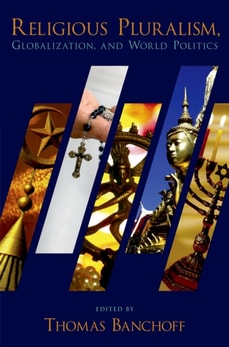
Since the1950s the world has witnessed a period of extraordinary religious revival in which religious political parties and non-governmental organizations have gained power around the globe.
Winner of the 2013 Christianity Today Book Award in Missions / Global AffairsWinner of the Aldersgate Prize Honorable MentionWinner of the 2014 International Studies Association International Ethics Section Book AwardIn the wake of massive injustice, how can justice be achieved and peace restored?