An authoritative introduction to ISIS-now expanded and revised to bring events up to the presentThe Islamic State stunned the world with its savagery, destructiveness, and military and recruiting successes.
This is the first book to address in depth the interplay between radicalisation and political violence in Europe, as well as the effectiveness of counter-measures.
The book aims to outline the progress, problems and challenges of delivering a safe and secure Olympics in the context of the contemporary serious and enduring terrorist threat.
This book provides the first overarching, empirically grounded, critical analysis of child trafficking as an idea, ordering principle, and artefact of politics.
The Palgrave Handbook of Global Counterterrorism Policy examines a comprehensive range of counterterrorism policies, strategies, and practices across dozens of states and actors around the world.
This book examines the doctrine of giving no concessions to terrorists, and uses empirical research to establish whether there is any link between negotiating with such groups and the spread of violence.
This volume covers a timely debate in contemporary security studies: can armed forces adjust to the rising challenge of insurgency and terrorism, the greatest transformation in warfare since the birth of the international system?
Global Terrorism and New Media carefully examines the content of terrorist websites and extremist television programming to provide a comprehensive look at how terrorist groups use new media today.
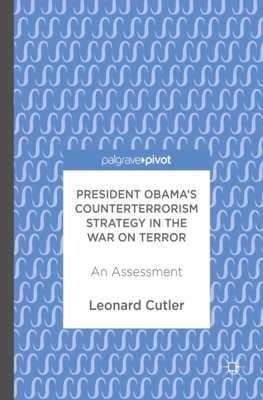
This book assesses President Barack Obama's counterterrorism policy as it evolved throughout his presidency, from the expanded use of drones to the controversial decisions regarding the Syrian conflict.
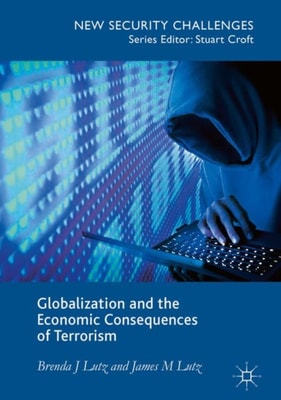
This book analyzes the effects of economic, social, and political disruptions that have come with integration into the global economy for countries in five different regions and the developing world as a whole.
Security, Religion, and the Rule of Law argues that true, substantive, and sustainable national security is only possible through respect for the rule of law, human rights, and religious freedom.
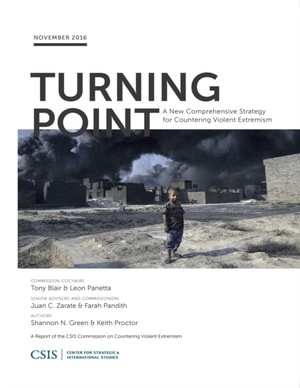
The CSIS Commission on Countering Violent Extremism, cochaired by Tony Blair and Leon Panetta, was formed to develop a comprehensive and actionable blueprint to combat the growing appeal of violent extremism in the United States and abroad.
Compellingly written and even-handed in its judgments, this is by far the clearest account of what has happened through the years in the Northern Ireland conflict, and why.
For decades the most frightening example of bigotry and hatred in America, the Ku Klux Klan has usually been seen as a rural and small-town product-an expression of the decline of the countryside in the face of rising urban society.
This fourth comprehensive study of international terrorist attacks covers 2017, during which the Islamic State suffered continued reversals yet retained its status as the most active, well-financed and well-armed terrorist group worldwide.
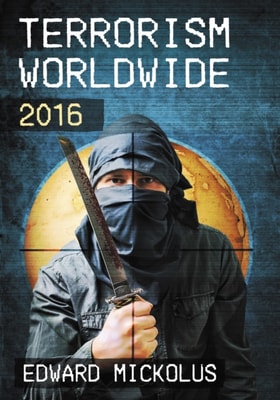
This third comprehensive chronology of international terrorist attacks covers 2016, during which the Islamic State suffered several battlefield reversals yet continued its operations as the most active, well-financed and well-armed terrorist group worldwide.
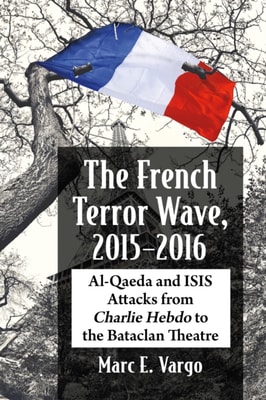
A torrent of Islamist terrorism swept across France in 2015 and 2016, executed by militant jihadists on behalf of al-Qaeda and the Islamic State (ISIS).
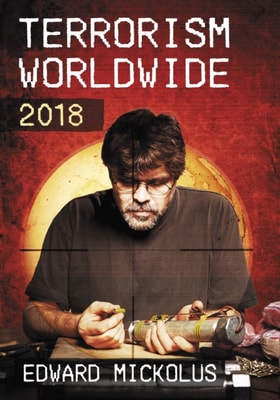
This comprehensive worldwide study catalogs terrorist attacks in 2018, during which the Islamic State continued its decline from a quasi-government commanding territory the size of the United Kingdom to a more traditional terrorist network controlling just 1000 square miles.
This edited collection surveys how non-Western states have responded to the threats of domestic and international terrorism in ways consistent with and reflective of their broad historical, political, cultural and religious traditions.
A NEW YORK TIMES EDITORS' PICK / TOP 10 RECOMMENDED READTwo experts of extremist radicalization take us down the QAnon rabbit hole, exposing how the conspiracy theory ensnared countless Americans, and show us a way back to sanity.
As we approach the tenth anniversary of the 9/11 attacks, we have a chance to see more clearly how they were a turning point in America's relationship with the world.
The relationship between drugs and today's wars has grown more noticeable since the end of the Cold War and will likely gather strength in this era of increased globalization.
In the post-9/11 world, the possibility of energy infrastructure-terrorism-the use of weapons to cause devastating damage to the energy industrial sector and cause cascading effects-is very real.
In December 2014, the Senate Select Committee on Intelligence (SSCI) released a 500+ page executive summary of a 6,000 page study of the CIA's detention and interrogation of al Qa'ida terrorists.
Introduced in 1998 by the Department of Defense, the concept of information operations (IO) proposed to revolutionize the ways in which warfare, diplomacy, and business were conducted.