The events of 9/11 and subsequent acts of jihadist terrorism, together with the failures of intelligence agencies over Iraq's Weapons of Mass Destruction, have arguably heralded a new age of intelligence.
The events of 9/11 and subsequent acts of jihadist terrorism, together with the failures of intelligence agencies over Iraq's Weapons of Mass Destruction, have arguably heralded a new age of intelligence.
The Northern Ireland peace process has been heralded by those involved as a successful example of transformation from a violent conflict to a peaceful society.
The Northern Ireland peace process has been heralded by those involved as a successful example of transformation from a violent conflict to a peaceful society.
Risky Business tells in plain language the specific behaviors that indicate an employee has the potential to become violent, and it tells managers what to do--and what not to do--to prevent workplace violence.
Risky Business tells in plain language the specific behaviors that indicate an employee has the potential to become violent, and it tells managers what to do--and what not to do--to prevent workplace violence.
This book explores the factors that influence violent rebellious political organisations to transform into other entities, such as political parties, criminal organisations and terrorist organisations.
This book explores the factors that influence violent rebellious political organisations to transform into other entities, such as political parties, criminal organisations and terrorist organisations.
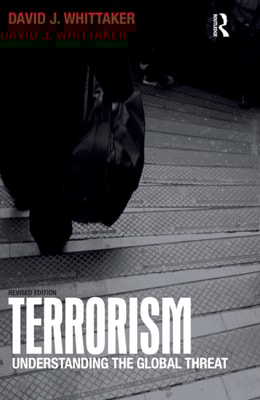
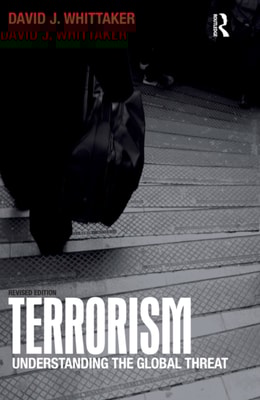
First published in 2004 in the immediate wake of the September 11 terrorist attacks, this is an accessible commentary intended to provoke thought and debate on the topic of terrorism.
First published in 2004 in the immediate wake of the September 11 terrorist attacks, this is an accessible commentary intended to provoke thought and debate on the topic of terrorism.
The history of terrorism stretches back nearly two thousand years and terrorism, both in the forms of terrorist groups and terror regimes, is an inherent part of the modern world: from Anarchist groups to al-Qaida; from Hitlers Germany and SS to al-Bashirs Sudan and Janjaweed militias.
The history of terrorism stretches back nearly two thousand years and terrorism, both in the forms of terrorist groups and terror regimes, is an inherent part of the modern world: from Anarchist groups to al-Qaida; from Hitlers Germany and SS to al-Bashirs Sudan and Janjaweed militias.
The new and updated edition of Political Islam, World Politics and Europe focusses on the shift within political Islam, in light of 9/11 and the events of the Arab Spring, from a jihadist struggle, to institutional Islamism.
The new and updated edition of Political Islam, World Politics and Europe focusses on the shift within political Islam, in light of 9/11 and the events of the Arab Spring, from a jihadist struggle, to institutional Islamism.
Employing a theoretical framework based on the concept of identity loss, this book seeks to understand why increased integration has stimulated greater radicalization among the Muslim populations in Western Europe.
Employing a theoretical framework based on the concept of identity loss, this book seeks to understand why increased integration has stimulated greater radicalization among the Muslim populations in Western Europe.
This new handbook is a comprehensive collection of cutting-edge essays that investigate the contribution of Critical Terrorism Studies to our understanding of contemporary terrorism and counterterrorism.
This new handbook is a comprehensive collection of cutting-edge essays that investigate the contribution of Critical Terrorism Studies to our understanding of contemporary terrorism and counterterrorism.
The radical act of suicide protest is undertaken by social movement participants in order to demand a particular previously articulated political outcome.
The radical act of suicide protest is undertaken by social movement participants in order to demand a particular previously articulated political outcome.
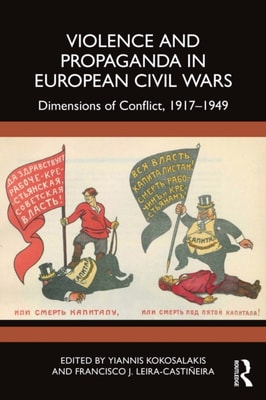
This volume offers a broad overview of the conditions, motives, and practices of violence during the most prominent intra state conflicts in Europe during the first half of the 20th century.
This book addresses two closely related questions: what is the process by which the relatively short and violent genocides of the twentieth century and beyond have occurred?