Over the fifty years between 1940 and 1990, the countries of eastern Africa were embroiled in a range of debilitating and destructive conflicts, starting with the wars of independence, but then incorporating rebellion, secession and local insurrection as the Cold War replaced colonialism.
Over the fifty years between 1940 and 1990, the countries of eastern Africa were embroiled in a range of debilitating and destructive conflicts, starting with the wars of independence, but then incorporating rebellion, secession and local insurrection as the Cold War replaced colonialism.
From Afghanistan to Zimbabwe the world has witnessed a rising tide of contentious elections ending in heated partisan debates, court challenges, street protests, and legitimacy challenges.
From Afghanistan to Zimbabwe the world has witnessed a rising tide of contentious elections ending in heated partisan debates, court challenges, street protests, and legitimacy challenges.
Counter-terrorism law and policy has been prominent and widespread in the years following 9/11, touching on many areas of everyday life from policing and border control to financial transactions and internet governance.
Counter-terrorism law and policy has been prominent and widespread in the years following 9/11, touching on many areas of everyday life from policing and border control to financial transactions and internet governance.
The 21st century exists in the shadow of the return of extremist Islam to the center of the world's political stage, a process that began at the end of the previous century.
The 21st century exists in the shadow of the return of extremist Islam to the center of the world's political stage, a process that began at the end of the previous century.
Although there has been an increase in research on terrorism across the social and behavioural sciences in the past few decades, until recently most of this work has originated from political science, psychology or economics.
Although there has been an increase in research on terrorism across the social and behavioural sciences in the past few decades, until recently most of this work has originated from political science, psychology or economics.
It is traditionally viewed that vulnerable inmates form captive audiences for violent terrorist offenders who, in turn, are destined to turn prisons into training grounds for militant activities; all the while forming alliances with more hardened criminals to produce an even greater threat.
It is traditionally viewed that vulnerable inmates form captive audiences for violent terrorist offenders who, in turn, are destined to turn prisons into training grounds for militant activities; all the while forming alliances with more hardened criminals to produce an even greater threat.
Recent debates in security policy have highlighted trends towards fragmentation, informalisation and privatisation in the diverse field of security policy, with its increasingly transnational security risks.
Recent debates in security policy have highlighted trends towards fragmentation, informalisation and privatisation in the diverse field of security policy, with its increasingly transnational security risks.
Contingency planning and resilience are of prime importance to the late modern risk society, with implications for law and for governance arrangements.
Contingency planning and resilience are of prime importance to the late modern risk society, with implications for law and for governance arrangements.
When originally published in 1981 this was the first book to bring together in one volume some of the most thoughtful work by British academics and specialists studying the political violence and terrorism which had recently challenged Britain and other Western democracies.
When originally published in 1981 this was the first book to bring together in one volume some of the most thoughtful work by British academics and specialists studying the political violence and terrorism which had recently challenged Britain and other Western democracies.
The papers in this special issue of Studies in Conflict and Terrorism accompanied the conference in Oklahoma in April 2000, whose purpose was to assess developments in terrorism over the preceeding two decades, map its likely future direction and propose policy recommendations and other remedial steps to counter the menace.
The papers in this special issue of Studies in Conflict and Terrorism accompanied the conference in Oklahoma in April 2000, whose purpose was to assess developments in terrorism over the preceeding two decades, map its likely future direction and propose policy recommendations and other remedial steps to counter the menace.
For a long time the understanding of the Palestinian question has been dominated by the views offered by the Arab governments on the Israeli establishment.
For a long time the understanding of the Palestinian question has been dominated by the views offered by the Arab governments on the Israeli establishment.
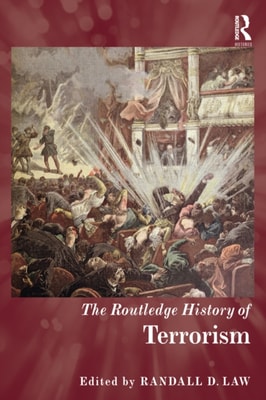
This study places terrorist acts in Europe in their historical perspective by examining terrorist and anarchist movements in late nineteenth century Europe.