Race debates have become more frequent at the national level, and the response to racism in the media and by politicians has shifted from denial to acknowledgment to action.
This book is about harmful traditional practices: damaging and often violent acts which include female genital mutilation, forced marriage, honour killings and abuse, breast ironing, witchcraft and faith-based abuse.
This book undertakes an exploratory exercise in decolonizing criminology through engaging postcolonial and postdisciplinary perspectives and methodologies.
This book presents a study of the rise of American neoliberalism in the aftermath of the modern Civil Rights movement, paying particular attention to the traumatic impact of the neoliberal age on countless African Americans.
This book considers new developments in Critical Race Theory (CRT) in times of austerity and assesses both the impact of British CRT or 'BritCrit', and CRT's continuing growth in the US.
This book emphasizes the inherently democratic nature of education; from those who practice in higher education institutions and are involved in decision-making, to those questioning the methods of reform processes in those institutions.
This book shifts analytical focus from macro-politicization and securitization of Islam to Muslims' choices, practices and public expressions of faith.
The practices and technologies of evaluation and decision making used by professionals, police, lawyers and experts are questioned in this book for their participation in the perpetuation of historical forms of colonial violence through the enforcement of racial and eugenic policies and laws in Canada.
Written by some of the most notable criminologists of South Asia, this book examines advances in law, criminal justice, and criminology in South Asia with particular reference to India, Pakistan, and Bangladesh.
This book examines diverse literary writings in Bangla related to crime in late nineteenth and early twentieth century colonial Bengal, with a timely focus on gender.
This state-of-the-art, comprehensive Handbook is the first of its kind to fully explore the interconnections between social justice and education for citizenship on an international scale.
This book explores the transformation of the Tunisian space of mobility after the Arab Uprisings, looking at the country's emerging profile as a migratory "e;destination"e; and focusing on refugees from Syria, Libya, and Sub-Saharan countries; Tunisian migrants in Europe who return home; and young undocumented European migrants living in Tunis.
Set at the intersection of Human Rights, social justice and Literature, this cutting edge book examines a range of literary texts, fiction, plays and poetry, and through them considers representations of Human Rights and their violations.
This book discusses two moral panics that appeared in the media in late apartheid South Africa: the Satanism scare and the so-called epidemic of white family murder.
This book explores the relationship between the Irish police and ethnic minorities, made particularly pressing by the rapid ethnic diversification of Irish society.
This book argues that the weakness of civil society in the post-Soviet Caucasus is a result not only of post-communist political and economic problems, but also of the effects of historical legacies.
This book uncovers a historical dependency on smelting activities that has trapped inhabitants of La Oroya, Peru, in a context of systemic lack of freedom.
This book's discussion of skin bleaching, lightening and toning in Black Atlantic zones disengages with the usual tropes of Black Nationalism and global white supremacy such as 'the desire to be white', 'low self-esteem' and 'self-hatred' and instead engages with the global multi-billion dollar market in lighter skins with products from local cosmetic and pharmaceutical companies and entrepreneurs.
In 1985, the Kairos Document emerged out of the anti-apartheid struggle as a devastating critique of apartheid and a challenge to the church in that society.
This book provides an in-depth and timely analysis of the member states' compliance patterns with the key European Union Anti-Discrimination Directives.
Border Shifts develops a more complex and multifaceted understanding of global borders, analysing internal and external EU borders from the Mediterranean region to the US-Mexico border, and exploring a range of issues including securitization, irregular migration, race, gender and human trafficking.
This edited volume is both a guide for educators and a resource for everyone who wants to strengthen resistance against a major atrocity that besieges human development.
This edited volume brings together experts from around the world to provide coverage and analysis of infrastructure's role in Internet governance, both now and in the future.
State Voting Laws in America documents changing views on voting rights, emphasizing court rulings which shaped our understanding of what constitutes a legitimate right to vote.
This project provides an in-depth study of the role of worker-activist leaders in industrial strikes in China, a country where labor rights face significant challenges from state and industry suppression and by current lack of formal organization.
Sexuality, Disability, and the Law approaches issues of sexual autonomy and disability from multiple perspectives, including constitutional law, international human rights, therapeutic jurisprudence, history, cognitive psychology, dignity studies, and theories and findings on gender constructs and societal norms.
This book demonstrates that alternative approaches to criminal rehabilitation succeed in developing pro-social attitudes and in improving mental, physical and spiritual health for youth and adults in prison and community settings.
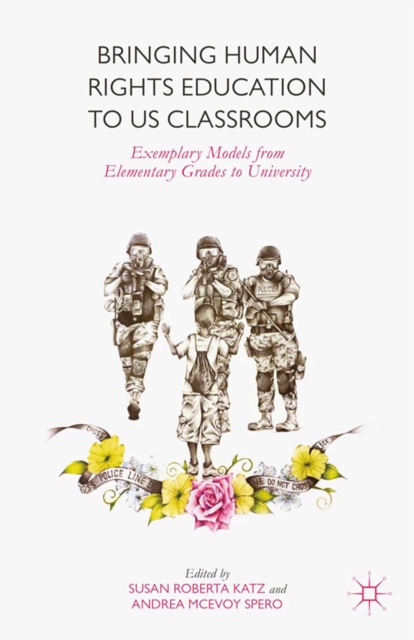
This book offers research-based models of exemplary practice for educators at all grade levels, from primary school to university, who want to integrate human rights education into their classrooms.
This study examines Turkey's non-recognition of the right to conscientious objection to military service and locates this non-recognition within the context of international human rights law - specifically United Nations and European Union system.
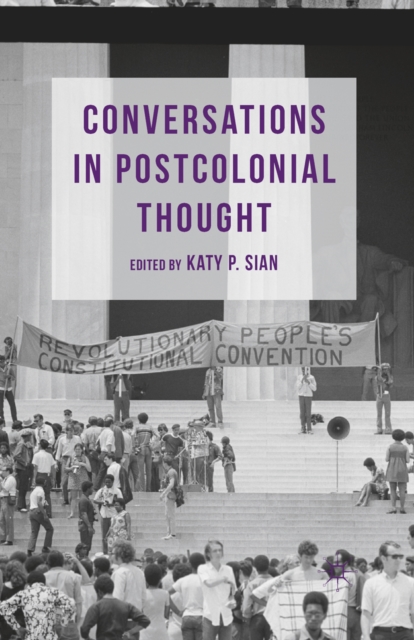
Offering 12 interviews with postcolonial thinkers in the social sciences and humanities, this collection features theorists such as Sara Ahmed and Paul Gilroy.