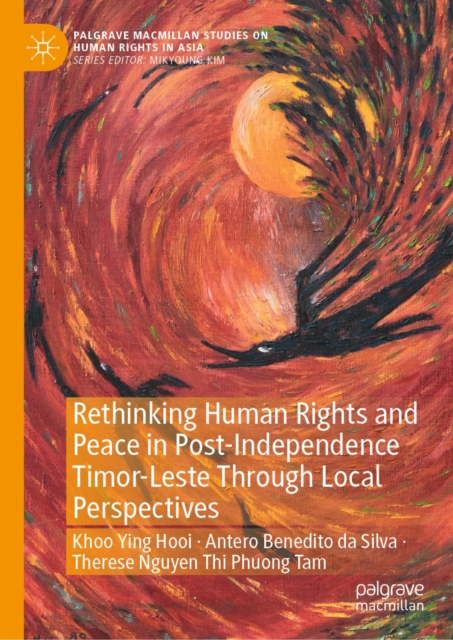
This book assesses the extent to which an emphasis on national security and prioritization of state interests has dominated governance policy-making in Northeast and Southeast Asia, at the expense of human security, human development, and human rights.
This book reports on a research program designed to construct the basics of a new type of literacy that teaches pupils social problem-solving at individual and collective levels.
This book explores the human rights consequences of the new mercenarism, as channeled through so-called private military and security companies (PMSCs), and offers an overview of the evolution and status quo of both non-legal (soft law and self-regulation) and legal initiatives seeking to limit them.
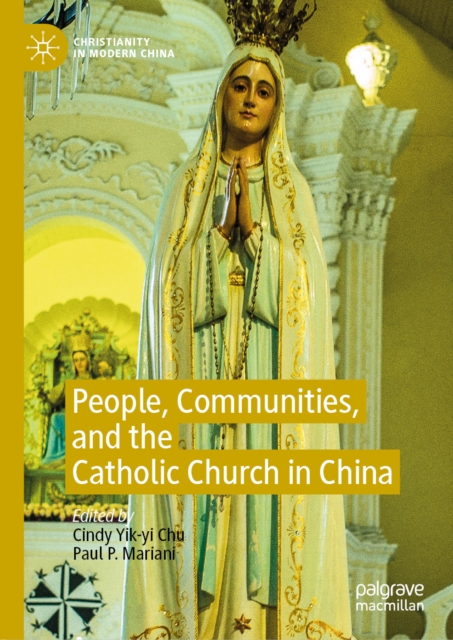
This book explores the Chinese Catholic Church as a whole as well as focusing on particular aspects of its activities, including diplomacy, politics, leadership, pilgrimage, youths, and non-Chinese Catholics in China.
This book provides a comprehensive human rights analysis of key areas of law affecting older persons, including legal capacity; elder abuse; accommodation and aged care; healthcare; employment; financial security, retirement, and estate planning; and social and cultural participation.
This book compares the thought of Michael Oakeshott and Leo Strauss, bringing Oakeshott's desire for a renaissance of poetic individuality into dialogue with Strauss's recovery of the universality of philosophical enlightenment.
This book examines opposition to the Council of Europe's Istanbul Convention and its consequences for the politics of violence against women in four countries of Central and Eastern Europe.
This book is the third in a four volume series that focuses on research-based teaching and learning practices that promote social justice and equity in higher education.
This volume explores transgender children and internalized body normalization in early childhood education settings, steeped in critical methodologies including post-structuralism, queer theory, and feminist approaches.
Why politics and international relations "e;seem"e; to be driven by power/strategies in some conditions but "e;seem"e; to be attached to values/beliefs in other situations?
Since the prohibition of the threat or use of force and the resurgence of (economic) nationalism, economic warfare has become an increasingly important substitute for actual hostilities between states.
Relations between societal values and legal doctrine are inevitably complex given the time lag between law and social reality, and the sociological space between legal communities involved in the development and application of the law and non-legal communities affected by it.
Following the 30th anniversary of the United Nations Convention on the Rights of the Child in 2020, and the creation of the UN Sustainable Development Goals, there is increased interest in and a need to develop national human rights' bodies for children's rights.
The World Yearbook of Education 2010: Education and the Arab 'World': Political Projects, Struggles, and Geometries of Power, strives to do justice to the complex processes and dynamics behind the world of Arab education.
This book offers a synthesis of the main achievements and pending challenges during the thirty years of transitional justice in Chile after Augusto Pinochet's dictatorship.
Attacks on humanitarian aid operations are both a symptom and a weapon of modern warfare, and as armed groups increasingly target aid workers for violence, relief operations are curtailed in places where civilians are most in need.
This edited collection investigates how full employment programs can sustain the economy and the environment, promote social justice, and reinvigorate local communities.
This book illustrates the parallel struggles among Blacks in the US and the Caribbean for equality and greater political participation and equal treatment during the 1960s and 1970s.
This book focuses on the formal and informal reconciliation processes during conflict and post-conflict periods in various locations in the Asia-Pacific, and includes cases studies based on primary research conducted in countries such as Cambodia, Timor-Leste, Nepal, Sri Lanka, Pakistan, India, South Thailand, Bougainville and the Solomon Islands.
The book analyzes the impact of urban movements on government and public policies in a context of rapid urban transformations, public policy crises and increasing social inequalities.
The research presented in this book provides a stakeholder analysis of human rights protection at a time when the region appears to be regressing into an insidious and deep authoritarianism.
This comparative volume examines the ways in which current controversies and political, legal, and social struggles for gender equality raise conceptual questions and challenge our thinking on political theories of equality, citizenship and human rights.
This book argues that Political Islam in the Iranian context evolved into three main schools of thought during the 1960s and 1970s: Jurisprudential Islam led by Ayatollah Khomeini, Leftist Islam led by Shariati, and Liberal Islam led by Bazargan.
Mary Wollstonecraft’s visionary treatise, originally published in 1792, was the first book to present women’s rights as an issue of universal human rights.
This volume, dedicated to the memory of Gerard Mannion (1970-2019), former Joseph and Winifred Amaturo Chair in Catholic Studies at Georgetown University, explores the topic of changing the church from a range of different theological perspectives.
The aims of child rights education are to make children and their primary duty-bearers aware of child rights so that they both can be empowered to together advocate for and apply them at their family, school and community levels.